
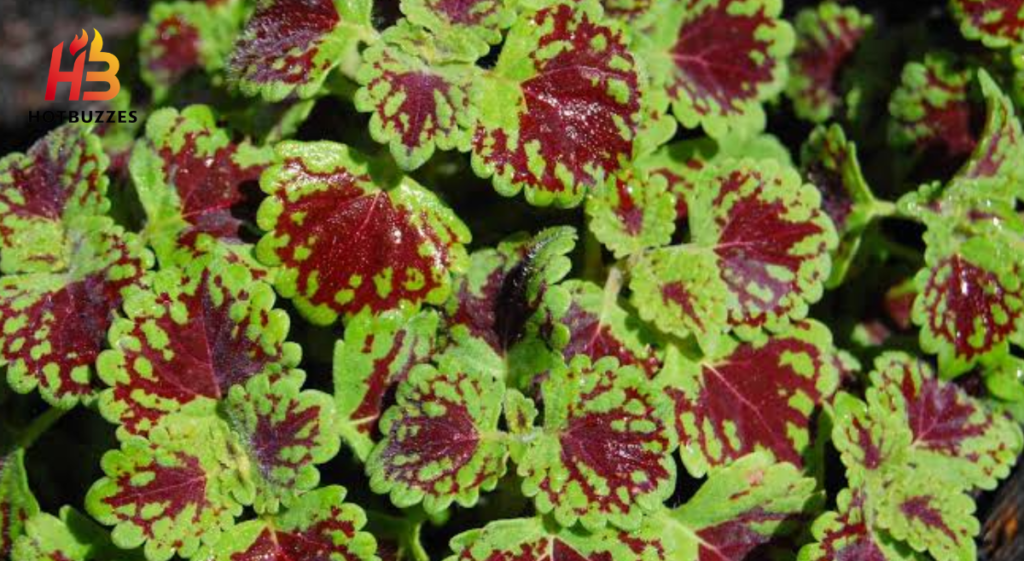
If you have ever walked past a plant with leaves so vibrantly patterned they looked almost painted, there is a good chance you were looking at a coleus. No other common garden or houseplant packs this much colour variety into a single species. Deep burgundy, electric lime, coral pink, bronze, cream, scarlet, and combinations of all of these, sometimes on one leaf, make coleus one of the most instantly striking plants available to gardeners and indoor plant owners at any skill level.
What makes this even better is that Coleus earns this visual performance without demanding specialist care. It grows quickly and propagates with ease. It responds visibly to proper care and grows well as a houseplant, in containers, or as a garden focal point during warmer months. Learning its basic care requirements helps prevent common problems like faded leaves, legginess, and early flower spikes. With the right knowledge, you can confidently grow coleus instead of just admiring it in someone else’s garden.
The Botanical Identity of Coleus
The plant most people call coleus has gone through several official name changes that continue to confuse garden centres, seed packets, and plant care guides. Learn the best fertilizer schedule for indoor plants to support healthy growth and vibrant foliage.
According to Wikipedia’s entry on Coleus, the genus Coleus was first described by João de Loureiro in 1790. It belongs to the family Lamiaceae, the mint or deadnettle family, which explains the characteristic square stems coleus shares with other members of this family, including mint, basil, and lavender.
Wikipedia’s entry on Coleus scutellarioides provides the current accepted scientific name: Coleus scutellarioides, native to Southeast Asia through to Australia. The plant has several scientific synonyms. Coleus blumei, Plectranthus scutellarioides, and Solenostemon scutellarioides are all names you may see in gardening guides, seed packets, and plant databases. This is why the same plant might appear under three different names at the same garden centre. They all refer to the same species.
Rosy Dawn Gardens’ coleus history page explains that the species was first introduced into Europe from Java in 1851 by a Dutch horticulturalist. At that time, there were few leaf colours and shapes. Everything available today is the result of extensive breeding and selection work over the intervening 170-plus years.

The plant typically grows 60 to 75 cm tall and wide, according to Wikipedia, making it a substantial presence in both garden beds and large containers. In ideal conditions, some cultivars reach 1 metre tall. In colder climates, it is grown as an annual, though in its native tropical range, it behaves as a short-lived perennial capable of living three to four years.
Understanding Coleus Colour: Why It Changes and What Controls It
The most distinctive feature of coleus is its colorful foliage. It is also the part that confuses many growers. The same plant can look dramatically different depending on light conditions, fertilizer levels, and age.
The Old Farmer’s Almanack’s April 2026 coleus guide explains the fundamental colour rule: if leaves appear faded or lose their vibrant colour, the plant may be getting too much direct sun or not enough nutrients. Proven Winners’ coleus growing guide adds the opposite: if the colour is drained from leaves, it is getting too much sun. If the plant begins losing leaves, it is not getting enough light.
The light-colour relationship operates differently depending on the variety. The Old Farmer’s Almanack identifies the key distinction: generally, dark-leaf varieties are more sun-tolerant, while plants with lighter foliage need more shade. Darker pigments in the leaves absorb more direct sunlight without damage. Lighter, cream, yellow, or pastel varieties contain less protective pigment and fade or scorch in strong sun.
A peer-reviewed study published on PubMed from the National Centre for Biotechnology Information confirms this at the cellular level. It found that light directly increases anthocyanin production, the pigment responsible for red, purple, and maroon leaf colours. However, excessive UV exposure can damage chloroplasts in varieties with lighter-colored leaves. This is why the same coleus variety often looks more vibrant in gentle morning light but appears faded after prolonged afternoon sun.
Fertiliser also affects colour directly
The Old Farmer’s Almanack states clearly that excess fertiliser weakens leaf colouration. Balcony Container Gardening’s care guide adds: to keep coleus in its brightest colours, make sure not to fertilise too much. This is a counterintuitive finding for most plant growers; the assumption is that more nutrients produce more growth and better colour. With coleus, excess nitrogen specifically encourages vegetative growth at the expense of pigment intensity.
Choosing the Right Light Situation
Light management is the most important part of growing coleus. It affects both the plant’s color and its growth. According to Proven Winners, coleus grows best in partial to full shade, although newer varieties can tolerate full sun. For the brightest foliage, place the plant where it receives morning sun and afternoon shade. This is the most reliable placement for coleus in most climates and works well in both garden beds and outdoor containers.
Clemson University Home and Garden Information Centre’s coleus factsheet confirms: most coleus grow best in part shade or dappled light. For all varieties, avoid deep shade. Discover the best watering schedule for houseplants based on their needs and growing conditions.
For indoor coleus, Proven Winners specifies: place in a window that receives bright indirect light or under grow lights. AI Plant Finder’s 2025 care guide refines this further: for indoors, bright indirect light is ideal. Too much sun fades leaf colour. Too little makes it leggy and dull. The balance point, just enough sun, is what makes leaves their most vibrant.
The grow light option is worth knowing for indoor growers in winter or rooms without adequate natural light. Proven Winners specifically endorses grow lights as an alternative to window placement, which makes coleus one of the more flexible plants for home offices and rooms away from windows.

Watering: The Balance Between Moist and Soggy
Coleus shows its watering needs more clearly than almost any other common plant. Once you know what to look for, its signals make it easy to tell when the plant needs water.
Epic Gardening’s coleus guide describes this directly: coleus reacts very sharply to the lack of moisture in the soil. The leaves become flabby, visibly wilted and soft when the plant is underwatered. This wilting response happens faster than in most plants because Coleus has relatively thin leaves with high water content and no significant storage capacity in its stems or roots.
Proven Winners gives the target state: Coleus plants do best with evenly moist soil. Water when the top one to two inches of soil feel dry to the touch. Provide more water during prolonged heat or dry spells. Clemson University HGIC specifies: water when the entire top inch of soil is dry. Use a soaker hose or drip system to deliver water to the base of the plant without wetting the foliage.
That foliage-wetting caution from Clemson is important and worth emphasising: wetting the leaves while watering and excessive soil moisture can lead to disease problems. Coleus is susceptible to fungal leaf spot diseases when foliage stays wet. Always water at the soil level rather than overhead, and allow any water that does splash on leaves to dry before the plant goes into shade, where it will stay wet longer.
University of Minnesota Extension’s coleus guide notes that watering needs differ significantly depending on the environment. A plant in full sun requires more frequent water than one in shade. Plants grown in containers need much more frequent watering than those in garden beds. The soil in a container dries out far faster than the surrounding garden soil. For container plants specifically, checking soil moisture daily in warm weather is not excessive.
Signs of Overwatering
The signs of overwatering in coleus differ from those of most plants. Because coleus actively wilts when underwatered but also shows yellowing and soft stem base when overwatered, the soil check is essential for accurate diagnosis. Soft, wet soil with yellowing leaves and a soft stem at the base points to overwatering. Dry soil with limp, flabby leaves points to underwatering.
Soil: What Coleus Roots Actually Need
Healthy Houseplants’ January 2025 coleus guide gives the most specific soil specification available: coleus thrives in well-draining, rich, and slightly acidic soil with a pH range of 6.0 to 7.0. The ideal soil composition is a mix of loam, peat moss, and perlite or sand to ensure good drainage while retaining moisture.
Epic Gardening captures the fundamental texture requirement practically: Coleus likes light and fluffy soil full of organic matter. A simple test for soil density: grab a handful and squeeze it. Dense, compacted soil that holds its shape is wrong for coleus. Light soil that breaks apart easily is correct.
Proven Winners specifies that compacted, clay, or poorly draining soil can lead to root rot. The organic matter component matters not just for drainage but for microbial activity. Healthy Houseplants recommends amending with compost or well-rotted manure to improve soil structure, enhance nutrient content, and promote beneficial microbial activity, especially important for coleus, which feeds on soil microorganisms as part of its normal nutrient uptake.
For container coleus, Proven Winners recommends high-quality all-purpose potting soil with adequate drainage holes in the container. Clemson University HGIC adds: Use a very well-drained soil mix when growing coleus in containers. Container coleus in heavy potting soil is one of the most reliable paths to root rot in this species.
Temperature and Humidity
Coleus is a tropical plant that becomes immediately unhappy when temperatures drop and shows the results in its appearance almost at once. AI Plant Finder specifies the origin context directly: Coleus comes from Malaysia and similar tropical climates with hot and humid weather. Its preferred temperature range is 60 to 75 degrees Fahrenheit (16 to 24 degrees Celsius). Avoid temperatures below 50 degrees Fahrenheit (10 degrees Celsius).
Balcony Container Gardening gives the full range: coleus grows best from 65 to 90 degrees Fahrenheit but can survive down to about 40 degrees. It will not survive freezing temperatures, so overwinter coleus plants indoors in cooler climates. This is practical advice for any coleus grower in a climate that experiences frost. The plant is not hardy outdoors year-round in most of the Northern Hemisphere and needs to be brought inside before the first frost of autumn.
Wikipedia confirms: Coleus scutellarioides is winter hardy only to USDA Zones 10 through 11, the warmest zones only, covering southern Florida, Hawaii, and similar climates. Everywhere else, it functions as a tender annual outdoors.
For humidity, Healthy Houseplants notes coleus appreciates higher humidity levels, which can be achieved through regular misting or placing the pot on a pebble tray filled with water. This is particularly relevant for indoor coleus in winter when central heating creates dry conditions that cause leaves to curl at the edges and lose their plumpness.
Fertilising: Less Is More for Colour Intensity
The fertilising rule for coleus is the opposite of what most people assume. More food does not produce better colour. It produces more growth at the expense of colour. The Old Farmer’s Almanack is unambiguous: excess fertiliser weakens leaf colouration. Slow-release balanced formula fertilisers are suggested at half strength every two weeks. Balcony Container Gardening echoes this: provide a half dose of a water-soluble fertiliser regularly, weekly or bi-weekly.
University of Minnesota Extension takes a slightly different approach: incorporate a granular general-purpose fertiliser with equal amounts of nitrogen, phosphorus, and potassium into the soil at the time of planting. After planting, fertilise monthly using a fertiliser with equal ratios again to promote foliage growth rather than flowering.
The logic behind the moderate approach is that coleus does not need heavy feeding because it grows quickly even in less-than-ideal soil conditions. The goal with fertilising coleus is maintaining steady growth without tipping the plant into the rapid vegetative growth that dilutes pigment concentration in the leaves. A consistent, light feeding at half the recommended strength is far more reliable than periodic heavy doses.
Proven Winners suggests a slow-release all-purpose fertiliser applied at planting time, supplemented with a balanced water-soluble fertiliser once a month during the growing season. This two-step approach, a baseline from the slow-release and a monthly top-up, works well for both garden and container coleus without the risk of over-feeding that comes with weekly liquid fertilising at full strength.
Pinching and Pruning: The Skill That Makes or Breaks Coleus Appearance
More than any other single care practice, pinching determines whether a coleus plant looks like a compact, bushy, colour-saturated display or a leggy, sparse collection of stems with colour concentrated only at the tips.
Pinch Stem Tips
Proven Winners describes the purpose clearly: pinch stem tips on young plants to promote branching and a full bushy habit. Cut off flower spikes as they appear to put energy back into foliage growth.
Clemson University HGIC gives the mechanical detail: pinch growing shoots of young plants frequently to encourage branching and maintain dense foliage. The Old Farmer’s Almanack specifies the cutting location: remove any stem at the point where two stems or two leaves, are growing from it. This cut location triggers the two side buds below the cut to develop into new stems, effectively doubling the branching at each pinch point.
Flower Spike Issue
The flower spike issue is particularly important because most coleus growers miss it until it is too late. When coleus produces a flower spike, a tall central stem with small blue, purple, or white flowers at the tip, the plant directs its energy toward seed production rather than leaf production. Leaf colour fades, the plant becomes leggier, and the overall appearance declines rapidly.
The Old Farmer’s Almanack notes that while the tiny flowers are not without appeal and can lure hummingbirds, pinching back flower spikes maintains bushiness and plant vigour. The moment a flower spike emerges from the centre of the plant, pinch it off at the base. Do this consistently through the growing season, and the plant maintains its foliage quality indefinitely. Allow it to flower, and the plant begins its decline toward setting seed and dying back.
Balcony Container Gardening notes that this container plant often gets leggy, so pinching off the tops and deadheading flowers promotes bushy growth. Leggy coleus, with long bare stems and colour only at the tips, is almost always the result of either insufficient light or insufficient pinching. Both causes produce the same stretched, sparse appearance, and both require different corrections.
Growing Coleus from Seed
Starting coleus from seed is a rewarding process that opens up variety options not available as established plants, but it requires understanding one key biological requirement: light is needed for germination, not darkness. Epic Gardening provides the most specific seeding guidance. Start sowing at the end of March when the soil receives maximum light.
Start seeds eight to twelve weeks before the last frost date. Place seeds on evenly moist soilless seed starter, not saturated, just moist enough that water cannot be squeezed out. Seeds require light to germinate, so do not bury them; simply press them gently into the surface of the seed-starting medium without covering them.
Epic Gardening also provides a useful variety note: Coleus does not come in electric purple or blue. Any seed packet claiming these colours is misleading. The available colours span red, pink, coral, burgundy, orange, yellow, green, cream, bronze, and combinations of these, genuinely spectacular, but without true blue or purple.
Germination typically occurs within ten to fourteen days at temperatures of 70 to 75 degrees Fahrenheit. Once seedlings develop their first true leaves, the second set of leaves that appear after the initial seed leaves, they can be handled carefully and transplanted to individual cells or small pots. At this stage, introducing more light gradually while keeping the seedling mix evenly moist is essential.

One interesting genetic characteristic of coleus seed germination noted by Rosy Dawn Gardens: coleus are very generous with producing sports, mutations that occur spontaneously and produce plants with different leaf patterns from their parent. Seeds from a named variety will not produce plants identical to the parent, and this is considered a feature rather than a problem by experienced growers who enjoy the element of surprise in the seedlings they raise.
Propagating Coleus from Cuttings
Propagation from cuttings is the most reliable way to reproduce a specific coleus variety exactly. Seeds produce variable offspring. Cuttings produce genetic clones of the parent plant. AI Plant Finder outlines the water propagation method step by step. Pick a non-flowering stem that looks healthy, vibrant and with at least two to three leaf nodes. Use clean, sharp scissors or pruning shears. Cut just below a node where leaves attach to the stem.
Strip off the leaves on the bottom one to two inches of the stem, the section that will be submerged. Place the cutting in a clear jar of water with roots submerged but leaves above the waterline. After one to two weeks, roots appear, and the new plant can be potted in soil.
Epic Gardening adds the soil propagation alternative: dip the cutting in rooting hormone after it has been freshly cut, or briefly in water to sprout small roots. Place in evenly moist potting soil. Cover with a plastic dome or bag and keep away from direct sunlight for around a week. After a week, remove the covering and move to indirect light. Keep soil evenly moist through the entire process.
The Old Farmer’s Almanack gives the practical timing for overwintering: in cooler regions, take cuttings from outdoor plants before the first frost in autumn. Place cuttings in water to root. Plant the rooted cuttings in small pots and keep them near a sunny window for winter. Come spring, once frost danger has passed, plant the coleus outdoors again. This cycle allows growers to preserve favourite varieties year after year without purchasing new plants each spring.
Growing Coleus Indoors as a Houseplant
While coleus is most commonly associated with garden beds and summer containers, it functions equally well as a year-round houseplant when light conditions are adequate. Proven Winners confirms coleus can be grown as a houseplant and recommends placing it in a window that receives bright indirect light or under grow lights. This makes an east-facing window the most practical choice, with gentle morning light without the intensity of afternoon sun that causes colour fade.
The primary difference between growing coleus indoors versus outdoors is how aggressively it needs pinching. Outdoor coleus in good light grows quickly and bushy with regular pinching. Indoor coleus with slightly less light tends toward legginess faster, which means pinching needs to happen more frequently, any time a stem reaches two to three nodes beyond the previous pinch point.
The key advantage of growing coleus indoors in cooler climates is continuity. Rather than treating it as a summer annual that dies at the first frost, an indoor coleus can be maintained through winter, cut back in early spring to promote new, fresh growth, and then moved outside again when temperatures stabilise above 50 degrees Fahrenheit. Over several years, a well-maintained indoor coleus develops a woody base and produces increasingly vigorous seasonal growth each spring.
Pests and Common Problems
Coleus is not especially susceptible to pests but does attract the standard range of indoor and garden insects under certain conditions. Balcony Container Gardening identifies the most common: mealybugs, whiteflies, aphids, spider mites, and slugs. Mealybugs and aphids cluster on new growth and stem joints, where they are visible as white cottony masses or clusters of small, soft-bodied insects. Spider mites are identified by fine webbing on the undersides of leaves and a stippled, pale appearance to the leaf surface. Whiteflies scatter in clouds when the plant is disturbed.
For treatment: wipe mealybugs directly with a cotton swab dipped in rubbing alcohol. Aphids and whiteflies respond well to a strong jet of water or insecticidal soap applied weekly until cleared. Spider mites require increased humidity alongside neem oil treatment applied to all leaf surfaces, including undersides.
Leggy growth with long bare stems is the most common non-pest problem and results from either insufficient light or failure to pinch. The Old Farmer’s Almanack advises: leggy, stretched growth is usually caused by insufficient light; provide brighter indirect light and pinch back stems to encourage bushier growth.
Wilting despite moist soil is a warning sign of root rot. This typically results from soil that stays wet too long, either from overwatering or poor drainage, and should be addressed by removing the plant from its container, inspecting the roots, trimming any soft or dark sections, and repotting in fresh, well-draining soil.
FAQs
Q1: Why are my coleus leaves losing their colour?
The most likely cause is too much direct sunlight. Move the plant to a position with morning sun and afternoon shade outdoors, or bright indirect light indoors. Excess fertiliser at full strength can also dilute colour; reduce to half the recommended dose. The Old Farmer’s Almanack confirms that both causes produce the same faded result.
Q2: My coleus keeps getting tall and leggy. What am I doing wrong?
Two causes produce legginess: insufficient light and insufficient pinching. Provide brighter indirect light and pinch the growing tips every time a stem reaches three to four nodes beyond the previous cut. Clemson University HGIC confirms that pinching growing shoots of young plants frequently is essential for maintaining dense foliage.
Q3: Should I let my coleus flower?
No, in most cases. Proven Winners and The Old Farmer’s Almanack both recommend cutting off flower spikes as they appear to put energy back into foliage growth. Allowing flowering causes the plant to decline toward seed production, resulting in faded colour and reduced foliage quality.
Q4: Can Coleus survive outdoors in winter?
Only in USDA Zones 10 and 11, the warmest climates, are equivalent to southern Florida and Hawaii. In all cooler climates, coleus is killed by frost and must be brought indoors or overwintered from cuttings. Wikipedia confirms this hardiness range.
Conclusion
Coleus is the plant that proves how much visual impact a garden or indoor collection can achieve without expensive or difficult specimens. The combinations of colour available across modern cultivars, developed from a species introduced to European horticulture barely 170 years ago, are genuinely without parallel in the plant world, ranging from quiet, sophisticated combinations of sage and cream to vivid, almost tropical contrasts of scarlet and chartreuse on a single leaf.
Getting the best from Coleus comes down to three core practices applied consistently. First, light management, morning sun or bright indirect light to maintain colour intensity without fading. Second, pinching, regular removal of growing tips and every flower spike to maintain the bushy, dense form that makes coleus genuinely impressive rather than merely interesting.
Third, watering discipline, keeping soil evenly moist at all times while never allowing it to become waterlogged, which is the one condition coleus will not forgive. Follow those three practices, and coleus grows fast, colours intensely, propagates generously, and rewards every season you grow it.

Asim Usman is a plant enthusiast and content writer who specializes in creating informative, reader-friendly articles on plant care and gardening. He combines thorough research with practical insights to provide accurate, easy-to-follow guidance that helps readers grow healthy plants with confidence. His goal is to make plant care simple, enjoyable, and accessible for everyone.