
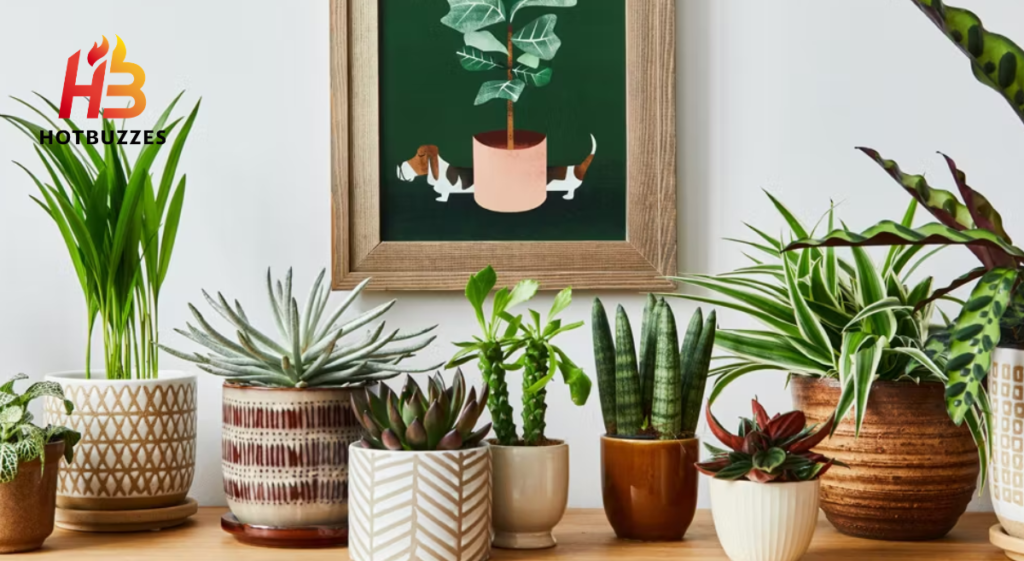
Something significant shifted in the houseplant world at the very start of 2026. After a few years of post-pandemic plateau where search interest and sales volumes were normalising, Google search interest in houseplants recorded a notable single-month spike in January 2026 — the first major resurgence since the peak of the 2020 to 2021 indoor gardening boom. According to Terrarium Tribe’s April 2026 houseplant statistics page, the global indoor plant market was valued at approximately 21 billion dollars in 2025, with compound annual growth rates projected at four to five percent through 2030.
Traditional garden centres and nurseries retained 50.10 percent of the total indoor plant market share in 2025, but online platforms are expected to grow at a 10.05 percent CAGR through 2031 — significantly faster than the overall market, reinforcing a hybrid retail model rather than a full digital shift.
Ideal Home’s January 2026 trend feature quotes the Royal Horticultural Society directly: houseplant sales grew by 15 percent over the last year, with the RHS predicting Swiss cheese plants (Monstera) and dragon trees (Dracaena) leading the jungle foliage trend, and calatheas, ferns, and bonsai continuing to top trends through 2026. Accio’s March 2026 houseplant trend analysis identifies the defining characteristics of the 2026 buyer as someone drawn to both classic low-maintenance varieties and rare visually striking specimens simultaneously — with a notable shift toward sustainable gardening practices and a focus on plants that offer aesthetic appeal, air purification, and mental wellbeing benefits in one package.
This guide covers the fifteen plants that matter most in 2026, with detailed care profiles, a direct head-to-head comparison of the top five across twelve dimensions, and the research context behind each ranking decision.
What the 2026 Market Data Reveals About Plant Buying Behaviour
Before the plant-by-plant list, the statistics that underpin this ranking deserve their own section because they explain every decision made here.
Terrarium Tribe provides the clearest market snapshot available: Google Trends data from 2020 to 2026 shows that search interest for houseplants peaked sharply during early lockdown periods in 2020 and gradually normalised through 2022 to 2024, stabilising at levels above pre-pandemic baselines. The January 2026 spike confirms that a new wave of consumer enthusiasm is building rather than the market simply maintaining its elevated post-pandemic floor. The four to five percent projected CAGR through 2030 suggests this is not a short-term phenomenon. Find the perfect houseplants for frequent travelers with this guide to hardy, easy-care indoor plants.
How Consumer Preferences Are Changing in 2026:
Amra and Elma provide the most specific demographic and category data. The 66 percent American household ownership figure means most 2026 purchases are additions to existing collections rather than first-time impulse buys — which changes what sells. The buyer in 2026 already has a plant. They are choosing a second or third plant with more knowledge about what their home environment can support, what care commitment they can realistically sustain, and what visual effect they are trying to achieve. That sophistication is why low-maintenance plants are surging while genuinely difficult plants are not. The 33 percent low-maintenance demand surge among millennials is not a statement about laziness — it is a statement about self-knowledge and realistic planning.
The Three Key Motivations Driving Houseplant Purchases in 2026:
Urbane Eight’s January 2026 indoor plant trend guide describes 2026’s defining themes as style, wellness, and living art in the home. These three motivations map onto three distinct buying segments: style buyers who want statement plants that make rooms look designed; wellness buyers who want plants with documented air quality, humidity, or psychological benefits; and living art buyers who want the collector-level visual interest of rare or unusual specimens. The fifteen plants below collectively address all three motivations — which is why this list spans from near-indestructible beginners’ plants to collector-level specimens with specific and demanding care requirements.

1. Monstera deliciosa
Monstera has not faded, and understanding why explains something important about the 2026 market. The RHS named it the leader of the 2026 jungle foliage trend in Ideal Home’s January 2026 coverage. Urbane Eight identifies it as a statement-making plant that functions as living décor, fitting naturally into 2026 design trends that prioritise texture and personality. All About Planties’ February 2026 guide lists Monstera Thai Constellation as a social media favourite with constellation-like creamy-white variegation on its leaves — confirming the genus continues generating collector enthusiasm far beyond its standard green form.
The Secret Behind Monstera’s Staying Power:
What keeps Monstera at number one in 2026 is not nostalgia but genuine visual evolution combined with a care profile that suits the 45 percent foliage plant market dominance. The standard Monstera deliciosa produces large, deeply fenestrated leaves that grow larger and more perforated with each successive leaf as the plant matures — making it a plant that becomes more impressive over time rather than remaining static. The Thai Constellation and Albo Borsigiana variegated forms keep the genus relevant for collectors willing to pay premium prices, while the standard form remains the most purchased large indoor plant across most global markets at a price accessible to every budget.
Native Habitat and the Hemiepiphyte’s Climbing Nature:
According to Wikipedia’s entry on Monstera deliciosa, the plant is native to humid tropical forests in the lowlands of southern Mexico and Central America. It is a hemiepiphyte — a plant that starts life rooted in soil but climbs trees using aerial roots as it matures, eventually growing high into the forest canopy. Understanding this natural climbing behaviour explains why a moss pole transforms the plant’s growth so dramatically indoors. When aerial roots have something to attach to, the plant registers that it is climbing and produces progressively larger, more fenestrated leaves in response — exactly as it would when scaling a tree in the wild.
The Science of the Split: Programmed Cell Death and Leaf Fenestration:
The New York Botanical Garden explains that the perforations in monstera leaves develop through a genetically encoded process in which cells organise their own destruction through programmed cell death — one of the most unusual biological mechanisms in the common houseplant world.
Care at a glance: Bright indirect light. Water when the top two to three inches of soil are dry — every one to two weeks in summer, every three to four weeks in winter. Well-draining soil in a pot with drainage holes. Add a moss pole to encourage larger, more fenestrated leaves and faster growth. Feed monthly in spring and summer at half the recommended fertiliser strength.
2026 market position: Category leader in foliage plants. RHS-endorsed. Strong across beginner, intermediate, and collector segments simultaneously. The defining houseplant of the decade, showing no sign of losing its position.
2. Snake Plant (Dracaena trifasciata)
Thursday’s December 2025 trending houseplants report places the snake plant among its core trending species for 2026, noting it delivers numerous benefits while being easy to maintain across varying temperatures and light levels. Urbane Eight describes it directly: tough, tolerant, and great for beginners — traits that are specifically trending in 2026 as the 33 percent low-maintenance demand surge reshapes the market.
Why the Snake Plant Is Winning Over 2026’s More Experienced Plant Buyer:
The snake plant is the direct beneficiary of the structural shift in what the 2026 plant buyer wants. Where the 2020 buyer was willing to attempt any plant regardless of care complexity, the 2026 buyer — already owning plants, already having killed some — is making deliberate choices about what fits their lifestyle. The snake plant fits every lifestyle because its requirements are genuinely minimal. Here’s a rewrite with varied sentence openers:
Place it in a bright south-facing room, and it grows reasonably quickly. Tuck it into a dim north-facing hallway, and it survives indefinitely. A bedroom benefits from the oxygen it releases at night through CAM photosynthesis. Meanwhile, a home office gets the advantage of formaldehyde filtration from furniture off-gassing. Wherever it is placed and however infrequently it is watered, it maintains its architectural upright form without any visible compromise.
Snake Plant Varieties for 2026 (Moonshine, Raven, and Cylindrica):
The expanding variety range in 2026 is giving experienced snake plant owners specific reasons to buy again. The Moonshine variety with its almost silver-white leaves suits the warm neutral interior palettes Urbane Eight identifies as dominant for the year. The Raven variety with near-black foliage serves the dark, cocooning interior trend. The Cylindrica with round spear-like leaves reads as contemporary sculpture rather than a standard houseplant. Three completely different visual directions from one species with identical minimal care requirements — which is exactly the kind of proposition that drives repeat purchases from existing plant owners.
Snake Plant Air-Purifying Benefits (NASA Clean Air Study Findings):
NASA’s Clean Air Study documented the snake plant’s removal of formaldehyde, benzene, xylene, and nitrogen oxides from indoor air — one of the broadest pollutant removal profiles of any common houseplant. Its CAM photosynthesis makes it biologically appropriate for bedroom placement in ways that most houseplants are not.
Care at a glance: Low to bright indirect light. Water every two to four weeks in summer. Once a month or less in winter. No humidity requirements whatsoever. Tolerates fluorescent lighting. Survives extended absences of four to eight weeks without visible decline. Mildly toxic to pets if ingested. Explore the best indoor plants for cyclists with busy schedules and active lifestyles.
2026 market position: Mass market. Consistent top seller across all retail channels from supermarkets to specialist nurseries. New varieties driving repeat purchases from existing owners who thought they had already explored this species fully.
3. ZZ Plant (Zamioculcas zamiifolia) — Structural Beauty Through Total Neglect
Thursd places the ZZ plant among its core trending species for 2026, describing it as nearly indestructible with glossy foliage that delivers consistent appeal regardless of care consistency. Urbane Eight echoes this directly: nearly indestructible with glossy foliage that thrives through neglect — traits that are trending in 2026 specifically because they match what the experienced plant buyer has learned from previous plants they could not keep alive.
The Science Behind the ZZ Plant’s Drought Tolerance:
The ZZ plant’s survival capability is rooted in specific biology rather than general toughness. Its underground rhizomes — which look like small potatoes when the plant is removed from its pot — store both water and nutrients that the plant draws from whenever soil conditions are unfavourable. These rhizomes are so effective at water storage that an established ZZ plant can go three to six weeks without watering in normal indoor conditions without showing any visible stress. In cooler, lower-light conditions — exactly the closed-home environment that most travellers and frequent absentees create — the survival window extends further because the plant’s reduced metabolic rate in dim light means it draws from its reserves more slowly.
Market Data Confirms the ZZ Plant’s 2026 Popularity:
According to Amra and Elma, hardy species such as Zamioculcas zamiifolia are set to headline 2026 alongside drought-tolerant succulents — a direct market data endorsement of its position on this list. The waxy surface of every ZZ leaf is not merely cosmetic. It is a moisture barrier that prevents transpiration losses from the leaf surface, contributing to the plant’s legendary drought tolerance alongside the rhizome water reserves.
The Raven ZZ is the 2026 variant generating the most specific design and collector interest. Its foliage is so dark it reads as almost black in most indoor lighting conditions — a deep, high-gloss charcoal-green that becomes progressively darker as each new leaf matures. This colour suits the deep cocooning interior palettes that Ideal Home’s 2026 coverage identifies as dominant for the year. A single Raven ZZ in a matte ceramic pot against a warm neutral wall delivers the kind of considered, deliberate interior moment that characterises the most admired plant displays in 2026.
Care at a glance: Low to medium indirect light. Water every three to four weeks. No humidity requirements. Stores water in underground rhizomes. Completely tolerates the dim closed-home conditions that stress most other plants. Toxic to pets and humans if ingested.
2026 market position: Strong and growing. The Raven variety specifically driving premium purchases within an otherwise accessible price category. Structural low-maintenance credentials make it the most defensible purchase recommendation for any buyer who has previously struggled to keep plants alive.

4. Pothos (Epipremnum aureum) — The Comeback Driven by New Varieties
Urbane Eight identifies pothos as a 2026 trend staple: a fast-growing trailing plant that adds lush greenery and fits into any space across all skill levels. Thursd lists pothos relatives among the trending species showing strong current demand, noting their wide range of leaf patterns and colours is bringing new energy to a plant family that could easily have become overlooked through familiarity.
Pothos Makes a 2026 Comeback with Statement-Making Varieties:
Pothos became so ubiquitous during the pandemic plant boom that it nearly lost its design appeal — it was everywhere, and everywhere often means nowhere in terms of visual distinctiveness. In 2026, it is finding a genuine second moment through varieties that look fundamentally different from the standard Golden Pothos that filled millions of homes between 2020 and 2022. Cebu Blue pothos has silvery-blue foliage with an almost metallic quality that photographs dramatically and looks genuinely unusual in person. Njoy pothos has bold green and white contrast where each leaf carries a clearly defined bi-colour pattern. Global Green pothos has a two-tone interior patterning visible within each leaf — darker green at the margins with lighter green at the centre, creating a reversed colour effect from standard variegated plants.
Cebu Blue, Njoy, and Global Green (Why These Pothos Varieties Drive Repeat Purchases):
These are not minor variations requiring close inspection to appreciate. They are plants that look fundamentally different from each other and from anything the standard pothos buyer already owns. For the 66 percent of households that already have a plant and are making a considered second or third purchase, this visual variety within an accessible, low-maintenance species is exactly the proposition that drives purchasing decisions in 2026.
The propagation ease remains unchanged across all varieties and is one of the most practically valuable characteristics any houseplant can have. Stem cuttings placed in a glass of clean water with the nodes submerged develop visible roots within two to three weeks. Those rooted cuttings can then be potted into soil to grow into full plants. A single purchased pothos in any variety can produce an expanding collection over a season at no additional cost — which is the kind of compounding return on a modest initial investment that experienced plant owners specifically seek out.
Care at a glance: Low to bright indirect light depending on variety — solid green varieties in lower light, variegated varieties in brighter conditions to maintain colour intensity. Water when the top two inches of soil are dry. Propagates readily in water. Fast-growing with minimal care demands. Toxic to pets and humans if ingested.
2026 market position: Comeback driven by new varieties that look genuinely different from the standard forms already in most collections. Strongest in the repeat-purchase segment where existing plant owners are refreshing their displays with visually distinct additions to a familiar, trusted species.
5. Alocasia Silver Dragon — The Collector Category Goes Mainstream
Real Simple’s 2026 expert roundup quotes PlantIn expert Lotte Berendsen directly and specifically: the Alocasia Silver Dragon is already on track to be one of 2026’s trendiest houseplants. This plant has thick, almost metallic leaves with a gray-green tone and dark, painted-like veins. It stands out for its elegance and the exotic touch it adds to interiors. Its preference for humid environments makes it an ideal houseplant for bathroom placement specifically.
Silver Dragon Goes Mainstream:
What makes the Silver Dragon significant for 2026 is not just its appearance but what its rising mainstream availability represents about where the market is heading. It has moved from specialist-only availability at significant premium prices into wider distribution through major plant retailers without losing its visual distinctiveness — a transition that has historically opened a category to mass-market purchasing while sustaining premium pricing for the most desirable specimens. Accio confirms that rare and exotic plants with distinctive foliage patterns remain highly desirable in 2026, and the Silver Dragon sits at the intersection of genuine visual distinctiveness and now-achievable availability for a much wider buyer pool than previously had access to it.
The Dragon-Scale Leaf Effect:
The leaves are the reason for all of this attention. They are heavily textured in a pattern that genuinely resembles dragon scales — the plant was named for a reason. The base colour is a silvery green-grey that catches light differently at different times of day. Dark, clearly defined veins run across each leaf surface, creating a graphic contrast visible from across a room. And because the texture is three-dimensional rather than merely printed onto the leaf surface, the plant looks different from different viewing angles and in different lighting conditions in a way that flat-leaved plants simply cannot replicate.
Amra and Elma confirm the collector dimension: rare and exotic plants with distinctive foliage patterns remain highly desirable in 2026. The Silver Dragon represents the entry point into collector territory that does not require collector-level investment — bridging the gap between the accessible mainstream foliage market and the rarefied world of expensive aroids in a way that makes it genuinely relevant to both segments simultaneously.
Care at a glance: Bright to medium indirect light — no direct sun, which scorches the lighter leaf areas. Allow soil to partially dry between waterings. Humidity above 50 percent preferred — bathroom or kitchen placement is ideal. Temperatures consistently between 15 and 30 degrees Celsius. Avoid cold drafts, which cause immediate visible stress. Toxic to pets and humans if ingested.
2026 market position: Collector crossover moving from specialist to mainstream distribution. Maintains premium pricing while achieving wider availability. The most visually distinctive plant accessible to mainstream buyers in 2026.
Comparison: The Top 5 Plants in 2026
For anyone choosing between the five plants above, this table cuts directly to what differentiates them across twelve dimensions that determine long-term owner satisfaction.
| Dimension | Monstera | Snake Plant | ZZ Plant | Pothos | Alocasia Silver Dragon |
|---|---|---|---|---|---|
| Care difficulty | Easy | Very easy | Very easy | Very easy | Moderate |
| Light requirement | Bright indirect | Low to bright | Low to medium | Low to bright | Bright indirect |
| Watering frequency | Every 7 to 14 days | Every 14 to 28 days | Every 21 to 28 days | Every 5 to 10 days | Every 7 to 14 days |
| Humidity needed | 40% average | None | None | 40% average | 50%+ preferred |
| Absence tolerance | 2 weeks | 4 to 8 weeks | 4 to 6 weeks | 1 to 2 weeks | 1 to 2 weeks |
| Pet safety | Toxic | Mildly toxic | Toxic | Toxic | Toxic |
| Air purifying | Yes | Yes — NASA | Limited | Yes | Limited |
| Growth rate | Fast | Slow | Slow | Fast | Moderate |
| Visual impact | Very high | High | High | Medium to high | Very high |
| Beginner suitability | Yes | Yes | Yes | Yes | No |
| Price accessibility | Accessible | Accessible | Accessible | Accessible | Mid-premium |
| 2026 market position | Category leader | Mass market star | Growing strongly | Comeback variety | Collector crossover |
The verdict from this comparison: Snake plant and ZZ plant win for travellers and low-care homes — both deliver real visual presence with absence tolerances of four to eight weeks that no other plant on this list approaches. Monstera wins for long-term visual transformation as it grows progressively more impressive over time. Alocasia Silver Dragon wins for distinctiveness — no other plant on this list looks remotely like it. Pothos wins for speed of return and the compounding benefit of free propagation. The snake plant alone scores well across every single dimension and represents the most universally defensible single-plant recommendation for 2026.
6. Philodendron Birkin — Pinstripes That Stop Visitors Mid-Sentence
Real Simple’s 2026 expert roundup gives the Philodendron Birkin a specific 2026 expert endorsement from Jane Dobbs at Allan’s Gardeners: it brings soft, natural energy into a space with distinctive white pinstripe variegation. Urbane Eight identifies the Philodendron Birkin among the social media-influenced plants driving 2026 collector and design interest, noting that visually rich plants function like living décor and fit right into 2026 design trends that prioritise texture and personality.
The Birkin’s Chimera Origin and Ever-Changing Pinstripes:
The Birkin is a cultivated chimera — a stabilised sport mutation of Philodendron Rojo Congo that emerged spontaneously in cultivation rather than being deliberately bred. This origin explains its most distinctive characteristic: every new leaf carries a different pinstripe pattern from the previous one. Some leaves are heavily striped with prominent cream or white running from the central vein outward. Others have subtler, finer stripes. A few come out almost entirely cream. The unpredictability within a reliable overall aesthetic is what makes it consistently interesting rather than quickly familiar — a quality that matters enormously when choosing a plant intended to occupy the same shelf for years.
Stable Variegation Without the Reversion Risk:
Unlike chimeric collector plants such as the Monstera Albo Borsigiana, where the variegation can revert unpredictably to solid green, the Birkin’s pinstripe pattern is stable. It is a chimera, but the variegation pattern is consistent across new growth, which means the buyer gets the visual interest of variegated foliage without the risk and price premium associated with truly unstable chimeric plants. Its compact upright growth — maximum height around 60 to 90 cm — suits desk and shelf placement where larger floor plants would completely overwhelm the space.
Care at a glance: Bright indirect light is essential to maintain pinstripe intensity — in lower light, new leaves may emerge plain green rather than striped. Water when the top inch of soil feels dry. Average household humidity is sufficient, though it appreciates slightly higher levels. Monthly feeding at half strength in spring and summer. Toxic to pets and humans if ingested.
2026 market position: Strongly trending. Accessible price point for variegated foliage that gives collector-adjacent buyers a meaningful plant without the chimeric price premiums of the rarest variegated species.
7. Dracaena Janet Craig (Dracaena fragrans)
Thursday gives Janet Craig a specific 2026 endorsement as a top-trending houseplant: renowned for its air-purifying properties, removing formaldehyde, benzene, and trichloroethylene, making it attractive to environmentally conscious consumers. Its dark green glossy leaves and distinctive shape make it a statement piece in any interior design. Interestingly, Dracaena is also considered lucky in Chinese culture, adding cultural appeal alongside its visual and environmental characteristics.
Dracaena’s 2026 Comeback as a Statement Plant:
The RHS endorsed Dracaena alongside monstera as leading the 2026 jungle foliage trend in Ideal Home’s January 2026 coverage. Its 2026 resurgence reflects a pattern of experienced plant owners rediscovering species previously dismissed as purely commercial plants and recognising their genuine value as home statement plants. The Janet Craig produces long, strap-like deep green leaves that emerge from a central crown, creating an architectural fountain form that reads as genuinely dramatic at larger sizes. In a bright room with a quality ceramic pot, a large Janet Craig looks like something an interior designer placed deliberately — not something that ended up in the corner of a lobby.
The Janet Craig’s Fluorescent-Light Tolerance:
The tolerance of fluorescent lighting is a specific and underappreciated advantage that makes it useful in rooms where other plants simply cannot function. Home offices away from windows, spare bedrooms without strong natural light, internal hallways — the Janet Craig grows in all of these while most statement plants would decline within weeks.
Care at a glance: Low to medium indirect light. Genuinely tolerates fluorescent lighting. Water when the top two to three inches are dry. Use filtered water to prevent the tip browning that fluoride and chlorine in tap water cause. Average household humidity. Toxic to pets if ingested.
2026 market position: Reassessment-driven growth. Increasing presence in home settings after years of primarily commercial placement. The RHS endorsement provides the institutional credibility that validates home buyers choosing a plant previously associated with offices.
8. Peace Lily (Spathiphyllum) — Air Purification and Flowers in Low Light
Urbane Eight lists the peace lily among the 2026 trend staples: elegant blooms with air-purifying potential that fit into any space and suit a range of skill levels. Thursd confirms it among the core trending species, noting it delivers numerous benefits simultaneously — combining flowering capability with one of the broadest air purification profiles of any common houseplant.
Peace Lily’s Broad Air-Purifying Range:
The peace lily covers the widest documented range of indoor air pollutants of any plant on this list — formaldehyde, benzene, trichloroethylene, xylene, toluene, and ammonia. This includes ammonia removal, a capability almost no other commonly kept houseplant shares. Ammonia is found in household cleaning products and builds up in bathrooms, kitchens, and utility rooms. The peace lily’s placement in these environments addresses a real and continuous pollution source rather than the theoretical off-gassing from furniture that is most relevant only when first purchased.
How the Peace Lily Signals When It Needs Water:
One of its most useful and underappreciated characteristics is its watering communication. The plant droops noticeably and dramatically when it needs water — leaves go limp and soft, stems bend toward the pot. Water it thoroughly, and within thirty to sixty minutes the entire plant recovers to its full upright position. This clear, reversible communication makes it one of the easiest plants to read and one of the most forgiving for the owner who wants to respond to the plant’s signals rather than monitoring soil moisture on a schedule.
It is also one of the very few plants that produces flowers in genuinely low light — the elegant white spathes bloom in spring and summer even in rooms without strong natural light, making it the best flowering option for any dim interior space on this entire list.
Care at a glance: Low to medium indirect light. Keep soil consistently moist but never waterlogged. Plant droops visibly when it needs water and recovers fully within an hour of being watered. Humidity above 40 percent preferred. The most straightforward watering indicator of any plant on this list. Toxic to pets and humans if ingested.
2026 market position: Consistent performer across multiple trend cycles. Air purification credentials, flowering capability in low light, and clear watering communication make it one of the most beginner-friendly high-reward plants available.
9. Calathea and Prayer Plant (Calathea and Maranta)
Real Simple’s expert roundup gives prayer plants a specific 2026 endorsement from Jane Dobbs: they add interest and personality to a room with their bold patterns and movement — the leaves fold at night. They continue to gain popularity as people seek more interactive and visually stimulating plants. The RHS specifically predicted calatheas to top trends through 2026 in Ideal Home’s coverage — an institutional botanical authority directly endorsing a plant category.
Nyctinasty — The Nightly Leaf Movement Setting Prayer Plants Apart:
The defining characteristic of prayer plants and calatheas — the one that no other common houseplant shares — is the nightly leaf movement. Leaves fold upward in the evening as light fades, a movement triggered by changing light conditions rather than temperature or time of day. In the morning, they lower again as light returns. The mechanism is called nyctinasty and involves water moving in and out of specialised motor cells at the base of each leaf stalk. For the 2026 buyer interested in plants that make a home feel genuinely alive rather than static and decorative, this movement quality is the precise sensory experience they are seeking.
Calathea and Maranta Varieties Worth Collecting:
The variety within the calathea and maranta family adds to the category’s appeal. Broad silver stripes define Calathea orbifolia’s leaves. Burgundy undersides and intricate patterning mark the Calathea medallion. Elongated, spotted leaves give Calathea lancifolia — the rattlesnake plant — its name. Maranta leuconeura with its rabbit’s tracks pattern in deep green on lighter green. Each variety looks genuinely different from the others while sharing the same movement behaviour and similar care requirements — which means building a small collection within one plant family is both achievable and visually rewarding.
Care at a glance: Medium to low indirect light. Keep soil consistently moist but not waterlogged — these plants dislike drying out. Humidity above 60 percent reduces leaf crisping dramatically. Use filtered or rainwater to prevent tip spotting from fluoride and chlorine. Non-toxic to pets and humans — one of the few genuinely pet-safe plants on this list with real visual impact.
2026 market position: RHS-endorsed with growing demand among buyers seeking interactive and visually stimulating plants that respond visibly to their environment.
10. Anthurium Velvet Varieties — The 2026 Collector Category Shift
Accio identifies anthurium hybrids as among the plants representing the new rare plant trend driving the collector segment in 2026 and beyond — specifically noting Anthurium Veitchii among the 45 indoor plants experts recommend for the year. All About Planties lists Anthurium Veitchii specifically among the expert-recommended plants for 2026, describing its commanding presence in any interior.
The velvet-leaf anthurium category represents the most significant collector market shift of 2026: experienced collectors who previously focused on climbing aroids like variegated monsteras and rare philodendrons are moving toward sculptural dark-leaved anthuriums as the next frontier. King of Spades anthuriums produce enormous dark leaves with a surface texture that genuinely resembles velvet — the description is not metaphorical but a direct description of the leaf structure under normal viewing conditions. Papillilaminum hybrids push this further with leaves that combine velvet texture with unusual elongated forms not found in more common species.
The dark, moody aesthetic of velvet anthuriums aligns precisely with the cocooning interior design trend that Ideal Home’s 2026 coverage identifies as dominant for the year — deep, rich interior palettes using plants with genuine visual weight rather than the lighter, airier aesthetic of ferns and trailing plants.
Care at a glance: Bright indirect light — direct sun scorches the velvet leaf surface. High humidity above 60 percent is essential for leaf quality. Stable position — velvet anthuriums respond poorly to frequent relocation. Moderate watering with excellent drainage to prevent root rot. Toxic to pets and humans if ingested.
2026 market position: Premium collector category. The defining collector category shift of 2026 is that the market moves from climbing aroids toward sculptural velvet-leaved species.

11. Ficus Family — Year of the Ficus
Urbane Eight makes the clearest statement about this category available from any 2026 trend source: the Ficus genus is having a major moment in 2026. Industry experts and plant trend forecasters have officially named the year the Year of the Ficus, with a resurgence in popularity across multiple species — from classic fiddle leaf figs to rubber plants and weeping figs.
Three Ficus Varieties Defining 2026:
The three ficus varieties worth knowing specifically for 2026: Ficus lyrata (the fiddle leaf fig), tall and architectural, with large violin-shaped leaves that define a room at full size. Ficus elastica — the rubber plant — available in deep forest green or dramatic burgundy with glossy, thick leaves that catch and reflect light. Ficus triangularis — the newest and most talked-about face of the genus in 2026 — with distinctively triangular leaves that create a naturally geometric pattern unlike anything in the standard plant market.
The “Year of the Ficus” (Design Meets Cultural Meaning):
The Year of the Ficus designation from the industry is both a reflection of genuine buying momentum and a driver of it. Amra and Elma confirm the cultural dimension: the 2026 plant buyer is drawn to plants with design identity and cultural meaning, not just visual appeal. The ficus family delivers both — a genus with deep cultural significance in multiple traditions, now being rediscovered as a design element rather than merely a generic green backdrop.
Care at a glance: Bright indirect light for all three main varieties. Water when the top two to three inches are dry. Most critical instruction for all ficus: find a good position and do not move the plant. Ficus dislike environmental changes and respond to being moved by dropping leaves. Average to moderate humidity. Mildly toxic to pets if ingested.
2026 market position: Year of the Ficus designation driving the strongest institutional marketing push behind any single plant category in 2026. All three wide varieties show strong sales growth.
12. Spider Plant (Chlorophytum comosum) — The Safe and Proven Performer
Urbane Eight identifies the spider plant as a 2026 trend staple: easy to propagate, great in hanging baskets, and suitable for any space across a range of skill levels. Thursd lists it among the core trending species, noting it delivers numerous benefits consistently across multiple trend cycles — a rarer characteristic than it sounds, as most plants fade in and out of trending status while the spider plant maintains its position through genuine performance rather than media coverage.
The spider plant holds a unique position on this list as the only drought-tolerant, air-purifying, visually interesting plant that is completely verified as non-toxic to both cats and dogs by the ASPCA. For the 2026 market where pet ownership and plant ownership are both at historic highs, this combination — effective, forgiving, and safe — makes the spider plant the recommendation for any pet-owning household that the other plants on this list cannot match.
NASA’s Clean Air Study verified its removal of formaldehyde, carbon monoxide, xylene, and toluene from indoor air. The cascading pups that trail from a mature specimen add visual movement and interest to a shelf or hanging basket display without requiring any additional care effort — they develop naturally and can be propagated in water to produce new plants at no cost when the parent plant is large enough to be producing them regularly.
Care at a glance: Medium to bright indirect light. Water when the top two inches of soil are dry. No special humidity requirements. Produces trailing pups on arching stems that propagate readily in water. Non-toxic to cats and dogs — the most important characteristic for pet-owning households.
2026 market position: Consistent multi-cycle performer. Pet-safe positioning increasingly valuable as the overlap between high pet ownership and high plant ownership households grows.
13. Coleus (Plectranthus scutellarioides) — The Colour Specialist Moving Indoors
Real Simple’s 2026 expert roundup includes Coleus Chocolate Mint as one of the specifically trending houseplants for 2026, noting it will bring breathtaking beauty into any home interior. Accio confirms the broader trend driving coleus interest: consumers are seeking unique foliage, vibrant colours, and plants that can thrive in diverse indoor environments — and coleus delivers all three simultaneously at an accessible price point.
Coleus’s Unmatched Range of Leaf Colour:
No other common houseplant produces this range of leaf colour combinations within a single species. Deep burgundy, electric lime, coral pink, bronze, cream, scarlet, and combinations of all of these — sometimes on one leaf simultaneously — give coleus a visual range that no other plant category approaches. In 2026, the Chocolate Mint variety specifically — dark chocolate-brown leaves with mint-green margins — generates significant interest for its alignment with the cocooning interior palette trend. The Wizard series provides one of the broadest colour ranges available in compact, upright forms that suit indoor placement without the legginess that some coleus varieties develop in lower light.
Why Pinching Is Essential for Coleus Care:
The key management skill that determines whether a coleus stays beautiful or declines quickly is pinching. Whenever a stem tip elongates and develops a pointed flower bud, pinching it out immediately prevents the plant from entering the flowering-and-seeding lifecycle that causes leaf colour to fade and growth to decline. Regular pinching every two to three weeks keeps the plant compact, bushy, and producing the dense colourful foliage that makes it worth growing. This active management requirement distinguishes coleus from the more passive care most other plants on this list allow — but the visual reward for that small additional effort is proportionally greater.
Care at a glance: Bright indirect light to maintain colour intensity — dark varieties are more sun-tolerant than light ones. Keep soil evenly moist but never waterlogged. Warm temperatures above 10 degrees Celsius. Pinch off flower spikes as soon as they appear. Non-toxic to pets and humans.
2026 market position: Growing indoor market presence after years as primarily an outdoor summer bedding plant. The Chocolate Mint variety specifically trending in 2026 for its alignment with dark interior palettes.
14. Large Phalaenopsis Orchid — Bloom Duration as the Core Market Advantage
Amra and Elma place flowering plants at 27 percent of indoor plant market distribution — the second largest category after foliage plants. Within that substantial category, the Phalaenopsis orchid dominates volume because it delivers what no other commonly kept flowering plant can match: blooms that last three to nine months per cycle and reliable reblooming with basic temperature management.
Why Orchid Bloom Duration Changes the Value Equation:
The bloom duration advantage is worth dwelling on because it changes the economics of plant purchasing fundamentally. A bunch of cut flowers from a florist might last one to two weeks. A potted chrysanthemum or cyclamen lasts four to eight weeks in good conditions. A healthy Phalaenopsis in full bloom maintains its flowers for three to nine months — at the high end, this means a single plant purchased in October is still flowering in June. The cost per month of visual impact is lower than almost any alternative flowering option available at any price point.
The Sill’s 2026 Endorsement of Large Orchids:
The Large Orchid appeared specifically in The Sill’s 2026 top picks — significant endorsement from one of the most influential plant retailers in the US market, and a clear signal that the shift toward plants offering functional advantages is translating into commercial buying patterns in 2026. A large, mature Phalaenopsis in full bloom with multiple flower spikes is one of the most visually impressive houseplants available regardless of comparison category.
Reblooming is triggered by the same temperature differential that the plant experiences in its native Southeast Asian habitats — a ten-degree Fahrenheit drop between day and night temperatures for two to three weeks, typically achievable by moving the plant near a cool window in autumn. This simple environmental manipulation reliably initiates a new flower spike within weeks, making the large orchid the flowering plant with the most controllable and repeatable blooming cycle of any species on this list.
Care at a glance: Bright indirect light — never direct sun. Water every one to two weeks using the root colour indicator: silver-grey roots signal readiness, green roots mean the plant is still hydrated. Bark potting medium — never soil. Quarter-strength balanced fertiliser at every watering during the growing season. A temperature drop of ten degrees Fahrenheit at night for two to three weeks in autumn triggers reblooming. Non-toxic to pets and humans.
2026 market position: Dominant within the flowering plant category. Sustained commercial importance driven by an unmatched bloom duration advantage.
15. Bird of Paradise (Strelitzia nicolai) — The Room-Defining Floor Plant
Urbane Eight identifies bird of paradise as one of the statement-making plants that defines 2026’s living art interior trend — a floor plant that creates focal points in open-concept rooms and brings biophilic design into everyday living spaces. Multiple 2026 interior trend reports from independent sources identify it as the large floor plant that completes the jungle aesthetic that the RHS named as the year’s dominant houseplant direction.
How Bird of Paradise Transforms a Room’s Scale:
At mature indoor size — two to three metres with leaves up to 90 cm wide — the Bird of Paradise does something that no smaller plant on this list can achieve: it makes a room feel architecturally different from what it was before the plant arrived. It is not simply that the room has a plant in it. The room’s proportions feel different. The ceiling feels higher. The empty corner that previously registered as dead space now registers as an intentional design decision. This transformation effect is what drives the continued strong demand for large floor plants specifically in 2026 despite the low-maintenance trend favouring more modest sizes in other plant categories.
Lacination (Why Bird of Paradise Leaves Look Better With Age):
The leaves split naturally as the plant matures — a process called lacination that occurs as a biological adaptation to wind exposure in the plant’s native South African habitat. Each leaf develops natural perforations and splits that create a more textured, dramatic appearance over time without any care intervention. The result is that the plant looks progressively more interesting as it ages — the opposite of most plants, which look best when young and fresh and gradually become more ordinary as they mature.
Amra and Elma identify biophilic design as one of the key drivers of 2026 plant purchasing — the human need to connect with natural elements in constructed indoor environments. The Bird of Paradise delivers this biophilic effect more powerfully than any other plant on this list because its scale and silhouette genuinely evoke the feeling of being in a tropical environment rather than simply being adjacent to a decorative plant.
Care at a glance: Bright indirect to some direct morning light — this plant needs more light than most on this list and rewards the brightest available window position. Water when the top two inches of soil are dry. Average household humidity is adequate for established plants. Feed monthly with balanced fertiliser in spring and summer. Requires genuine floor space in a room large enough to accommodate eventual spread. Mildly toxic to pets if ingested.
2026 market position: Strong and growing. The definitive large floor plant recommendation across interior design media and plant trend reporting in 2026. Represents the biophilic design movement’s influence on mainstream plant purchasing.

Research-Based Statistics That Define the 2026 Houseplant Market
The numbers from the most credible available sources deserve their own section because they explain why this list looks the way it does and where the market is heading. According to Terrarium Tribe, the global indoor plant market reached approximately $21 billion in value in 2025 with a four to five percent compound annual growth rate projected through 2030. Google Trends data confirms the January 2026 search spike as the first major resurgence since the 2020 to 2021 peak — indicating renewed momentum rather than plateau continuation. Traditional garden centres retain 50.10 percent of market share, but online platforms are growing at 10.05 percent CAGR — nearly three times faster than the overall market.
The 2026 Houseplant Market by the Numbers:
According to Amra and Elma, 66 percent of American households now own at least one houseplant — marking houseplants as a mainstream household item comparable to electronics or kitchen appliances in terms of penetration. Foliage plants hold 45 percent of indoor plant market distribution. Flowering plants hold 27 percent. Succulents hold 18 percent. Low-maintenance varieties saw a 33 percent surge in demand among millennial urban consumers. The global succulent market reached 2.1 billion dollars with a 7.8 percent CAGR — the fastest-growing segment. Indoor air-purifying plants now account for 40 percent of urban consumer purchases. Potted plants account for approximately 30 percent of all floriculture purchases as consumers favour long-term enjoyment over cut flowers.
According to Ideal Home, citing the Royal Horticultural Society directly, houseplant sales grew by 15 percent over the last year — confirming sustained market expansion rather than normalisation from pandemic highs. According to Accio, the houseplant market in 2026 is characterised by strong interest in both classic low-maintenance varieties and rare visually striking specimens simultaneously — with a notable shift toward sustainable gardening practices and plants that offer aesthetic appeal, air purification, and mental wellbeing benefits in a single purchase.
FAQs
Q1: Which plant is genuinely best for a complete beginner in 2026?
Snake plant and ZZ plant are the two strongest beginner choices. Both tolerate low light, survive irregular watering, are widely available at accessible prices, and provide immediate visual presence that improves over time. Urbane Eight confirms both as 2026 trend staples specifically because they are beautiful, reliable, and easy to care for. If choosing between the two, the ZZ plant is more forgiving of overwatering than the snake plant.
Q2: Which plant delivers maximum visual transformation per pound or dollar spent?
Monstera and bird of paradise both deliver room-defining impact as they grow. A small monstera purchased at an accessible price grows into an architectural statement over two to three years. A bird of paradise begins making a room feel genuinely different from the moment it reaches floor-plant size. The monstera offers the better value at entry price. The bird of paradise offers the more dramatic transformation at maturity.
Q3: Is the 2026 plant market genuinely growing or is the data misleading?
Growing. Terrarium Tribe confirms the January 2026 search spike, the 15 percent sales growth cited by the RHS in Ideal Home, and the four to five percent CAGR projection all point in the same direction. Three independent sources — market research firms, Google Trends data, and RHS sales figures — all confirm sustained expansion.
Q4: Which plants on this list are safe for cats?
Calathea and prayer plants, spider plants, large Phalaenopsis orchids, and coleus are generally considered non-toxic to cats and dogs. Monstera, pothos, ZZ plant, peace lily, alocasia, anthurium, and dracaena are all toxic to pets if ingested. Always verify using the ASPCA toxic plant database by botanical name before making any purchase for a pet-owning household.
Q5: What does the RHS specifically predict for 2026?
According to Ideal Home’s January 2026 coverage, the RHS named monstera and dragon trees (Dracaena) leading the jungle foliage trend. Calatheas, ferns, and bonsai are predicted to continue topping trends. Houseplant sales grew 15 percent in the previous year. Urbane Eight additionally reports that industry experts have named 2026 the Year of the Ficus — the strongest single-category institutional prediction of the year.
Conclusion
The fifteen plants on this list reflect what the 2026 indoor plant market actually looks like when market data from multiple credible sources, botanical authority from the RHS, consumer trend reporting, and practical care reality are considered together rather than relying on any single source.
The headline finding from combining all these signals is that 2026 is the year plant ownership matured from a trend into a practice. The 66 percent household penetration figure means most buyers already have plants. The 33 percent low-maintenance demand surge means they have learned what works in their specific home. The rising collector interest in velvet anthuriums and the Silver Dragon means the hobby has a gradient from beginner to enthusiast with clear entry points at every level.
Whatever stage of plant ownership you are at, there is a plant on this list that specifically suits it. The snake plant for the first-time buyer who wants reliability. The Philodendron Birkin for the intermediate owner who wants visual distinctiveness without chimeric price premiums. The velvet anthurium for the committed collector moving beyond aroids. The Phalaenopsis orchid for the practical buyer who wants visual impact measured in months rather than weeks. Start with one that matches your honest care capacity rather than your aspirational one. The collection grows from there.

I started growing houseplants a little over 3 years ago with a single pothos cutting and a windowsill. Since then, my collection has grown to more than 40 plants (snake plants, ZZ plants, peace lilies, a couple of orchids). I’m still intimidated by, and one aloe that has survived three moves despite my best efforts to kill it.
I’m not a botanist or a certified horticulturist, I’m a hobbyist who’s made most of the beginner mistakes so you don’t have to: overwatering, underwatering, ignoring root rot until it was too late, and putting a sun-loving plant in the darkest corner of my apartment. HotBuzzes is where I share what I’ve actually learned from keeping plants alive (and occasionally failing), along with research from reliable sources to back it up.