
Most people put a lot of thought into which plant to buy. They research the lighting requirements, review the watering schedule, and find the perfect spot in the house. Then they grab whatever pot looks nice and call it a day. That last step is where many houseplants quietly start to struggle.
Pot size affects almost everything about how a plant grows, how fast the soil dries, how the roots develop, how often the plant needs watering, and whether or not it becomes susceptible to root rot. Getting the pot size right does not have to be complicated, but it does require knowing a few key principles that most beginners never get told.
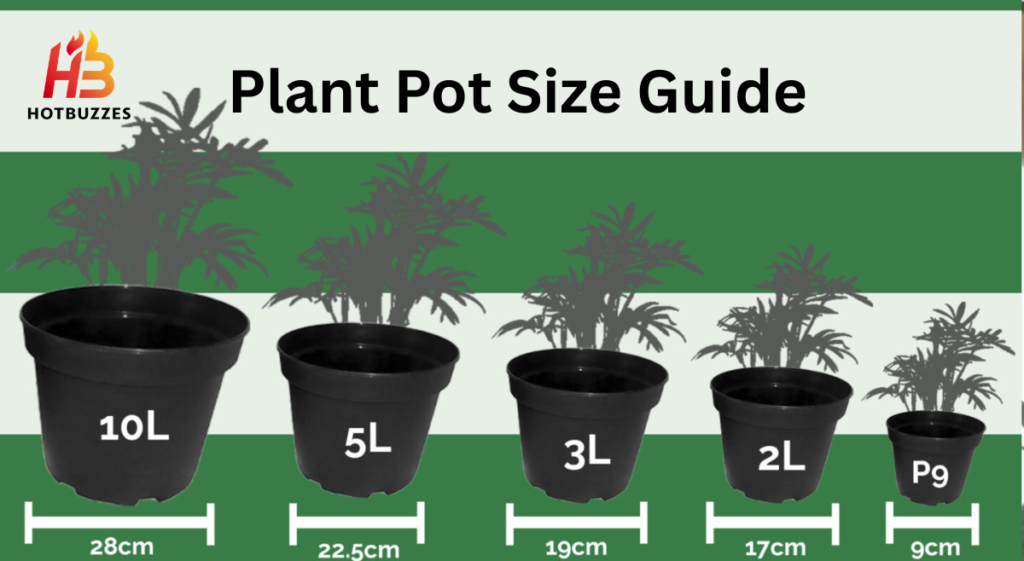
This guide covers everything from how pot size affects plant health, to what happens when a pot is too big or too small, to a size-by-size breakdown of which plants suit which pots, plus pot material comparisons so you can make the right choice on both dimensions.
Why Pot Size Matters More Than Most People Realise
The relationship between a pot and a plant is not just about aesthetics or fitting the plant in a space. Pot size directly controls the moisture environment around the roots, which in turn affects almost everything else.
According to Jay Scott’s Collection, there is evidence that doubling a pot size can encourage up to 40% more growth in some plants. That is a significant number. But the same source is clear that pot size cuts both ways; a pot that is too large creates problems just as serious as one that is too small.
Leaves and Soul puts it simply: a pot that is too big holds water for too long, which increases the risk of root rot and fungus gnats. A pot that is too small dries too fast, stalls growth, and forces roots to circle the inside of the container with nowhere to go.
A study published by the Society for Experimental Biology, referenced by Decker’s Nursery, used 3D MRI root scans to observe how potted plants extend their roots toward the sides of the pot, and how quickly this happens.

The researchers found that the pot’s environment signals to the plant how much space is available, shaping how the root system develops. The exact mechanism is not fully understood, but the implication is clear: pot size is not passive. It actively shapes how a plant grows. Keep your plants healthy by learning how to identify, prevent, and fix overwatering problems.
What Happens When the Pot Is Too Small?
A pot that has become too small for the plant it holds is called root-bound or pot-bound. This is one of the most common houseplant problems and is easy to spot once you know what to look for. Plant Care for Beginners describes the signs clearly. Roots growing out of the drainage holes at the bottom of the pot are one of the most obvious indicators.
You can also check by carefully removing the plant from its pot. If the roots are tightly circling the bottom or wrapped around each other with barely any soil visible between them, the plant has outgrown its container.
Other signs of a pot that is too small include:
- The plant wilts within a day or two of watering, even though the watering amount seems right. The soil dries out extremely fast because there is so little of it relative to the root mass drawing moisture from it.
- Growth has stalled despite the right light and feeding. When roots have no room to expand, the plant has no physical space to support new growth above ground.
- The plant becomes top-heavy and tips over easily. A large canopy of leaves on top of a pot that is too small for the root system creates an unstable balance.
- Water runs straight through the pot without soaking in. When roots fill the entire pot, there is no loose soil left to absorb water, so it runs out the drainage holes almost immediately.
According to Grow Tropicals, most houseplants actually recover more easily from being slightly root-bound than from sitting in a pot that is too large. This is an important point for beginners to understand: you do not need to rush repotting at the first sign of a tight fit.
What Happens When the Pot Is Too Large?
Choosing a pot that is too big is an equally common mistake, and it is often more damaging than a pot that is too small. The core problem is moisture. When a small plant sits in a large pot, most of the soil volume is not being reached by the plant’s root system.
That unused soil stays wet long after the plant has drawn moisture from the area around its roots. That consistently damp zone is exactly the environment that pathogens like Pythium and Phytophthora, the organisms responsible for root rot, thrive in.
Wayfair’s planting guide notes that if your plant shows yellowing from root rot, this likely means the pot is too big, and the plant should be transferred to a smaller pot with fresh soil immediately.
Jay Scott’s Collection confirms that if a container is too large and the soil dries slowly due to poor drainage, the roots end up sitting in damp conditions, and the chance of root rot increases significantly.
Signs that a pot is too large:
- Soil stays wet for more than a week after watering, even with drainage holes.
- The plant looks lost in the pot, and the soil volume seems wildly disproportionate to the root system.
- Yellowing leaves appear despite normal watering because root rot has taken hold in the saturated soil.
- The plant grows slowly or not at all despite good light conditions.
Plant Care for Beginners offers a practical test: if the roots of the plant are more than two inches below the top of the soil when you remove the plant and examine them, the pot is likely too large.

The Golden Rule: How Much Bigger to Go When Repotting
The standard guidance across almost every plant care resource is consistent and straightforward. Wayfair says to choose a planter that is at least two inches wider than the plant’s current pot. Plant Care for Beginners gives the same figure, one to two inches larger in diameter than the current pot when repotting.
Grow Tropicals is even more specific, recommending an increase of just two to three centimeters in diameter. Going up one standard nursery pot size, for example, from a 12 cm pot to a 14 cm pot, is usually appropriate for most houseplants.
Decker’s Nursery adds a useful note for larger plants: when repotting from a container that is ten inches in diameter or less, going up by one to two inches is enough. For plants already in large pots over ten inches, moving up two to three inches in diameter is appropriate.
The key principle from Leaves and Soul is to match the pot to the root ball, not to the spread of the leaves above ground. The canopy can be much wider than the roots, and sizing to the foliage consistently leads to pots that are too large for the actual root system.
Plant Pot Size Chart for Common Houseplants
Here is a general size guide for common houseplant types, based on standard care guidance from Leaves and Soul and Wayfair:
Very small plants and seedlings — 2 to 4 inch pots (5 to 10 cm). Examples: small succulents, cacti, herb seedlings, propagated cuttings. These small pots suit plants with minimal root systems that prefer their soil to dry out quickly. Perfect for tabletop and windowsill displays.
Small to medium houseplants — 4 to 6 inch pots (10 to 15 cm). Examples: pothos, peperomia, small snake plants, small ZZ plants, African violets, spider plants. This is the most common size range for beginner houseplants. It offers enough room for the roots to grow while keeping the soil volume manageable. Turn a single pothos plant into many by learning the basics of water propagation.
Medium houseplants — 6 to 8 inch pots (15 to 20 cm). Examples: medium pothos, peace lily, rubber plant in its early stage, monstera young plants, ferns. This size is appropriate for plants that are actively growing and developing a fuller root system.
Large houseplants — 8 to 12 inch pots (20 to 30 cm). Examples: mature snake plants, ZZ plants, larger peace lilies, bird of paradise young plants, philodendrons. These sizes accommodate plants that have been growing for a year or more and need significant root space.
Statement and floor plants — 12 to 18 inch pots (30 to 45 cm). Examples: mature monstera, fiddle leaf fig, large rubber plants, and larger bird of paradise. Floor-standing plants with well-developed root systems. These pots are heavy and should be placed on plant trolleys if you need to move them.
Trees, large shrubs, and statement plants — 18 to 24 inch pots (45 to 60 cm). Examples: indoor palms, large ficus, mature olive trees kept indoors. According to Leaves and Soul, containers in this range hold between 30 and 75 liters of potting mix and suit small trees and large statement plants.
Special Cases: Plants That Like Smaller Pots
Not all plants follow the bigger-is-better rule when it comes to space. Some actually thrive when slightly root-bound. Jay Scott’s Collection notes that succulents and cacti tend to thrive in shallow containers because they have one main taproot that goes deep and many shorter, finer roots that stay close to the surface.
Giving them a large, deep pot means excessive soil that holds moisture the plant does not need and cannot process fast enough. Peace lilies, spider plants, and snake plants are known to bloom more readily when their roots are somewhat tight in the pot.
These plants channel energy into flowering when they sense their root space is limited. Repotting them into a significantly larger container can actually delay or suppress blooming.
Orchids are another exception. Most orchids grow best in relatively small, clear nursery pots where roots can access light and air. Orchid roots are adapted to attach to surfaces rather than grow through deep soil, which is why orchid pots often have holes along the sides as well as the bottom.
Pot Depth: Shallow vs. Deep
Width gets most of the attention in pot sizing, but depth matters too, and different plants have very different needs. Wayfair describes the principle clearly: the right planter height should have enough room to house the roots, plus an additional one to two inches of space at the top for watering.
Planters that are short and wide are better suited for shallow-rooted plants like succulents, cacti, African violets, and spider plants. Planters Etc recommends deep pots for plants with extensive root systems, such as palms, ficus, and fruiting plants, where the extra depth is crucial to support both growth and stability.
A useful rule of thumb: if a plant grows tall and upright, it tends to need more depth. If it spreads wide and low or grows as a rosette, shallower pots are usually more appropriate.

Pot Material: Terracotta, Plastic, and Ceramic
Choosing the right pot size is only half the equation. The material the pot is made from affects how quickly the soil dries, which has a direct impact on how often you water and how much risk of root rot your plant faces.
Terracotta
Terracotta is unglazed, fired clay. According to Nebraska Extension at the University of Nebraska-Lincoln, the porosity of clay allows air and moisture to penetrate through the sides of the pot. The roots that grow close to the inner wall of the pot benefit from this airflow. Terracotta also acts like a wick, pulling excess moisture away from the soil and evaporating it through the pot walls.
Potting Corner gives a clear recommendation: terracotta if you tend to overwater. The material forgives the tendency to water too frequently by drying the soil faster. The downside is that terracotta dries out quickly, which is a disadvantage for plants that prefer consistent moisture.
It is also heavier than plastic, more fragile, and can crack in freezing temperatures if brought outdoors and left in cold weather. Best for: succulents, cacti, snake plants, ZZ plants, lavender, herbs, and any plant that prefers dry conditions between waterings.
Plastic
Plastic pots are 100% non-porous. Water exits only through the drainage holes or by evaporating from the soil surface. This means soil in plastic pots stays moist significantly longer than in terracotta, sometimes two to three times as long, according to Potting Corner.
Indoor Gardening Essentials notes that plastic pots work well for plants that like consistent moisture and for people who tend to forget to water. They are also lightweight, durable, inexpensive, and available in every size imaginable.
The risk with plastic comes when drainage is inadequate. Without a drainage hole, water pools at the bottom, and the anaerobic conditions at the root zone become a fast track to root rot. Best for: ferns, calathea, peace lilies, tropical plants that prefer consistent moisture, and people who water infrequently.
Glazed Ceramic
Glazed ceramic pots are clay pots that have been fired with a liquid glass-like coating. The glaze seals the clay and makes the pot essentially non-porous, behaving much like plastic in terms of moisture retention.
Living Etc quotes plant expert Lisa Eldred Steinkopf, who explains that glazed ceramic works well for plants that prefer to stay moist, while unglazed terracotta suits plants that like to dry out. The most important requirement regardless of material, she emphasises, is drainage, a drainage hole, not gravel in the base as a substitute.
Grow Tropicals warns that many decorative ceramic pots are sold without drainage holes. If you love a ceramic pot that has no hole, use it as a cachepot: place the plant in a standard nursery pot with drainage holes inside the decorative ceramic pot.
This protects your surfaces while keeping the plant’s roots in proper draining conditions. Best for: moisture-loving tropical plants where aesthetics are important. Use with a liner or nursery pot if there is no drainage hole.
Signs It Is Time to Repot
Knowing when to move a plant to a larger pot is just as important as knowing what size to choose. Planters Etc identifies the clearest signs:
- Roots are visible growing out of the drainage holes at the bottom of the pot. This is the most reliable indicator that the plant has run out of room.
- The plant has slowed or stopped growing during the active season, spring and summer, despite good light and regular feeding.
- The plant is wilting more frequently than usual, even with consistent watering, because the small amount of soil dries out almost immediately after watering.
- The plant is becoming visibly top-heavy, with a large crown of leaves that makes the pot feel unstable.
- The soil seems to repel water rather than absorb it, with water running straight out of the drainage holes almost immediately.

Grow Tropicals recommends giving a newly purchased plant two to four weeks to settle before considering repotting, unless roots are severely bound and the plant is visibly stressed. Many nursery plants are already in appropriately sized pots, and repotting too soon into a larger container can cause unnecessary stress.
How to Repot a Plant Correctly
Once you have chosen the right new pot, the repotting process itself follows a simple sequence. Leaves and Soul recommends watering the plant a day before repotting, which reduces stress and makes the roots easier to work with without tearing.
Gently ease the plant out of its current pot. If it is stuck, squeeze the sides of a plastic pot or run a knife around the inside edge of a rigid pot to loosen the root ball. Avoid pulling the plant out by the stem.
Once out, loosen any tightly circling roots with your fingers. Trim away any dark, soft, or mushy roots; these are dead or rotting and will not recover. Set the plant in the new pot so the crown sits roughly an inch below the rim. This leaves space for watering without soil spilling over.
Fill around the roots with fresh potting mix and gently press it down to eliminate large air pockets. Water thoroughly and allow the excess to drain. Do not fertilize right after repotting; give the plant two to four weeks to settle into its new environment before resuming feeding.
Pot Size Reference by Plant
| Plant | Starter Pot | Mature Pot |
|---|---|---|
| Pothos | 10 cm | 15 to 20 cm |
| Monstera | 15 cm | 25 to 35 cm |
| Snake Plant | 10 cm | 20 to 25 cm |
| Spider Plant | 10 cm | 15 cm (keep snug) |
| Peace Lily | 12 cm | 18 to 20 cm |
| Rubber Plant | 15 cm | 25 to 30 cm |
| ZZ Plant | 12 cm | 20 to 25 cm |
| Succulents | 6 to 8 cm | 10 to 12 cm |
| Fiddle Leaf Fig | 20 cm | 30 to 40 cm |
FAQs
Q1: How often should I repot my houseplants?
Most houseplants benefit from repotting every one to two years, usually in spring at the start of the growing season. Slow-growing plants like cacti and snake plants may only need repotting every three to four years. Fast-growing plants like pothos and philodendrons may need annual repotting.
Q2: Can I put a small plant in a large pot to avoid repotting later?
It is generally not recommended. A large pot holds far more soil than the small root system can use, and the excess soil stays wet, creating root rot conditions. It is better to repot gradually, going up one size at a time.
Q3: Do I need to put rocks or gravel at the bottom of the pot?
No. According to The Sill, the most important requirement is a drainage hole. Gravel at the bottom does not improve drainage in the way most people believe; it actually raises the level at which water pools. A drainage hole is the only reliable way to let excess water escape.
Conclusion
Choosing the right pot size for a houseplant is one of those things that feels minor until you understand how much it affects plant health. Too small and the roots become bound, growth stalls, and the plant dries out too fast.
Too large and the soil stays wet, root rot sets in, and the plant declines despite looking like it has plenty of room. The one to two inch rule, going up one size at a time when repotting, is reliable for most houseplants and prevents both of these problems.
Pair that with a pot material that matches your watering habits, make sure there is always a drainage hole, and check on your plants every few weeks for the signs that tell you a repot is coming. Get those basics right, and your plants will have the foundation they need to grow well for years.

I started growing houseplants a little over 3 years ago with a single pothos cutting and a windowsill. Since then, my collection has grown to more than 40 plants (snake plants, ZZ plants, peace lilies, a couple of orchids). I’m still intimidated by, and one aloe that has survived three moves despite my best efforts to kill it.
I’m not a botanist or a certified horticulturist, I’m a hobbyist who’s made most of the beginner mistakes so you don’t have to: overwatering, underwatering, ignoring root rot until it was too late, and putting a sun-loving plant in the darkest corner of my apartment. HotBuzzes is where I share what I’ve actually learned from keeping plants alive (and occasionally failing), along with research from reliable sources to back it up.