
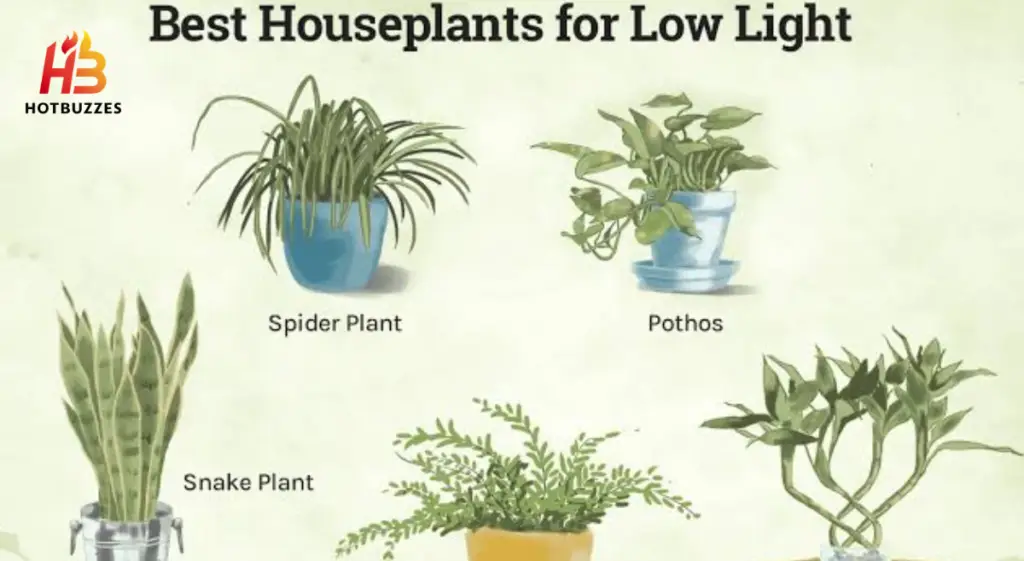
Living in an apartment often means dealing with light conditions that most plant guides quietly skip over. North-facing windows. Rooms blocked by the building next door. Hallways that barely pick up a glow even at midday.
Balconies that shade the rooms directly behind them. Standard plant advice built around bright indirect light and south-facing windows simply does not apply to a lot of apartment spaces, and many people end up with a string of dead plants before they realise the problem was never their care routine. It was always the wrong plant for the space.
The plants on this list were chosen specifically because they handle genuine apartment light conditions, not the kind of light found in glossy plant content shoots, but the kind found in real rooms that are a bit too far from a window, face the wrong direction, or are flanked by other buildings that cut the light significantly. Before getting into the list itself, one clarification is important. Low light does mean no light.
What Low Light Actually Means
This is the most misunderstood term in plant care, and getting it wrong explains why most low-light plant guides fail people in practice. Plant Care Club gives the clearest practical definition available. Low light is a room with a north-facing window, a spot six to ten feet from an east or west window, or a room lit primarily by overhead fluorescent or LED lights.
You can read a book without a lamp, but the room does not feel bright. Your hand casts only a faint, diffused shadow. Very low light is a hallway with no direct window, a corner of a large room far from all windows, or a bathroom with a small frosted window.
The Sill’s low-light plant guide explains what happens to plant biology in reduced light: low light conditions cause less energy and nutrition to be available to the plant. As seasons change, so does the amount of daylight, and the plant needs to be adjusted accordingly to maintain its exposure.

Too little light inhibits chlorophyll production and causes wilting. Plants cannot grow in complete darkness because they need light to survive. Like humans and animals, plants have a circadian rhythm that determines their day and night cycles. With that established, here are the plants that genuinely thrive in apartment low-light conditions.
1. ZZ Plant (Zamioculcas zamiifolia)
The ZZ plant is the most reliable plant for a genuinely dim apartment and earns the top spot on every credible low-light list for reasons that go well beyond marketing language. Pro Garden Review explains why better than most: if you are searching for a plant that can survive in a windowless office or a basement apartment, the ZZ plant is your best candidate.
Its waxy, deep green leaflets reflect what little light is available, making it remarkably tolerant of fluorescent lighting and extreme neglect. The large potato-like rhizomes beneath the soil surface act as a built-in reservoir for both water and nutrients, which is why missed waterings rarely cause lasting damage.
The Plant Manual’s low-light guide confirms that ZZ plant, snake plant, and cast iron plant are the safest choices for the darkest livable spots in an apartment. Its research combines guidance on indoor light levels from the University of Minnesota Extension, the University of Maryland Extension, and the University of Missouri Extension.
Care at a glance: Water every two to four weeks in summer. Once a month or less in winter. No humidity requirements. Low to medium indirect light. Tolerates fluorescent lighting. Mildly toxic to pets.
2. Snake Plant (Dracaena trifasciata)
The snake plant handles low-light conditions better than almost any other commonly available houseplant while providing one of the strongest architectural statements possible. Its tall, upright leaves make it look deliberate in a corner rather than like something placed there as an afterthought.
Low Light Leaf describes its light adaptability directly: it thrives with minimal sunlight and is notable for its longevity. Many owners keep it for years with little maintenance. The Plant Manual confirms it as one of the top ten genuinely reliable low-light plants, specifically naming it alongside the ZZ plant and cast iron plant as the safest options for the dimmest apartment corners.
The snake plant also has one of the most extensively documented air-purifying profiles of any houseplant. Plant Care Club references the NASA clean air study and notes the snake plant filters toxins, including formaldehyde and benzene, from indoor air, a meaningful benefit for apartment spaces with limited ventilation.
For 2026, newer varieties are adding interest to a plant that was already popular. The Moonshine snake plant, with its silvery-pale leaves, fits perfectly into the warm neutral interior palettes trending right now. The Raven ZZ and Raven snake plant crossover aesthetic appeals to apartment owners working with darker, moodier colour schemes.
Care at a glance: Water every two to four weeks in summer. Once a month or less in winter. Low to bright indirect light. Average household humidity. Very forgiving of neglect. Mildly toxic to pets. Explore the best care practices to help your Philodendron Birkin grow strong and maintain its unique variegation.
3. Pothos (Epipremnum aureum)
If the ZZ plant is the most resilient low-light choice and the snake plant is the most architectural, the pothos is the most versatile. It trails, it climbs, it fills shelves and hangs from baskets, and it does all of this in light conditions that most trailing plants cannot handle.
Garden Betty’s low-light plant guide gives the most useful variety guidance for apartment conditions: go for darker-leaved varieties such as the classic Golden Pothos and avoid variegated types like Marble Queen Pothos, which need extra light since they are less efficient than solid-green plants at photosynthesising. In a dim apartment, solid green always outperforms variegated in terms of health and growth speed.
The Plant Manual confirms pothos as one of the best ten genuinely low-light tolerant plants and notes that it is one of the most beginner-proof houseplants available, regardless of light level. Water when the soil has gone about halfway dry, and let vines hang down for a trailing effect, or attach them to a plant totem for larger leaf development.
Proven Winners notes that pothos is one of the few houseplant varieties that can actually flower in low light, given the right growing conditions, which makes it additionally rewarding in dim spaces where most plants produce only foliage.
The heartleaf philodendron deserves mention here as a close relative worth considering alongside pothos. Garden Betty describes it as a low-maintenance vining plant that, in its original habitat, grows in the shade of trees, exactly the biology that translates to reliable low-light performance indoors.
Care at a glance: Water when the top two inches of soil are dry. Low to bright indirect light, solid green varieties handle the dimmest conditions best. Average household humidity. Grows quickly in good conditions, more slowly in low light. Toxic to pets if ingested.

4. Peace Lily (Spathiphyllum)
The peace lily is one of the few houseplants that will produce flowers in low-light conditions, which makes it uniquely valuable for apartment owners who want something beyond permanent foliage in dim rooms.
Low Light Leaf names peace lily as one of the best low-light indoor plants specifically for bedrooms and dim living spaces, while Proven Winners lists it among the handful of plants that will genuinely flower in low light when given the right growing conditions. The elegant white spathes bloom reliably in spring and summer, even without direct natural light.
Plant Care Club highlights the peace lily’s practical communication style: it droops clearly when it needs water and recovers visibly within hours of being watered. This makes it one of the most beginner-friendly options for apartment owners because the plant tells you exactly when to act rather than requiring regular soil checks.
The peace lily also sits near the top of NASA’s clean air study results. It removes formaldehyde, benzene, and carbon monoxide from indoor air, three pollutants commonly found in apartments with limited ventilation, new paint, or furniture off-gassing. For a small apartment with limited airflow, this is a meaningful benefit beyond visual appeal.
One care note that matters particularly in dim apartments: peace lilies prefer consistently moist soil rather than the boom-and-bust watering cycles that work for drought-tolerant plants. Letting it dry out completely between waterings in a dim room slows recovery and causes yellowing.
Care at a glance: Water when the top inch of soil is dry, or the plant begins to droop slightly. Low to medium indirect light. Humidity above 40 percent. Keep soil consistently moist. Toxic to pets and humans if ingested.
5. Cast Iron Plant (Aspidistra elatior)
The cast iron plant earned its name through a century of practical observation and remains the strongest performer of all for rooms that feel genuinely impossible for plants.
The Plant Manual places it alongside the ZZ plant and the snake plant as one of only three plants genuinely suitable for the darkest livable apartment spaces. Room for Tuesday describes it as known for surviving in low light and less than ideal conditions, with deep green, slightly arching leaves that look traditional and timeless, ideal for rooms with wooden furniture, textured textiles, or traditional interior styles.
The plant’s Victorian-era reputation deserves genuine attention. It was specifically popular during a period when homes in England were lit primarily by gas or candlelight and had small, often north-facing windows. The plants that survived those conditions genuinely handle dim light; they were tested under real-world conditions for generations.
Plant Care Club confirms it is one of the few plants that grows well under fluorescent lighting, which extends its usefulness to offices, windowless bathrooms, and rooms lit entirely by overhead artificial light. It is also one of the slowest-growing plants on this list, which is a practical advantage for apartment owners who do not want a plant that quickly outgrows its allocated space.
Low Light Leaf confirms the cast iron plant as suitable for the very darkest indoor spots, rooms with small frosted windows, hallways, and spaces far from all natural light sources, placing it in the company of snake plant and ZZ plant as one of the only plants that can genuinely handle these conditions without a grow light.
Care at a glance: Water when the top inch or two of soil feels dry. Low to medium indirect light. Tolerates fluorescent lighting. Slow grower that stays compact and manageable for years. Pet-safe and non-toxic, one of the few genuinely safe options on this list.
6. Chinese Evergreen (Aglaonema)
Chinese evergreen is one of the most underrated low-light apartment plants available. It comes in a remarkable range of colours and leaf patterns, from deep forest green through silver, pink, and red, while handling genuinely dim conditions better than most decorative-leaved plants.
Low Light Leaf lists Chinese evergreen as one of the plants that can survive in dark rooms with limited natural light, alongside snake plant, ZZ plant, and cast iron plant. Proven Winners identifies it as originating in tropical rainforest understories and explains that many of these plants grow natively where little light penetrates the canopy, making their indoor low-light adaptability a genuine evolutionary trait rather than a marketing claim.
The Plant Manual places Chinese evergreen in its top ten best low-light indoor plants, noting that it stays healthy, holds its shape, and forgives the slower drying soil that occurs when light is limited.
One important variety note: the more colourful varieties of Chinese evergreen, the pinks and reds, need significantly more light than the darker green and silver varieties to maintain their colour. For genuinely dim apartment spaces, choosing a solid green or silver-green variety such as Aglaonema Silver Bay or Aglaonema Maria is the practical choice for reliable low-light performance.
Care at a glance: Water when the top two inches of soil are dry. Low to medium indirect light, solid green varieties handle the dimmest conditions best. Humidity above 40 percent preferred. Feed monthly during spring and summer at half strength. Toxic to pets if ingested.
7. Spider Plant (Chlorophytum comosum)
Spider plants are among the most forgiving of all apartment houseplants, and their ability to produce cascading offshoots, called spiderettes or pups, that hang from the mother plant gives them a distinctive look that fills shelves and baskets in a way few other plants can replicate in low light.
Low Light Leaf describes it as a popular low-light indoor plant known for adaptability and graceful arching leaves, with trailing offshoots that add movement and freshness to any dim corner. It grows even in low-light corners or under artificial lighting and requires only that the soil stays slightly moist to continue producing healthy foliage.
Proven Winners lists the spider plant among the few houseplant varieties that will flower in low light when conditions are right. The small white flowers that appear on the trailing stems are modest but add seasonal interest without requiring any additional light source.
Spider plants are also one of the few plants on this list that are completely safe for pets. The Plant Manual specifically recommends the spider plant as one of the better low-light-tolerant candidates to verify by scientific name for pet safety. Chlorophytum comosum is confirmed non-toxic by the ASPCA, unlike many popular low-light plants.
Care at a glance: Water when the top two inches of soil feel dry. Low to bright indirect light. Average household humidity. Produces pups on trailing stems that root readily in water. Pet-safe and non-toxic. Air-purifying benefits confirmed by multiple independent studies.

Signs Your Plant Needs More Light
Every plant on this list is genuinely low-light tolerant, but each has a limit. Knowing when that limit is being reached allows you to adjust before the problem becomes serious. Discover everything you need to know to keep your Monstera healthy and thriving indoors.
Proven Winners lists the clearest indicators. These include weak, leggy, or stunted growth. Faded foliage colour is another sign. Yellow or brown leaves, especially at the base of the plant, are also common.
General failure to thrive, despite correct watering, is another warning sign. Moving the plant slightly closer to a window can help. Adding a small grow light can also help. In most cases, these symptoms improve within a few weeks.
The Sill confirms that plants displaying symptoms of too little light, specifically leggy growth or faded colouring, should be moved to a brighter spot near a window. In rooms with no windows, light levels can be boosted effectively with an artificial grow light.
One reassuring point for apartment owners dealing with slow growth is this. Low Light Leaf notes that if your plants are alive and green, but growing slowly, that is completely normal in low light. It does not mean anything is wrong with your care. Slow growth in dim conditions is the plant operating correctly within its available resources, not a sign of failure.
FAQs
Q1: Which plant on this list is genuinely safest for the darkest apartment rooms?
The ZZ plant, cast iron plant, and snake plant are the three strongest performers for genuinely dark spots. The Plant Manual specifically names all three as the safest choices for the darkest livable apartment spaces.
Q2: Which plants on this list are safe for pets?
The cast iron plant, parlour palm, spider plant, and heartleaf philodendron are generally considered safer around cats and dogs. The ZZ plant, snake plant, peace lily, pothos, Chinese evergreen, and dracaena are all toxic to pets if ingested. Always verify with the ASPCA database before purchasing.
Q3: Can any of these plants survive without a window?
With a grow light running for eight to twelve hours per day, the ZZ plant, snake plant, cast iron plant, dracaena, spider plant, and heartleaf philodendron all perform well in windowless rooms. Without any light source, no plant survives long-term.
Q4: How often should I water low-light plants?
Less often than you would in brighter conditions. Low light slows evaporation and plant metabolism, which means soil stays moist longer. Most plants on this list need watering every ten to fourteen days in summer and every three to four weeks in winter. Always check the top two inches of soil rather than following a fixed calendar.
Conclusion
A dim apartment is not a plant-free apartment. It is simply an apartment that needs the right plants. Every plant on this list has genuine biological adaptations to low light, not marketing language, but real evolutionary traits developed over millions of years in forest understories where direct sunlight rarely reached the ground.
The ZZ plant’s rhizome storage system. The cast iron plant’s Victorian-era reputation for outlasting everything else in genuinely dark rooms. The snake plant’s efficient photosynthesis in minimal light.
The peace lily’s ability to produce flowers without a sunny window. These are not coincidences. They are specific biological features that make these plants genuinely suited to the conditions most apartments deliver.

Ajwa Asif is a writer with a passion for plants, gardening, and creating educational content. She researches plant-related topics using reputable horticultural resources and shares practical advice to help readers grow healthier plants and build confidence in their gardening journey. Her content focuses on delivering clear, reliable, and user-focused information.