
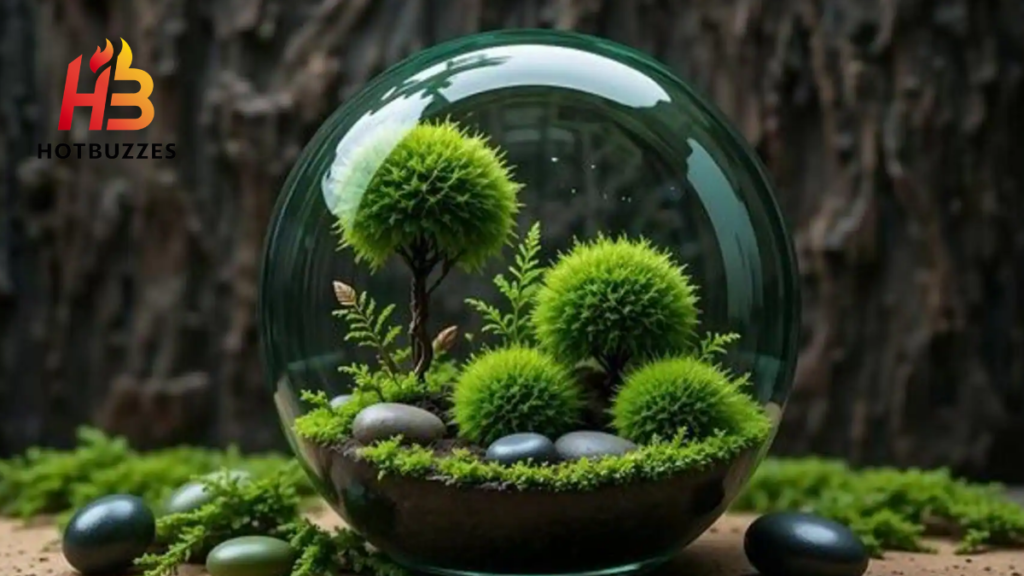
A moss terrarium is one of the easiest and most rewarding ways to bring a living piece of forest indoors. Unlike flowering houseplants that demand fertilizer schedules and pruning routines, moss survives on very little. It has no roots, no seeds, and no flowers. It simply pulls water and nutrients straight through its leaf surface. This is exactly why the environment inside its glass container matters so much more than the environment around most other plants. Once the humidity, light, and airflow inside the jar are balanced, a moss terrarium can sit quietly on a shelf for years. It asks for almost nothing in return.
This guide walks through everything a beginner needs to build and maintain a healthy moss terrarium. It covers choosing the right container and moss species, along with reading the warning signs of too much or too little moisture. Additionally, it includes a quick reference table for care ranges and research-backed facts that explain why moss terrariums behave the way they do.
Designed for anyone starting their first moss terrarium, it also helps those whose existing terrarium has started to look dull, patchy, or discolored. The guide follows the order a new terrarium owner would need it, starting with supplies and setup. From there, it moves through the core environmental factors of light, water, temperature, and airflow. Finally, it ends with troubleshooting, seasonal care, and research-backed facts that explain the reasoning behind the recommendations.
Tools and Supplies Checklist
Before starting a moss terrarium, it helps to gather everything in one place. This is better than discovering a missing item halfway through the build. Most of the items below are inexpensive and widely available at general nurseries or hardware stores. A full starter set rarely requires a specialty terrarium shop.
Container and Base Materials
A clear glass container with or without a lid is a core material. Small stones or pea gravel are needed for the drainage layer. Activated charcoal and a moss-friendly soil mix are also core materials. Long tweezers or planting tools make it much easier to position moss and any companion plants inside a narrow-necked jar. They do this without crushing the layers underneath. Having everything measured out in advance keeps the actual assembly quick and mess-free.
Maintenance Supplies
A fine mist spray bottle covers most of the ongoing maintenance needs. A small hygrometer and a pair of small scissors for pruning are also useful. Some hobbyists also keep a soft paintbrush on hand. It is useful for gently brushing debris or condensation drips off the moss surface without damaging it. A turkey baster or pipette can also be used for removing any pooled excess water from the bottom drainage layer if it ever builds up too high. Keeping these tools stored together near the terrarium makes routine checks faster and more likely to actually happen on schedule.
Why Moss Works So Well in a Closed Container
Moss belongs to a group of plants called bryophytes, which lack a vascular system and true roots. Instead, moss absorbs moisture directly through its leaf tissue, which is why humidity plays such an outsized role in keeping it alive, according to MossLab. In its natural habitat, moss is often found growing in shaded, damp spots such as forest floors, the base of tree trunks, and the crevices between rocks, places where sunlight is indirect and moisture is constant.
A glass terrarium recreates that microclimate almost perfectly. The enclosed space traps moisture that would otherwise evaporate. The glass filters direct sun into the soft, indirect light moss prefers. This is why moss terrariums are often described as low-maintenance rather than no maintenance. The setup does most of the work, but a few conditions still need to be checked regularly.
How Moss Absorbs Water and Nutrients
Because moss lacks roots, it cannot pull water from deep in the soil the way a fern or a pothos can. Its leaves, which are frequently just one cell layer thick, absorb moisture directly from humid air. They also absorb moisture from water sitting on their surface. Nutrients arrive the same way, dissolved in that surface moisture rather than drawn up through a root system. This is also why moss reacts so quickly, for better or worse, to changes in humidity. A houseplant with roots has some buffer against a dry afternoon. Moss does not.

Recreating a Forest Microclimate in Glass
A well-built terrarium is really a miniature weather system. Moisture rises from the soil. It condenses on the cooler glass walls. It trickles back down. This repeats a small version of the water cycle found in an actual forest. Indirect light passes through the glass the same way it filters through a forest canopy, softened rather than blocked. Getting close to this natural balance is the entire goal of terrarium building. Every decision covered in this guide exists to support that balance. This includes container choice and soil layering.
Step-by-Step Setup Guide
Once the supplies are gathered, building the terrarium itself is a fairly quick process. Each layer deserves a bit of care. Most beginner terrariums, built in a container under one gallon in size, can be fully layered and planted in well under an hour.
Preparing the Container
Start by washing the container thoroughly with warm water and letting it dry completely. Any leftover soap residue or dust can affect how moisture behaves against the glass later, so a plain water rinse is usually safer than using cleaning products.
Adding the Base Layers
Pour in the drainage layer of stones or gravel first. Aim for a layer roughly one to two inches deep, depending on the size of the container. Add a thin layer of activated charcoal on top of the stones. Then add the soil layer. Press it down gently so it settles without becoming overly compacted.
Placing the Moss and Any Companion Plants
Position the moss on top of the soil, pressing it lightly so it makes good contact with the substrate underneath. If small stones, driftwood, or figurines are being added for decoration, it is usually easier to place these before the moss rather than after, so the moss can be tucked neatly around them.
The First Two Weeks After Setup
Newly planted moss is more sensitive than established moss. It benefits from slightly closer attention during the first two weeks. Misting a little more frequently during this settling-in period helps. Checking daily for any early signs of mold also helps. Avoiding moving the terrarium around too much helps the moss establish itself before switching to a normal long-term care routine. It is also a good window for confirming that the light and temperature spot chosen actually works. Problems that show up this early are much easier to correct than ones that surface months later. Learn how to grow new snake plants from leaf cuttings with this simple propagation method.
Choosing the Right Container
Any clear glass or plastic vessel can technically hold a moss terrarium. The choice between an open and a closed container changes how often it needs attention. Container sizes for a first attempt commonly range from around half a gallon up to two or three gallons. The smaller end of that range is easier for a beginner to keep humid.
Closed Containers
A container with a tightly fitting lid retains humidity far longer, and terrariums built this way may only need a light misting once every eight weeks or longer, as noted by Doodlebird Terrariums. Beginners who travel often or tend to forget regular plant care are usually better off with a fully closed jar, since it forgives longer gaps between check-ins.
Open Containers
An open or loosely covered container loses moisture much faster. It will need misting every few weeks instead. Occasional extra water should be poured directly onto the soil to keep humidity from crashing. Those who enjoy a more hands-on hobby may prefer a partially open container. This also suits those who want to grow moss species that need active airflow.
Container Material and Size
Glass is generally preferred over plastic because it does not scratch as easily, does not retain odors, and lets light pass through evenly without the slight distortion some plastics introduce. Size matters too. A container that is too small heats up and dries out faster. There is less air volume acting as a buffer. A very large container can make it harder to maintain even humidity throughout. The air near the lid may stay drier than the air close to the soil. A mid-sized jar tends to be the easiest starting point. It should be large enough to fit a hand inside for maintenance but small enough to hold humidity steady.
Picking a Moss Species That Matches the Setup
Not all moss behaves the same way once it is sealed inside glass. According to Mophonic’s terrarium moss guide, cushion moss and haircap moss are better suited to closed, moisture-retentive terrariums, while sheet moss and Java moss tend to do better in open containers, though they need more frequent misting and should be kept away from dry drafts. Plant in Terrarium’s moss guide adds that Dicranum, often called mood moss, is another common terrarium choice known for its dense, dark green cushions and general tolerance of enclosed, humid conditions.
Best Moss Types for Closed Terrariums
Cushion moss forms dense, rounded mounds that hold moisture well and suit the stable humidity of a sealed jar. Haircap moss grows more upright than most other varieties, adding height and visual texture, and performs best when humidity stays consistent rather than being allowed to dry out completely.
Best Moss Types for Open Terrariums
Sheet moss spreads in flat mats. It works well as ground cover in a partially open setup. It dries out faster than cushion varieties. Java moss, more commonly associated with aquariums, can also be adapted to a humid open terrarium. It needs more frequent attention than closed-container species.
Using Wild-Collected Moss Safely
It helps to research the specific species before buying, since humidity tolerance varies. Some varieties can handle a drier terrarium, while others will brown and crisp within days if the enclosure is not humid enough, a point echoed by ome’s terrarium moss guide. Moss collected from a backyard can also work, but it carries a higher risk of pests, mold spores, or contaminants that store-bought moss has already been cleaned of. Rinsing wild moss thoroughly and inspecting it for insects before adding it to a terrarium reduces this risk considerably.
Common Mistakes to Avoid
A large share of moss terrarium problems trace back to a small handful of repeated mistakes. Most of these are easy to avoid once they are known in advance. The five covered below account for the overwhelming majority of issues reported by beginners. This includes the terrarium care sources referenced in this guide.
Overwatering Out of Habit
Many beginners water on a fixed schedule out of habit rather than checking the actual condition of the terrarium first. Because moss reacts quickly to excess moisture, watering out of routine rather than observation is one of the fastest ways to end up with a slimy, moldy terrarium, and Another World Terraria’s moss tips specifically recommend using distilled or reverse osmosis water when misting, since tap water minerals and salts can build up on moss over repeated waterings and stress it even when the amount of water itself is appropriate.
Choosing the Wrong Moss for the Container
Placing a species suited to an open, airy environment into a tightly sealed jar creates a mismatch. The same happens in reverse. No amount of attentive care can fully correct it. Matching the species to the container type from the start avoids months of ongoing struggle.
Skipping the Drainage Layer
It can be tempting to skip the stone and charcoal layers. Place soil directly at the bottom of the container, especially in a small jar. This almost always leads to standing water with nowhere to go. It shows up later as mold or a sour smell.
Placing the Terrarium in Direct Sun
Because moss tolerates some shade in the wild, it is easy to assume more light is always better. Direct sun through glass is one of the fastest ways to overheat and kill a moss terrarium, even during a season that does not feel particularly hot.

Never Opening a Sealed Terrarium
A sealed terrarium still benefits from occasional brief ventilation. Treating it as something that should never be opened at all removes the airflow needed to prevent fungal growth. The humidity itself can be maintained for long stretches without watering.
Building the Base: Soil and Drainage
Moss prefers a slightly acidic, well-draining substrate, generally in the range of about 5.0 to 6.0 on the pH scale, a range confirmed by Om’s moss care guide. Good drainage matters even in a sealed jar, because trapped water at the base without anywhere to go is one of the fastest ways to invite root rot in companion plants and mold growth around the moss itself.
Layering the Substrate
A common approach is to layer the terrarium with a drainage layer of small stones or gravel at the bottom. A thin layer of activated charcoal helps control odor and bacteria. Then, a soil mix suited to moss goes on top. It is often a blend of peat and perlite that stays moist without turning soggy. Each layer plays a distinct role. The stones create a reservoir for excess water. The charcoal filters out substances that would otherwise cause a stagnant smell. The topsoil layer holds just enough moisture for the moss roots or rhizoids to stay damp.
Why Drainage Prevents Root Rot and Mold
A drainage layer gives excess water somewhere to sit below the soil line instead of saturating it. Without this layer, water has nowhere to go once the soil is fully saturated, and it begins pooling directly against the moss and any companion plants, which is one of the most common causes of mold blooms and root rot in beginner terrariums.
Light Requirements
Moss grows in shade in the wild, but that does not mean a terrarium should be kept in a dark corner. Bright, indirect light is the target for most species, and normal ambient room lighting several feet from a window is often enough on its own without any dedicated grow light.
Natural Light Placement
Moss terrariums tend to do best when placed within three to four feet of a window or lamp, as explained by Doodlebird Terrariums. Direct sunlight is the one condition to avoid completely. Glass concentrates heat, and a terrarium left in direct sun can overheat quickly, cooking the moss inside even though the room itself feels comfortable. A terrarium placed too far from any light source will show slow, dull growth over time, so a spot with consistent bright but indirect exposure is usually the safest choice.
Using Grow Lights and Color Temperature
If the terrarium is kept under an artificial grow light instead of natural light, a bulb rated around 6500K color temperature is considered ideal, with 5000K as an acceptable substitute, according to BP Zoological Supply. Most aquarium light bulbs already provide this color range, which makes them a convenient option for terrarium setups that do not sit near a window. A timer set for eight to ten hours a day helps keep light exposure consistent without requiring daily adjustment.
Watering and Humidity
Humidity is the single factor that determines whether a moss terrarium thrives or slowly dies. Moss reacts through its whole leaf surface rather than through its roots. Even a modest and sustained drop below the ideal range tends to show up as visible browning within a matter of days.
Ideal Humidity Range
Most sources agree that moss terrariums perform best somewhere between 50 percent and 70 percent humidity, with new growth needing levels closer to 60 percent or higher to avoid drying out, based on guidance from Spectra Pets and BP Zoological Supply. Staying within this range consistently matters more than hitting an exact number on any single day.
Misting Technique and Frequency
A spray bottle set to a fine mist is the safest watering tool. Moss should be misted lightly rather than soaked, and the soil beneath it should feel moist but never wet or waterlogged. Overwatering is actually more common than underwatering in moss terrariums and tends to cause mold or a slimy, discolored surface, while underwatering shows up as brown, brittle, crisping edges. The fix in both cases is to adjust the misting schedule rather than dump extra water in all at once. Sealed terrariums need far less frequent watering than open ones, sometimes going a month or two between mistings, while open containers usually need attention every couple of weeks.
Using a Hygrometer
A hygrometer, which is an inexpensive humidity gauge, takes the guesswork out of watering. It is worth adding to any terrarium setup rather than judging moisture by eye alone. Placing it near the base of the terrarium, close to soil level, gives a more accurate reading than mounting it near the lid. Humidity is rarely even from top to bottom. Checking it at the same time each week, rather than sporadically, makes it easier to notice a gradual drift before it turns into a real problem.
Temperature Considerations
Temperature is often overlooked in favor of light and water, but it can be just as important, and it is one of the few factors on this list with a fairly specific upper threshold rather than a broad, comfortable range.
Ideal Temperature Range
Moss terrariums generally do best in cool to moderate conditions, and many species start to struggle once the enclosure regularly exceeds around 74°F, as noted by Doodlebird Terrariums. A room that feels comfortable to a person is usually close to the right range for moss as well, so extreme adjustments are rarely necessary.
Avoiding Sudden Swings
Sudden temperature swings are harder on moss than a stable, slightly cooler environment. Terrariums are best kept away from radiators, direct heating vents, and windowsills that get hot in the afternoon sun. Moving a terrarium back and forth between warm and cool spots repeatedly tends to stress the moss more. Simply leaving it in a moderately cool spot year-round is better.
Airflow and Preventing Mold
A closed terrarium holds humidity well, but too little airflow can create its own problems, and the two issues covered below, mold and algae, account for most of the visible discoloration seen in otherwise well-watered terrariums.
Ventilation Schedule
Without occasional air exchange, fungal growth can appear as a white, web-like coating across the soil or moss surface, according to BP Zoological Supply. Opening the lid for a short period every week or two allows fresh air in. It also lets excess condensation escape. This helps prevent this kind of fungal buildup without sacrificing the humidity the moss depends on.
Managing Algae Growth
Algae is a separate but related issue, and it typically shows up when a terrarium is getting both too much light and too much water at once, according to ome’s terrarium moss guide. If algae appears, cutting back on both light exposure and misting frequency usually resolves it within a couple of weeks. In more stubborn cases, removing the affected moss, rinsing it, and treating the terrarium with a diluted mixture of water and hydrogen peroxide before replanting can discourage algae from returning. Checking for early green film along the glass rather than waiting for it to spread across the moss itself makes this kind of correction much easier to catch in time.
Reading the Warning Signs
Moss communicates its needs through color and texture rather than wilting the way a typical houseplant does. Learning to read those signals is the core skill in keeping it alive long-term. The four patterns below cover nearly every issue a terrarium owner is likely to encounter.
Signs of Underwatering
Brown, brittle, or crisping tips usually mean the terrarium is too dry and needs more frequent misting, or the light exposure is too intense and generating extra heat. This is often the first sign a terrarium owner notices, since it changes the moss’s color and texture very visibly. Learn what your plant’s leaves, soil, and roots can tell you about its watering needs.
Signs of Overwatering
A slimy texture or yellowing surface points to overwatering. The fix is to ease off the spray bottle. Allow the soil to dry out slightly before misting again. Overwatering is less immediately obvious than underwatering. The moss may still look green at first before the discoloration sets in.
Signs of Poor Airflow and Excess Light
White, web-like patches signal a mold issue tied to poor airflow, which can usually be corrected by opening the lid periodically. Green film or algae growth typically means the terrarium is getting too much combined light and moisture, and dialing back both usually clears it. Adjustments do not need to be dramatic. Small, consistent tweaks to misting frequency and light placement tend to work better than large corrections made all at once.
How Long Recovery Takes
Once a problem is identified and corrected, moss usually does not bounce back overnight. Mild dryness can often show visible improvement within a week of increased misting. More significant issues such as overwatering damage or mold recovery can take two to four weeks of adjusted care before the moss looks fully healthy again. Patience during this recovery window matters. Making further changes too quickly, before the previous adjustment has had time to take effect, often creates a new imbalance rather than fixing the original one. It can also make it harder to tell which specific change actually solved the problem.
Pruning and Long-Term Maintenance
Moss needs very little grooming, but occasional light maintenance keeps it looking full and healthy over time, and the small amount of upkeep it does need tends to shrink further as the terrarium matures past its first year.
When and How to Prune
Trimming away any dead or discolored sections encourages thicker, more even mats over time rather than leaving the moss to spread unevenly around dead patches. Pruning does not need to happen on a strict schedule. Checking the terrarium every few weeks and removing anything clearly dead or decaying is usually enough.
Fertilizer Needs
Fertilizer is rarely necessary. Moss draws most of what it needs from moisture and the surrounding air. Heavy feeding can actually do more harm than good. Most guides recommend skipping fertilizer altogether or using it only sparingly if other plants share the same terrarium, a point made by ome’s terrarium moss guide. If fertilizer is used at all, a heavily diluted liquid fertilizer applied only a few times a year is generally considered sufficient. ome’s broader moss care guide also suggests adding microfauna such as springtails to a terrarium. They help break down waste and keep the moss surface cleaner without any additional feeding.
Knowing When to Refresh the Terrarium
Even with ideal care, moss terrariums are not permanent displays. According to MossLab, the longest-lasting terrariums are the ones maintained consistently over time rather than cared for intensively in bursts. Most moss terrariums will show some natural thinning or dulling after two to three years, even under good conditions. When that happens, refreshing the moss layer or starting a new terrarium is a normal part of the hobby rather than a sign that something went wrong. Much of the original substrate and drainage layer can often be reused as long as it still looks and smells clean.
Seasonal Adjustments
Care needs shift slightly with the seasons, and adjusting ahead of time, roughly two to three weeks before a major seasonal shift, prevents most seasonal problems before they start.
Summer Care
In warmer months, higher temperatures and stronger light mean the terrarium may dry out faster, so watering frequency often needs to increase, and the terrarium may need to be moved slightly farther from windows to avoid excess heat. Checking the hygrometer more frequently during heat waves helps catch a sudden drop in humidity before the moss shows visible stress.
Winter Care
In winter, indoor air tends to be drier because of heating systems, so keeping the terrarium covered more consistently helps hold on to the moisture it would otherwise lose. A terrarium that normally stays partly open during warmer months may need to be sealed more tightly through the coldest part of winter to keep humidity from dropping too far.
Where to Display a Moss Terrarium in the Home
Beyond the technical care requirements, the location chosen for a moss terrarium affects both its health and how much it is actually enjoyed day to day, and a spot within normal eye level tends to get noticed and checked far more often than one placed on a high or out-of-the-way shelf.
Rooms With Naturally Suitable Light
Rooms with a north- or east-facing window often provide the kind of bright, indirect light moss prefers without the risk of intense afternoon sun, since these exposures deliver softer, more consistent daylight throughout the day. A kitchen counter, a study desk, or a shelf a few feet from a living room window is a common spots that balance visibility with appropriate lighting, letting the terrarium be enjoyed regularly rather than tucked away out of sight. Rotating the terrarium a quarter turn every so often also helps growth stay even instead of leaning toward whichever side gets the most light.
Spots to Avoid
Bathrooms without windows may seem appealing because of naturally higher humidity, but the lack of any light source usually outweighs that benefit unless a grow light is added. Similarly, spots directly above heating vents or radiators should be avoided regardless of how convenient the shelf space is, since the temperature swings in those areas work against the stability moss needs.
Statistics About Moss and Terrariums
Beyond the practical care tips, a handful of documented facts help explain why moss terrariums are so resilient when set up correctly, from decades-long sealed ecosystem experiments to the sheer number of moss species identified worldwide
One of the most cited examples of a self-sustaining closed terrarium comes from David Latimer, an English engineer who sealed a spiderwort cutting inside a large glass carboy in 1960. He opened the container only once, in 1972, to add a small amount of water, and left it fully sealed after that. According to HowStuffWorks, the terrarium has continued to thrive for decades because it replicates three closed loops found in nature at a large scale: the water cycle, the oxygen cycle, and the nutrient cycle, with bacteria in the compost breaking down dead plant matter to feed the living growth above it. This example is not about moss specifically, but it demonstrates just how self-sufficient a properly sealed, well-lit terrarium ecosystem can become, which is the same principle a moss terrarium relies on at a smaller scale.

How Many Moss Species Exist
Estimates of global moss diversity vary depending on the source and classification method used, but most current research places the number of described moss species somewhere between roughly 10,000 and 13,000, with the wider bryophyte group, which also includes liverworts and hornworts, numbering over 20,000 species in total, according to the British Bryological Society. The Smithsonian Tropical Research Institute puts the global moss count at around 11,000 species specifically, alongside roughly 7,000 liverworts and 220 hornworts, a figure broadly in line with estimates from ScienceDirect, which cites approximately 13,000 extant moss species worldwide. This wide range of species is part of why humidity and light tolerance can differ so much between individual moss types, and why identifying the specific species in a terrarium matters more than treating all moss as a single plant with one set of needs.
What Terrarium Structure Reveals About Humidity Retention
Across the terrarium care sources referenced throughout this guide, a consistent pattern appears. Sealed containers with tightly fitting lids are repeatedly described as needing watering only once every several weeks, sometimes stretching past two months, while open or loosely covered containers require watering every couple of weeks at minimum. This gap illustrates just how much a lid alone changes the moisture retention of a small glass environment, and it is the main reason container choice is treated as the first and most important decision in this guide rather than an afterthought.
Why Bryophytes Are Considered Pioneer Plants
Mosses and its bryophyte relatives are frequently described in botanical literature as pioneer species, meaning they are often among the first plants to colonize bare or disturbed surfaces such as rock, disturbed soil, or decaying wood. This tolerance for harsh, low-nutrient conditions in the wild is part of why moss adapts so readily to the comparatively controlled and stable environment of a terrarium. A plant built to survive on bare rock with only ambient moisture has little trouble thriving in a jar with a steady water cycle and filtered light.
Moss Terrariums Compared to Traditional Houseplants
It helps to understand how moss terrarium care actually differs from the routines most people already know from potted houseplants, since assuming the two work the same way is a common source of early mistakes, particularly around how often each one actually needs water.
Watering Habits Are Reversed
Most houseplant advice centers on checking soil dryness with a finger and watering on a fairly predictable weekly rhythm. Moss terrarium care instead centers on humidity in the air and condensation on the glass, with watering schedules that can stretch to a month or two in a sealed container. Applying a typical houseplant watering habit to a moss terrarium is one of the fastest ways to overwater it.
Growth Speed and Visual Change
Traditional houseplants often show new leaves or visible growth within weeks. Moss grows more slowly, and changes are subtler, showing up as gradual thickening or a deepening of color rather than dramatic new growth, and Plant in Terrarium’s moss guide notes that moss that has browned or thinned out can take several months to fully regrow its mass even under good conditions. This slower pace is part of what makes moss terrariums feel calm and low-effort once they are established.
Maintenance Effort Over Time
A potted houseplant typically needs repotting, occasional fertilizing, and regular pruning as it grows larger. A moss terrarium rarely needs repotting at all, and its slow growth means the maintenance workload actually decreases over time rather than increasing, provided the humidity and light balance stays consistent.
Budget and Cost Considerations
Moss terrariums are generally an inexpensive hobby to start and maintain compared to many other forms of indoor gardening, with most of the cost concentrated in the one-time container purchase rather than in any ongoing supplies.
Initial Setup Costs
The container is usually the highest single cost, and prices vary widely depending on whether a simple jar or a decorative glass vessel is used. Soil, drainage stones, charcoal, and the moss itself are typically inexpensive, especially when purchased in small quantities suited to a single terrarium rather than a larger garden project.
Ongoing Costs
Because moss terrariums need very little fertilizer and infrequent watering, the ongoing cost of keeping one alive is minimal. A hygrometer is a one-time purchase that continues to be useful across future terrarium projects, and a spray bottle rarely needs replacing. The main recurring cost, if any, tends to be replacing or refreshing the moss itself every couple of years as older terrariums naturally thin out.
Comparing Cost to Other Indoor Gardening Hobbies
Compared to aquariums, larger houseplant collections, or vegetable gardening setups, moss terrariums require a smaller upfront investment and almost no recurring supply purchases, which makes them an accessible entry point for anyone curious about indoor gardening without a large budget or a lot of available space. A single terrarium can often be built and maintained for less than the cost of a single potted houseplant purchased from a nursery, once the reusable tools like the spray bottle and hygrometer are factored out of future projects.
Moss Terrarium Care Quick Reference Table
The table below summarizes the core care ranges covered in this guide for quick reference.
| Care Factor | Closed Terrarium | Open Terrarium | Warning Sign if Off |
|---|---|---|---|
| Watering frequency | Every 6 to 8 weeks or longer | Every 2 to 3 weeks | Slimy or brown, brittle moss |
| Humidity level | 50 to 70 percent | 50 to 70 percent, harder to maintain | Crisping edges below 50 percent |
| Light exposure | Bright, indirect, 3 to 4 feet from a window | Bright, indirect, slightly more tolerant | Dull, slow growth if too dim |
| Temperature | Below roughly 74°F | Below roughly 74°F | Browning after heat exposure |
| Airflow | Open lid briefly every 1 to 2 weeks | Naturally ventilated | White, web-like mold patches |
| Fertilizer | Rarely needed | Rarely needed | Unnecessary unless plants share the jar |
| Expected lifespan | 2 to 3 years or longer with stable care | Similar, but more sensitive to neglect | Noticeable thinning or dulling |
Companion Plants and Decorative Additions
Moss terrariums are often built as standalone displays, but many hobbyists like to pair moss with a few small companion elements for visual variety, most commonly one or two small plants alongside a handful of decorative, non-living pieces.
Plants That Pair Well With Moss
Small ferns, small-leaved ivy, and miniature fittonia are commonly used alongside moss because they share similar humidity and indirect light preferences. Matching companion plants to moss by their moisture needs prevents a situation where one plant thrives while the other struggles under the same conditions.
Non-Living Decorative Elements
Small stones, driftwood, and figurines are popular additions that do not compete with the moss for moisture or light. Bantam Earth’s terrarium moss guide notes that terrarium moss also serves a functional role alongside its looks, helping retain soil moisture and support the enclosed inhabitants of a display, which is part of why it is paired so often with decorative hardscape rather than left as the sole focal point. These elements also help break up the visual flatness of a moss-only terrarium and can be rearranged occasionally without disturbing the moss itself, unlike living companion plants which need to be handled more carefully during any redesign.
Design Considerations for Mixed Terrariums
When mixing moss with other plants, it helps to place taller companion plants toward the back or center of the container so the moss can still be seen as a ground layer rather than being hidden. Leaving small gaps of visible soil or stone between different moss patches and companion plants also gives the display a more natural, layered look rather than a single solid mat of green.
Grouping Multiple Moss Species Together
Combining two or three moss species with different textures, such as a low cushion moss paired with a taller haircap moss, can create visual depth without introducing the added care complexity of a fully mixed plant terrarium. Since all the moss species share the same general humidity and light needs, this kind of grouping is usually easier to maintain long-term than combining moss with unrelated plant types that may have slightly different requirements.
FAQS
Q1. How often should a moss terrarium be watered?
It depends on the container. A tightly sealed terrarium may only need misting once every six to eight weeks, while an open or loosely covered one usually needs a light misting every couple of weeks, along with occasional water added to the soil base if humidity drops.
Q2. Why is my moss terrarium turning brown or slimy?
Brown, brittle moss usually means the terrarium is too dry or getting too much heat from nearby light. A slimy, yellowing surface points the other way, to overwatering. In both cases, the fix is to adjust the misting schedule rather than make a large change all at once.
Q3. How long can a sealed terrarium go without water?
A well-balanced closed terrarium can often go six to eight weeks or longer between mistings, since the lid traps moisture and lets it cycle back down to the soil. Some extreme sealed setups have gone years between waterings, though that level of self-sufficiency depends on getting the initial balance of light, moisture, and drainage exactly right from the very start.
Q4. Can moss terrariums survive without direct sunlight?
Yes, and they actually prefer it that way. Moss grows best in bright, indirect light rather than direct sun, which can overheat the glass and dry out or scorch the moss inside.
Q5. Does moss need fertilizer in a terrarium?
Generally no. Moss gets most of what it needs from ambient moisture and rarely requires feeding, and overfeeding can cause more harm than benefit.
Q6. How long do moss terrariums typically last?
With consistent care, many last two to three years or longer before showing natural thinning. Stability in humidity and temperature matters more than intensive care for long-term survival.
Conclusion
A moss terrarium rewards patience and consistency far more than intensive effort. Most of the problems covered in this guide, whether mold, browning, algae, or slow growth, trace back to one of just a few underlying factors: too much or too little water, too much or too little light, or not enough airflow. Once those four variables are understood and kept in a steady balance, moss tends to take care of the rest on its own, growing quietly denser and greener with very little day-to-day intervention.
The plant itself asks for very little, but the small glass world it lives in needs to stay balanced across humidity, light, temperature, and airflow for that low-maintenance reputation to actually hold true. Once that balance is found, a moss terrarium becomes one of the most forgiving and long-lived additions to any indoor plant collection, requiring only an occasional check-in rather than a daily routine. For anyone building their first one, starting with a sealed container, a shaded species suited to closed environments, and a spot with bright indirect light offers the most forgiving starting point while the basic rhythm of care is still being learned.

Ali Hassan is a plant enthusiast and content writer who creates practical, easy-to-follow articles about plant care, gardening, and indoor plants. He combines thorough research with reliable horticultural resources to provide accurate, beginner-friendly advice. His goal is to help readers grow healthier plants and make plant care simple, enjoyable, and accessible for everyone.