
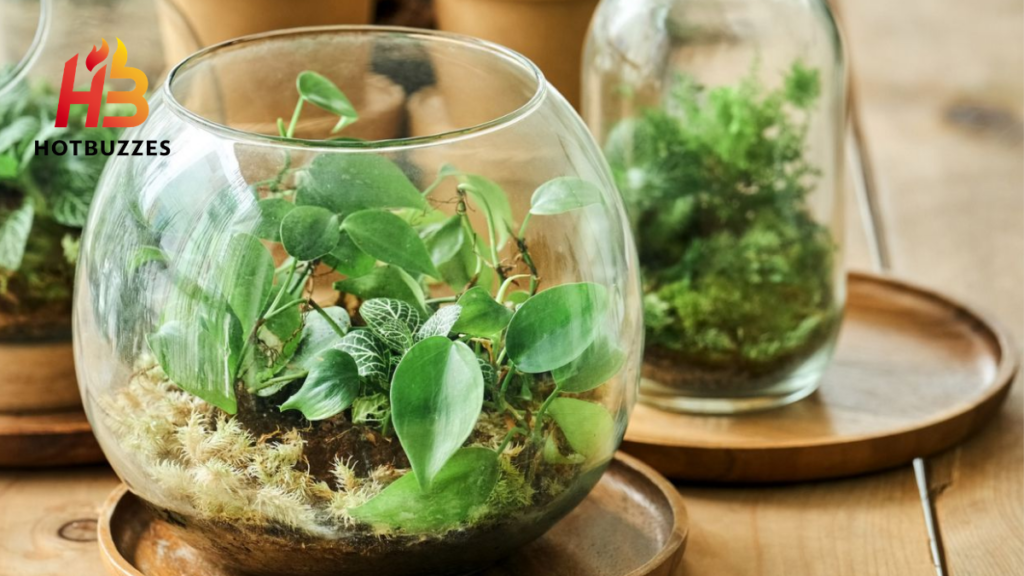
Anyone browsing indoor plant ideas eventually runs into two very different-looking setups that seem to accomplish a similar goal. A sealed or partly sealed glass terrarium and a regular potted plant sitting in an open container on a shelf or windowsill. Soil and plants are held in both. Each sits in some kind of vessel. Visually, both can look equally lush and green from across a room. Yet the way they function day to day could hardly be more different. This includes how often they need water and which plants will actually thrive inside them.
This guide walks through exactly how terrariums and open container gardening compare. It covers humidity, watering, light, plant selection, drainage, maintenance, cost, and the kinds of mistakes each method tends to invite. It also includes a side-by-side comparison table and a section on research-backed facts. This includes the nearly two-century-old experiment that gave rise to the modern terrarium in the first place. Practical guidance covers building each type of setup, spotting early warning signs of trouble, and choosing between them based on lifestyle rather than plant needs alone.
What Is a Terrarium?
A terrarium is a glass container holding soil and plants, built to create a growing environment noticeably different from the open room around it, according to Wikipedia’s terrarium entry, and understanding that core definition is the starting point for every comparison that follows.
The Wardian Case Origins
The concept traces back to the 1830s. A doctor named Nathaniel Bagshaw Ward noticed a fern and some grass sprouting inside a sealed glass jar. He had used the jar to observe a moth chrysalis, according to the University of Missouri Extension. He watched the plants grow for four years without adding a single drop of water or ever removing the cover. The resulting book, published in 1842, led to the development of what became known as Wardian cases. These were large enclosed containers originally used to transport delicate plants across long ocean voyages. Every terrarium sold or built today is, in essence, a small ornamental descendant of that original discovery.
Open vs Closed Terrarium Types
Terrariums themselves come in more than one form. A closed terrarium has a lid or a fully sealed opening. It retains the most humidity of any option. An open terrarium has no lid or only a small opening. It sits somewhere between a closed terrarium and a standard container in how much moisture it holds onto, according to the Home & Garden Information Center at Clemson. Both variations still qualify as terrariums. Both use a clear glass or plastic vessel specifically chosen to trap and recycle at least some humidity. This is the defining trait that separates any terrarium, open or closed, from ordinary container gardening.
What Is Open Container Gardening?
Open container gardening refers to growing plants in any conventional, open-topped vessel, most commonly a pot, tub, box, basket, or hanging planter, according to Wikipedia’s container garden entry, a category that covers the vast majority of houseplants most people already own.
Common Container Types
Pots made from terracotta, ceramic, or plastic are the most familiar examples. Window boxes, barrels, and hanging baskets also fall under the same umbrella. Unlike a terrarium, none of these containers are chosen for their ability to trap humidity. Most are not even required to be transparent. Visibility into the growing environment plays no functional role in how the plant is cared for.
What Makes It Different From a Terrarium
According to Wikipedia’s broader terrarium comparison, a typical plant pot is an open container. It allows natural air circulation and drainage. This makes watering easy and offers flexibility for a wide range of plant sizes. Large houseplants may never fit inside a glass terrarium in the first place. Tropical Glass’s plant pot comparison adds that both a terrarium and a plant pot involve soil, plants, and a container. However, a terrarium creates a genuinely controlled growing environment, especially when closed. A plant pot does not attempt to control the surrounding air at all. It relies instead on the room’s own ambient conditions.
Humidity and Moisture Retention
Humidity is the single clearest dividing line between these two approaches to growing plants indoors, and nearly every other difference covered in this guide, from watering schedules to which plants will thrive, traces back to this one underlying factor.
How Terrariums Create Their Own Microclimate
Inside a closed terrarium, water taken up by plant roots is released back into the air through transpiration. It then condenses on the cool glass walls and drips back down into the soil. This creates a small, self-contained cycle, as described by Vertical Live Garden’s beginner guide. This cycle allows a closed terrarium to maintain consistently high humidity. Humidity often stays in the range of 70 to 80 percent relative humidity, according to Mophonic’s terrarium comparison. Regular watering from the outside is usually unnecessary.
Why Open Containers Lose Moisture Faster
An open container has no glass barrier trapping moisture. Water that evaporates from the soil or transpires from the leaves simply disperses into the surrounding room air. It does not recirculate back into the pot. This is why a potted plant on an open shelf dries out based largely on the room’s humidity and airflow. A terrarium, by contrast, largely creates and maintains its own internal humidity. It does this regardless of what the rest of the room is doing.

Watering Frequency Compared
The humidity difference translates directly into two very different watering routines, one measured in months and the other measured in days, which is often the single most surprising contrast for anyone comparing these methods for the first time.
Closed Terrarium Watering
A well-sealed, properly balanced closed terrarium typically does not need watering for four to six months at a time, according to the University of Missouri Extension. The absence of condensation on the glass can signal that it is time to add a small amount of water. Wilting plants can also indicate the same need. Open terrariums allow more air exchange. They need watering somewhat more often than closed terrariums. However, they still need considerably less water than standard houseplants. Some humidity is still retained inside the glass even without a lid.
Open Terrariums and Container Watering
Standard open containers, whether a terrarium with no lid or an ordinary plant pot, need watering far more frequently. None of the moisture that evaporates is recaptured. According to Houseplant Alley’s open terrarium care guide, drought-tolerant succulents in an open terrarium setup might only need watering every seven to ten days. Typical foliage houseplants in an ordinary open pot often need checking every few days. This depends on pot size, soil type, and the surrounding room conditions.
Light Requirements
Light behaves differently depending on whether it has to pass through a glass barrier before reaching the plant, which is a factor many first-time terrarium builders overlook until their plants start showing signs of heat stress. Not sure whether to use a closed terrarium or open container? Compare both options and their care needs.
Why Terrariums Are Sensitive to Direct Sun
Because a terrarium’s transparent walls can intensify incoming sunlight, direct sun exposure risks scorching the foliage inside or overheating the enclosed air. This can stress or kill the plants, according to Wikipedia’s terrarium entry. Most terrarium plants fall into the medium light category. They do best within several feet of a bright window but not in the direct light path itself. The University of Missouri Extension echoes this guideline.
Light Needs for Open Containers
An open container has no glass to magnify or trap heat. The same bright windowsill spot that would overheat a terrarium is often perfectly safe. It can also be ideal for a sun-loving potted plant. This is why succulents and cacti, which crave strong, direct light, are generally better suited to an open pot or an open, uncovered terrarium. A sealed glass container is less suitable. This point is echoed by both the Royal Horticultural Society and Gardening Know How.
Terrarium vs Open Container Gardening at a Glance
The table below summarizes the core differences covered throughout this guide.
| Factor | Terrarium (Closed) | Terrarium (Open) | Open Container Gardening |
|---|---|---|---|
| Watering frequency | Every 4 to 6 months | Every 1 to 3 weeks depending on plant | Every few days to weekly |
| Humidity retained | Very high, 70 to 80 percent | Moderate | None, matches room humidity |
| Direct sunlight | Avoid completely | Avoid direct exposure | Often required for many species |
| Best plant types | Ferns, moss, tropical foliage | Succulents, cacti, air plants | Wide range, including large houseplants |
| Container material | Clear glass or plastic | Clear glass or plastic | Terracotta, ceramic, plastic, or glass |
| Disease and mold risk | Higher due to trapped humidity | Lower than closed, higher than open pots | Lowest, due to free air circulation |
| Typical maintenance level | Very low once balanced | Low to moderate | Moderate to high |
Plant Selection Differences
Choosing the right plant for the right container is one of the most important decisions in either method, and the two approaches favor almost opposite plant types.
Best Plants for Terrariums
Small, slow-growing foliage plants, miniature ferns, and mosses are considered ideal for sealed, closed terrariums, according to the Royal Horticultural Society. These species naturally thrive in consistently high humidity. They also suit the stable, filtered light a closed glass environment provides. Succulents and cacti, on the other hand, are better matched to open terrariums. Drier conditions and more airflow help prevent the rot that these drought-adapted plants are prone to in a sealed, humid space.
Best Plants for Open Containers
Open container gardening supports an enormously wider range of plant sizes and types. There is no glass ceiling limiting how tall or wide a plant can grow. There is also no humidity requirement, locking the choice down to moisture-loving species only. Large houseplants, flowering annuals, herbs, vegetables, and virtually any plant sold at a standard nursery can be grown in an open container. Its individual watering and light needs must be matched to the specific pot and location chosen for it.
Drainage and Soil Considerations
Because terrariums typically lack any external drainage, they rely on an entirely different internal system than a standard pot does.
Terrarium Layering System
A terrarium is generally built with a bottom layer of gravel or expanded clay. A thin layer of activated charcoal follows. A growing medium suited to the plants goes on top, according to the Royal Horticultural Society. Since there is no drainage hole for excess water to escape, this layered system is the only mechanism keeping roots from sitting directly in standing water. This is why the University of Missouri Extension stresses that terrarium waterings must always be light. Heavy watering has no way to drain out. Instead, it pools in the gravel and charcoal layer, encouraging root disease over time.
Standard Container Drainage
A conventional pot, by contrast, typically includes a drainage hole at the bottom. This allows excess water to flow out freely rather than accumulating inside the container. This structural difference is a major reason open container gardening tolerates a wider margin of watering error than a terrarium does. A slightly overwatered pot can simply drain the excess. A slightly overwatered terrarium has nowhere for that same excess water to go.
Maintenance and Time Commitment
The day-to-day time investment required by each method differs about as much as their watering schedules do.
Terrarium Maintenance Over Time
A properly balanced closed terrarium is widely described as nearly self-sustaining. It requires minimal watering and only occasional pruning to keep growth in check, according to Green Thumb Haven’s comparison guide. Once the initial balance of light, moisture, and plant selection has been dialed in, a closed terrarium can genuinely be left alone for extended stretches. This is part of its long-standing appeal for people who travel often. It also suits those who want a lower-maintenance way to keep greenery indoors.
Container Garden Maintenance
Open container gardening asks for more regular attention. This includes checking soil moisture every few days. It also means rotating pots for even light exposure. Plants may need repotting as they grow larger. Periodic fertilizing is also needed during the active growing season. None of these tasks is individually difficult. However, taken together, they add up to a noticeably higher ongoing time commitment. This is compared to a terrarium that has already reached a stable, self-regulating balance.
Disease and Pest Risk
Trapped humidity is a double-edged advantage, cutting down on watering while raising the risk of certain problems that simply do not apply to a container with free airflow.
Mold and Rot Risk in Closed Terrariums
The same high humidity that makes closed terrariums so low maintenance also creates ideal conditions for fungal growth and root disease. This can happen if watering is even slightly excessive, according to the University of Missouri Extension. The danger of disease buildup is greater in closed terrariums because of their higher humidity compared to open terrariums or dish gardens. Excess water in a terrarium cannot drain away like it can in a standard pot. Any mistake can linger far longer. This gives mold and rot more time to take hold before it becomes obvious from the outside.
Pest Patterns in Open Containers
Open containers face a different, generally lower, set of pest risks. Freer air circulation makes it harder for persistently damp conditions to build up. These conditions can attract fungus gnats and mold. That said, open containers are not risk-free. Pests like spider mites favor drier conditions. They are more commonly associated with underwatered open pots than with the consistently moist environment of a well-balanced terrarium.
Cost and Setup Considerations
Startup costs for each method vary considerably, largely driven by the type of container and materials involved, and the gap between them can be wider than most people expect before actually pricing everything out.
Terrarium Startup Costs
A terrarium requires a clear glass or plastic container. It also needs gravel or expanded clay for drainage, activated charcoal, and a suitable growing medium. The plants themselves are also needed. These items can add up to a moderate upfront cost, especially if a larger or more decorative glass vessel is chosen. The layered drainage system replaces what a drainage hole would normally do. There is little ongoing cost beyond the occasional plant replacement once the terrarium naturally ages.

Container Gardening Startup Costs
Open container gardening can be considerably cheaper to start. A simple plastic or terracotta pot with a drainage hole and a bag of standard potting mix cover the basic setup for most common houseplants. Costs can climb quickly for anyone building out a larger collection. Each additional plant typically needs its own appropriately sized pot. A single terrarium can house several small plants together in one container from the very start.
Aesthetic and Design Differences
Beyond the practical care differences, the two methods also serve fairly different visual and decorative purposes, shaping not just how the plants grow but how the entire display is meant to be experienced and enjoyed.
Terrariums as Miniature Landscapes
A terrarium is often treated as a small, self-contained landscape. It can include layered terrain, decorative stones, and carefully arranged plant groupings. These are designed to be viewed from outside the glass, according to Wikipedia’s terrarium entry. Terrariums are frequently considered decorative objects used to create miniature scenes as part of home décor. This landscape-like quality is part of why terrariums are popular gifts and centerpiece pieces. The glass container itself becomes part of the display rather than something to be hidden behind the plant.
Container Gardens as Flexible Displays
Open container gardening, by comparison, tends to be more utilitarian in design. It prioritizes the plant’s health and growth over the container’s own visual composition. Decorative pots and coordinated groupings can still create an attractive display. The flexibility to mix and match pot sizes, heights, and styles across a room gives open container gardening a different kind of visual versatility. It is built around arranging multiple separate plants rather than curating a single miniature scene inside one vessel.
Which One Fits a Beginner Best
Neither method is universally easier, and the right starting point depends heavily on what kind of mistakes a beginner is more likely to make, which is a more useful question to ask than simply which method is objectively simpler on paper.
Reasons to Start With Open Container Gardening
Open containers are generally more forgiving of watering mistakes, since excess water simply drains away rather than pooling with nowhere to go, according to Houseplant Alley’s open terrarium guide, which specifically recommends open setups for beginners worried about overwatering. The wider range of plant choices also means a beginner can start with an especially hardy, low-maintenance species, further reducing the odds of an early failure discouraging them from continuing.
Reasons to Start With a Terrarium
On the other hand, a closed terrarium removes watering from the equation almost entirely once it is properly set up, which can actually suit a different kind of beginner, specifically one who tends to forget to water plants regularly or travels often enough that a four- to six-month watering interval sounds far more appealing than a weekly one. The tradeoff is that getting the initial setup right, choosing the correct plants, layering the drainage properly, and finding the right light spot requires more upfront research than simply picking up a common houseplant and a bag of potting soil.
Combining Both Approaches at Home
Many plant collections end up using both methods side by side rather than committing to just one, since each approach genuinely excels under different conditions rather than one simply being a strictly better version of the other.
Zoning by Humidity Needs
Grouping moisture-loving plants into a closed terrarium while keeping drought-tolerant species in open pots elsewhere in the same room allows each plant to get the specific humidity level it actually needs, rather than trying to compromise on a single humidity setting for an entire mixed collection. This zoning approach is especially useful in homes with naturally dry indoor air, since it lets a handful of humidity-sensitive plants thrive inside a terrarium even when the rest of the room would be too dry for them otherwise.
Rotating Seasonal Displays
Some plant owners also use open containers for seasonal or short-lived displays, such as flowering annuals or herbs that are replaced every few months, while reserving terrariums for longer-term, more permanent plantings that are not meant to be swapped out on any particular schedule. This division plays to each method’s natural strengths, since the flexibility of open pots suits frequent change, while the slow, self-sustaining nature of a terrarium suits something meant to be left largely undisturbed for years.
Research-Based Facts
A few documented facts help explain why these two methods diverge as much as they do in practice, grounding what might otherwise sound like general gardening advice in specific, measurable observations. Learn the basic steps for making a Kokedama moss ball, from choosing the plant to wrapping it with moss.
As covered earlier, the entire concept of the modern terrarium traces back to Nathaniel Bagshaw Ward’s sealed glass jar experiment in the 1830s, during which a fern and grass grew undisturbed for four years without a single watering or any removal of the cover, according to the University of Missouri Extension. This nearly two-century-old demonstration remains the clearest proof of just how self-sufficient a properly sealed glass environment can become, and it directly explains why closed terrariums today can still go months between waterings using the very same water cycle principle Ward first observed by accident.
How Closed Terrarium Watering Intervals Compare
Across multiple horticultural sources, closed terrariums are consistently described as needing water only once every four to six months, according to the University of Missouri Extension, while open terrariums fall somewhere in between that interval and the far more frequent watering schedule of a standard open container. This spectrum, running from months between waterings on the closed end to days between waterings on the fully open end, illustrates just how directly humidity retention and watering frequency are linked, with the presence or absence of a lid functioning as the single biggest lever in that entire range.

Humidity Levels Inside Closed Terrariums
Closed terrariums are generally reported to maintain relative humidity in the range of 70 to 80 percent, according to Mophonic’s terrarium comparison guide, which also notes that humidity levels climbing meaningfully higher than that range can begin to promote mold rather than simply supporting healthy plant growth. This figure gives a concrete benchmark for anyone using a hygrometer to monitor a terrarium, since staying within that general range, rather than chasing the highest possible humidity reading, is what actually supports plant health without tipping into disease risk.
Common Mistakes in Each Method
Certain mistakes recur so often in each approach that recognizing them in advance can prevent a good deal of early frustration, especially for anyone trying either method for the very first time.
Terrarium Mistakes
Overwatering is the single most damaging mistake in a terrarium, since excess water has no drainage hole to escape through and instead sits in the gravel and charcoal layer, encouraging root disease, according to the University of Missouri Extension, which advises that it is always better to keep a terrarium a little too dry than too wet. Placing a terrarium in direct sunlight is a close second, since the magnifying effect of the glass can quickly overheat and scorch the plants inside even on a day that does not feel particularly hot in the rest of the room.
Open Container Mistakes
In open container gardening, the most common mistakes tend to run in the opposite direction: underwatering due to inconsistent attention or choosing a container without adequate drainage, which then traps excess water at the bottom of the pot in a way that mimics some of the same root rot risks associated with terrariums. Mismatching a plant’s light or humidity needs to the specific spot it has been placed in is another frequent issue, since the flexibility of open container gardening, while an advantage in many ways, also means there is no enclosed glass environment automatically correcting for a less than ideal location the way a terrarium’s self-contained microclimate does.
Outdoor Applications
While both methods are most commonly discussed as indoor growing options, each has a place outdoors as well, under somewhat different conditions that are worth understanding before moving either setup outside.
Terrariums Outdoors
People sometimes use terrariums outdoors in sheltered areas, such as covered porches or shaded patios. However, direct sunlight can harm terrarium plants outdoors just as it can indoors. Outdoor temperature swings can also prove harder to manage without the stable conditions of an indoor room. Protect outdoor terrariums from heavy rain as well. A sealed or partly sealed container has limited capacity to handle a sudden influx of water. Excess rain can disrupt the container’s already self-contained moisture cycle.
Container Gardens Outdoors
Open container gardening, by contrast, is extremely common outdoors, covering everything from a single pot of herbs on a balcony to an elaborate arrangement of planters lining a patio or garden path. Outdoor open containers benefit from natural rainfall and stronger, unfiltered sunlight. These conditions suit a wider range of sun-loving plants than indoor terrariums can support. However, outdoor pots need closer monitoring during hot, dry, or windy periods. They can dry out much faster than similar indoor containers.
Temperature Stability Compared
Beyond humidity and light, the two methods also differ in how much they buffer plants from everyday temperature swings.
How Terrariums Regulate Temperature
The enclosed space of a terrarium protects plants from sudden temperature changes and drafts, according to Vertical Live Garden’s beginner guide, which notes that this stability is part of why sensitive plants often grow better inside a terrarium than they would sitting exposed in an open room. A closed glass container effectively insulates its contents from a nearby drafty window, a door that opens and closes throughout the day, or a heating vent cycling on and off, all of which would otherwise cause the kind of fluctuating conditions many delicate plants struggle to tolerate.
Temperature Exposure in Open Containers
An open container provides no temperature buffer. Plants experience the temperature changes in the surrounding room, for better or worse. This does not necessarily create a problem. Many common houseplants and nearly all outdoor plants can handle normal daily temperature changes. However, an open container garden requires more careful placement. Keep pots away from cold drafts, hot vents, and direct air-conditioning exposure. The container itself cannot compensate for a poorly chosen location.
Air Quality and Oxygen Exchange
The sealed nature of a closed terrarium raises a reasonable question about air exchange that is worth addressing directly.
Gas Exchange Inside a Closed Terrarium
Even a fully sealed terrarium is not entirely airtight in practice, since most lids and stoppers allow at least some minimal gas exchange, and the small amount of air trapped inside is generally sufficient to support the very slow, low-light growth typical of terrarium-appropriate plants. Photosynthesis during the day and respiration at night still occur inside the enclosed space, cycling oxygen and carbon dioxide between the plants and the trapped air in much the same way they would in the open, just on a much smaller and slower scale.
Why Occasional Ventilation Still Matters
Despite this internal cycling, many terrarium guides recommend briefly opening a closed terrarium every week or two to exchange stale air and release any excess condensation that has built up beyond what the water cycle alone can manage. Open containers do not face this issue because they remain in constant, unrestricted contact with the surrounding room air. This airflow helps reduce the trapped, stagnant conditions that can encourage fungal growth in sealed environments. As a result, open pots carry a lower risk of these conditions.
Fertilizing Differences
How and how often each method needs feeding follows the same general pattern as its differences in watering.
Fertilizing Terrariums
Terrarium plants generally need very little fertilizer, since their slow growth rate in a stable, enclosed environment requires far fewer nutrients than a plant actively pushing out new growth in brighter, more variable outdoor-like conditions. When you use fertilizer in a terrarium, choose a heavily diluted liquid formula. Apply it sparingly to avoid overfeeding. Enclosed containers lack drainage, so excess salts and nutrients can build up in the soil. Without drainage, water cannot flush these excess nutrients away.
Fertilizing Open Container Gardens
Open container plants, particularly fast-growing or flowering species, generally benefit from more regular feeding during their active growing season, since nutrients in a pot can also leach out through the drainage hole over repeated waterings, unlike the more contained nutrient cycle inside a terrarium. A standard balanced fertilizer applied every few weeks during spring and summer, then reduced or paused during the dormant winter months, suits most common container-grown houseplants.
Repotting and Long-Term Growth
How each method handles a plant that has simply outgrown its original space differs quite a bit as well.
Repotting Considerations for Terrariums
Because terrarium plants are chosen specifically for their small size and slow growth, repotting is a relatively rare event, and many terrariums are actually built with the expectation that a plant will eventually need pruning back rather than moving to a larger container at all. When a terrarium plant does outgrow its space, the more common solution is trimming it back to maintain the miniature scale of the display, rather than transplanting it into a bigger glass vessel the way a houseplant would simply move into a bigger pot.
Repotting Considerations for Open Containers
Open container gardening, by contrast, generally assumes ongoing growth and eventual repotting as a normal part of a plant’s life cycle, moving a plant into a container one or two sizes larger every year or two as its root system fills out the available space. This built-in expectation of growth and repotting is part of why open containers accommodate such a wide range of plant sizes over time, from a small starter cutting all the way up to a mature, multi-foot-tall specimen.
Choosing Based on Available Space and Lifestyle
Beyond the plant-focused factors already covered, a few practical, lifestyle-driven considerations often end up deciding which method makes more sense for a given household.
Space Constraints
A terrarium packs an entire small garden into a single, self-contained footprint, which makes it a particularly good fit for small apartments, desks, or shelves where there simply is not room for multiple separate pots. Open container gardening, by comparison, generally requires more total surface area, since each plant typically occupies its own individual pot rather than sharing a single vessel with several others.
Travel and Time Away From Home
For anyone who travels frequently or is regularly away from home for extended stretches, a closed terrarium’s multi-month watering interval offers a level of low-maintenance reliability that open container gardening simply cannot match without some kind of automated watering system or a trusted plant sitter. Open containers left unattended for more than a week or two, particularly during warmer months, run a real risk of drying out completely, while a properly balanced closed terrarium left for the same stretch is unlikely to show any stress at all.
Households With Pets or Children
A terrarium’s glass walls also offer a layer of physical separation between curious pets or small children and the soil and plants inside, which some households specifically value for plants that might otherwise be dug into, chewed on, or knocked over. Open containers offer no such barrier, though their generally lower cost and easier replaceability can make an occasional accident less of a setback than it might be for a more carefully assembled terrarium display.
Building a Terrarium Step by Step
Understanding the basic assembly process makes the humidity and drainage differences discussed earlier much easier to picture in practice.
Layering the Base
Construction begins with a drainage layer of washed gravel or expanded clay at the very bottom of the container, according to the Royal Horticultural Society, followed by a thin layer of activated charcoal that helps filter the water cycling through the enclosed system and keeps it from developing an unpleasant, stagnant smell over time. A suitable growing medium, typically a well-draining, organically rich mix, goes on top of these two layers, providing the actual rooting environment for the plants.
Planting and Sealing
Once the layers are in place, plants are positioned according to their eventual mature size, with taller specimens generally placed toward the back or center and shorter ground cover types filling in the front or edges, mimicking the layout of a real, if miniature, landscape. If the terrarium is meant to be closed, the lid is added only after an initial light watering, and the container is then left to establish its internal water cycle over the following days and weeks before any further watering is even considered.
Building an Open Container Garden Step by Step
The setup process for an open container looks quite different, focused less on creating a sealed environment and more on giving a single plant, or a small group of plants, the right conditions to grow freely.
Choosing the Right Pot Size
Selecting a pot only slightly larger than the plant’s current root ball, rather than a dramatically oversized container, helps avoid excess soil holding onto more moisture than the plant’s roots can actually use, which is one of the more common ways open container gardening can accidentally develop overwatering problems despite having proper drainage. A pot with a drainage hole, paired with a well-draining potting mix appropriate to the specific plant, rounds out the basic setup.
Positioning for Light and Access
Because open containers do not create their own internal light-filtering environment the way terrarium glass does, positioning is largely about matching the specific plant’s light requirements to an appropriate spot in the room, whether that means a bright, sunny windowsill for a light-loving succulent or a shadier corner for a plant that prefers indirect light. Unlike a terrarium, which is generally viewed and enjoyed as a static, self-contained display, open containers are also typically positioned with easy access for regular watering and maintenance in mind, since they will need far more frequent hands-on attention going forward.
How Each Method Handles Neglect
Since not every plant receives perfectly consistent care, it is worth considering how each method responds when watering or attention lapses for a stretch.
A Neglected Terrarium
A closed terrarium that goes unwatered for an extended period is, in a sense, built for exactly this scenario, since its entire design is meant to minimize the need for outside intervention in the first place. The bigger risk with neglect in a terrarium setting tends to run in the opposite direction: a terrarium that receives an occasional unplanned extra watering from a well-meaning but forgetful owner who does not realize how infrequently it actually needs attention, which can tip an otherwise stable system toward the excess moisture and mold risk discussed earlier.
A Neglected Open Container
An open container responds to neglect far less gracefully, since there is no internal water cycle compensating for missed waterings the way a terrarium’s enclosed system does. A week or two of neglect during a hot, dry stretch can be enough to seriously stress or even kill a moisture-loving houseplant in an open pot, which is part of why open container gardening generally suits people with a more consistent day-to-day presence at home or who are willing to set up some form of backup watering system for stretches away.
Environmental and Sustainability Considerations
A few broader considerations, beyond the immediate care of the plants themselves, are worth factoring in when choosing between these two approaches.
Water Usage Over Time
Because closed terrariums recycle nearly all of their moisture internally, they use a genuinely small amount of water over their lifespan compared to an open container holding a similarly sized plant, which needs fresh water added on a regular, ongoing basis with no internal recycling mechanism at all. For anyone specifically interested in a lower water footprint for their indoor plant hobby, this makes closed terrariums a meaningfully more water-efficient option over the long run.
Material and Container Longevity
Glass terrarium containers, properly cared for, tend to last indefinitely, since glass does not degrade, crack from UV exposure, or need periodic replacement the way some plastic pots eventually do. Container gardening, by contrast, often involves plastic pots that may need occasional replacement as they age or as a plant outgrows its available size, though ceramic and terracotta pots used in open container gardening can be just as long-lasting as glass when handled carefully.
Signs Each System Is Out of Balance
Recognizing early warning signs helps catch a problem in either method before it becomes serious enough to threaten the plants involved.
Warning Signs in a Terrarium
Persistent, heavy condensation coating the entire inside of the glass, rather than light, occasional droplets, along with a musty smell when the lid is briefly opened, both point toward excess moisture that has tipped the internal balance too far toward wet. On the opposite end, a lack of any condensation at all over several weeks, paired with visibly wilting or shriveling plants, signals that the terrarium has dried out further than its self-sustaining cycle can correct on its own and needs a light, careful watering.
Warning Signs in an Open Container
Soil that stays visibly wet for days after watering, especially if paired with a sour or musty smell, suggests either overwatering or inadequate drainage, while soil that pulls away from the sides of the pot and feels bone dry throughout signals the opposite problem. Because open containers lack the terrarium’s built-in correction mechanism, catching either of these signs early and adjusting the watering routine promptly matters more here than it does in a terrarium, where the enclosed system has some natural capacity to self-regulate within a reasonable range.
Cleaning and Upkeep Beyond Watering
A bit of routine upkeep, separate from watering itself, keeps each system looking its best over time.
Keeping Terrarium Glass Clear
Because a terrarium’s glass walls are part of its visual appeal, keeping them clean matters more here than it typically does for an open pot’s exterior. Wiping down the outside of the glass with a soft cloth removes dust and fingerprints, while any algae or mineral buildup on the inside walls, which can occasionally develop in an overly bright or consistently wet terrarium, is usually addressed by adjusting light or watering levels rather than by scrubbing directly inside the sealed container.
Tidying Up Open Containers
Open container gardening involves a somewhat different set of upkeep tasks, including wiping dust off broad leaves so they can photosynthesize efficiently, removing yellowed or dead leaves as they appear, and occasionally cleaning the outside of the pot itself if mineral deposits or watering residue have built up along the rim or drainage saucer. Because open containers are handled more frequently during regular watering, this kind of routine tidying tends to happen somewhat naturally as part of the existing care routine, rather than requiring a separate, dedicated cleaning session the way an enclosed terrarium sometimes does.
FAQS
Q1. Is an open terrarium the same thing as open container gardening?
Not quite. An open terrarium is still a terrarium, meaning it uses a clear glass or plastic vessel specifically chosen to retain some humidity, even without a lid. Open container gardening refers more broadly to any conventional pot or planter that makes no attempt to trap humidity at all, regardless of whether it is made of glass, terracotta, ceramic, or plastic.
Q2. Which requires less watering, a terrarium or an open container?
A closed terrarium requires by far the least watering, often needing water only once every four to six months. An open terrarium needs more frequent watering than a closed one, but still less than a standard open container, which typically needs checking every few days to once a week, depending on the plant and pot.
Q3. Can succulents be grown in a terrarium?
Yes, but only in an open terrarium or a similar low-humidity setup, not a sealed, closed terrarium. Succulents and cacti are adapted to dry conditions and tend to rot in the consistently high humidity a closed terrarium maintains, making them a better match for open terrariums or standard open containers.
Q4. Why can’t terrariums be placed in direct sunlight?
The clear glass walls of a terrarium can magnify and concentrate incoming sunlight, which risks overheating the enclosed air and scorching the plants inside. Open containers do not have this same magnifying effect, which is why many sun-loving plants that would struggle in a terrarium thrive in an open pot placed in the exact same sunny spot.
Q5. Is a terrarium more difficult to maintain than a potted plant?
It depends on the stage. Setting up a terrarium correctly, choosing the right plants, layering the drainage, and finding the right light take more upfront care than simply potting a common houseplant. Once established, however, a well-balanced terrarium typically requires far less ongoing maintenance than an open container garden, which needs more frequent watering, rotating, and monitoring.
Q6. Can I convert a terrarium into an open container garden, or the other way around?
To some extent, yes. Removing the lid from a closed terrarium effectively turns it into an open terrarium, lowering its humidity and increasing how often it needs watering, and a terrarium container without a drainage hole can technically be used as a decorative open planter for drought-tolerant plants, provided watering stays especially light to avoid the same drainage issues terrariums are prone to.
Conclusion
Terrariums and open container gardening both start with the same basic ingredients, soil, plants, and a container, but the presence or absence of a sealed or partly sealed glass environment changes nearly everything else that follows, from watering frequency and humidity to plant selection and disease risk. Neither approach is objectively better than the other, and the right choice comes down to matching the method to the specific plants involved and the amount of hands-on attention a person actually wants to give. For many plant collections, the most practical answer is not choosing one over the other at all, but using each method where it naturally fits best: terrariums for humidity-loving plants that benefit from being left alone, and open containers for everything else that needs the flexibility, airflow, and easy access an open pot provides.

Ali Hassan is a plant enthusiast and content writer who creates practical, easy-to-follow articles about plant care, gardening, and indoor plants. He combines thorough research with reliable horticultural resources to provide accurate, beginner-friendly advice. His goal is to help readers grow healthier plants and make plant care simple, enjoyable, and accessible for everyone.