
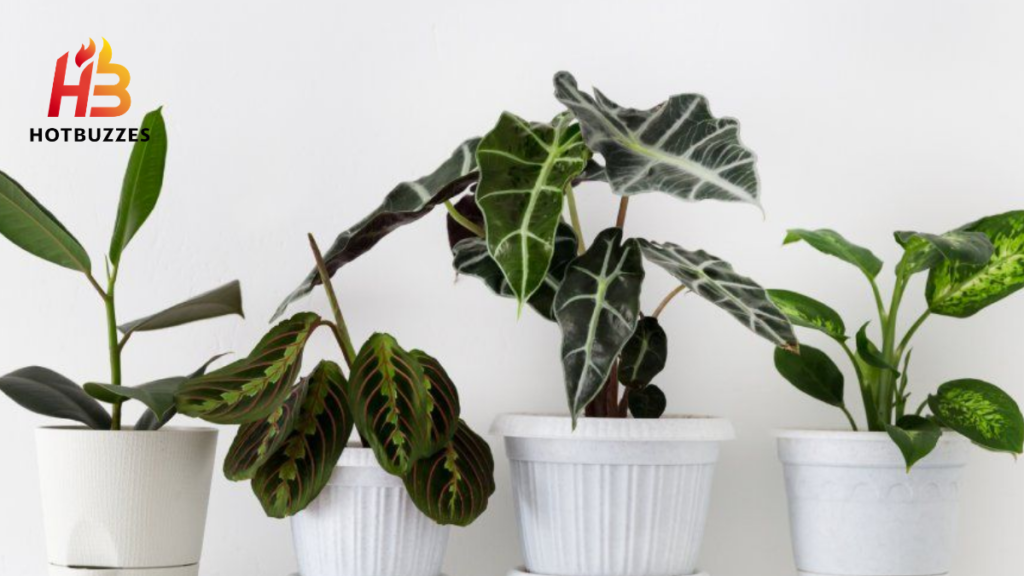
Every year, the plant world has a character, a dominant aesthetic, a defining trend, a moment that shifts the direction of what gets bought, grown, shared, and discussed. 2020 was the panic-buying boom. 2021 was the year of the rare plant obsession. 2022 and 2023 were the corrections, when prices crashed, and the most inflated plants returned to reality. 2024 was consolidation; serious growers kept going while casual buyers moved on.
2026 is something different entirely. It is the year houseplants stopped being a trend and became a permanent feature of how a significant portion of the population designs, inhabits, and thinks about their homes. According to Terrarium Tribe’s April 2026 houseplant statistics page, the global indoor plant market was valued at approximately 21 billion dollars in 2025, with compound annual growth rates projected at four to five percent through 2030.
Google search interest for houseplants recorded a single-month spike in January 2026, the first major resurgence since the pandemic peak, suggesting renewed momentum rather than plateau continuation. Traditional garden centres retained 50.10 percent of the total indoor plant market share in 2025, but online platforms are growing at a 10.05 percent CAGR, nearly three times the overall market rate.
According to Amra and Elma’s March 2026 plant marketing statistics report, 66 percent of American households now own at least one houseplant. The Axiom 2026 Gardening Outlook Study revealed that 49.5 percent of consumers spent more money gardening in 2025 compared to 2024 (an 11.5 percent increase), with a record 63.6 percent planning to expand their plant collections in 2026 despite continuing economic uncertainty. Indoor air-purifying plants now account for 40 percent of urban consumer purchases. Low-maintenance varieties have seen a 33 percent surge in demand among millennial urban consumers.
This is the 2026 houseplant review, a complete account of the year’s defining plants, moments, market shifts, cultural developments, and the direction the industry is heading as the year closes.
The Market Story of 2026: From Trend to Infrastructure
The most significant development in the houseplant market in 2026 is not any specific plant or trend. It is the structural permanence that the market has achieved. According to Wifitalents’ February 2026 houseplant industry statistics report, the US houseplant industry reached 1.7 billion dollars in annual domestic sales by 2021 and has continued growing from that elevated pandemic-era base rather than retreating to pre-pandemic levels as many analysts predicted.
The 66 percent American household ownership figure from Amra and Elma is the number that makes this permanence concrete. At two-thirds of all households, houseplant ownership has crossed from hobby to norm. It is comparable to coffee making, home cooking, or indoor entertainment. It is now a standard household activity rather than a distinguishing consumer preference. The industry serving this market is correspondingly mature. It has sophisticated retail distribution and professional growing infrastructure. Consumers also expect quality, selection, and convenience at every price point.
The Online Platform Growth That Is Reshaping Retail
Terrarium Tribe identifies a major retail shift in the houseplant market. Physical garden centres held 50.10 percent of market share in 2025. However, online platforms are growing at a 10.05 percent CAGR through 2031. This is much faster than the overall market’s four to five percent annual growth. As a result, online sales are gaining market share each year while the overall market continues to grow.
The practical implication for consumers in 2026 is greater access to plant varieties, sizes, and species. Local retailers could not economically stock all of these options. Rare collector plants once required specialist knowledge and personal connections to acquire. They are now available through specialist online retailers. Many offer next-day delivery, health guarantees, and expert care guidance with every purchase. This democratisation of access has accelerated the spread of collector culture from niche enthusiast communities into the mainstream plant-owning population.
The Pots and Planters Market That Reveals True Consumer Commitment
Verity Rank’s May 2026 indoor plants and planters market analysis provides the most specific indication of how committed 2026 plant consumers are: the North American pots and planters market alone is projected to hit 6.1 billion dollars in 2026, up from 5.8 billion in 2025, a 5.2 percent year-over-year growth rate. The global indoor flower pots and planters market is expanding at a 7.2 percent CAGR from 2026 to 2033, outpacing most other home decor categories, including candles and trays.
This secondary market data is significant. Pot and planter purchases reveal genuine investment in plant ownership rather than impulse acquisition. A person who buys a quality ceramic pot or designer planter for their monstera is signalling a long-term relationship with that plant. The 7.2 percent CAGR in planters is growing faster than the 4 to 5 percent CAGR in plants themselves. This suggests that existing plant owners are upgrading and reinvesting in their collections rather than simply expanding them numerically.
The Cultural Shift: From Collecting to Identity
Garden Media Group’s 2026 Houseplant Trends report from Costa Farms identifies the most significant cultural shift in the houseplant world this year with precise language: according to the 2026 Garden Trends Report, houseplants are undergoing a renaissance. They are no longer background décor but significant identity statements, expressions of character and lifestyle. This is especially true in new arenas, including gaming, curated micro-vignettes, and collector surfaces.
The report provides the specific demographic data that underlies this shift: 41 percent of Gen Z identify as plant collectors. This figure is not about passive plant ownership. It is about active, intentional curation. It involves the same investment in discovery, acquisition, and display that defines serious collecting culture. For a generation with access to global plant markets through social media and online retail, the collector mindset is available from the first plant purchase. It does not need to develop only after years of casual plant ownership.

The Plant Parent Identity That Now Shapes Purchasing Decisions
Wifitalents reports that 7 in 10 millennials consider themselves a plant parent, a framing that captures something specific about how plant ownership has evolved beyond the purely decorative. Plant parenting implies responsibility, relationship, and emotional investment in the well-being of a living thing. It implies the kind of ongoing attention that produces genuine knowledge over time. It also implies a social identity. Plant parents share their plants and propagate cuttings for friends. They discuss growing challenges and successes. They also build communities around shared horticultural interests.
Amra and Elma identify the COVID-19 pandemic as the catalyst that sparked an 18 percent rise in houseplant demand as people sought comfort at home and note that even post-pandemic, the emotional appeal of plants remains strong. Plants became companions during isolation, helping people feel connected to nature. This emotional dimension of plant ownership has remained important. It includes companionship, a connection with nature, and the comfort of sharing space with living things. These feelings have persisted and deepened even as pandemic isolation has faded. They are now a stable part of how plant owners relate to their collections rather than a crisis-specific response. Learn how to build a beautiful terrarium from scratch with this simple beginner-friendly guide.
Micro-Vignettes and the Curation Trend Defining 2026 Aesthetics
Garden Media Group identifies curated micro-vignettes as one of the specific new arenas where houseplants are being used as identity statements. This trend, small, deliberately composed arrangements of plants, objects, books, candles, and art that express a specific aesthetic vision, is one of the clearest expressions of the shift from casual plant acquisition to intentional plant curation.
The micro-vignette trend rewards visual thinking. Plant owners develop this skill by learning how plants interact through form, texture, colour, and scale. A collector who has spent three years combining trailing pothos, upright snake plants, and compact succulents gains genuine aesthetic knowledge. This knowledge translates directly into the micro-vignette compositions shaping 2026 plant aesthetics across major platforms.
The Trend Winners of 2026: Plants That Defined the Year
The single most discussed plant category development of 2026 is the Year of the Ficus designation, an industry consensus that emerged from multiple independent trend forecasting sources converging on the same prediction at the start of the year. Verity Rank confirms that the Ficus has officially displaced the Fiddle Leaf Fig as the number one trend, noting it as one of the five hottest houseplant trends for 2026 under the Back to Green category, a low-maintenance, air-purifying species.
Love That Leaf’s January 2026 trend report provides the most enthusiastic endorsement of this shift, noting that the slightly smaller-leafed and less-fussy Ficus elastica and seriously adorable Ficus benjamina are taking centre stage in 2026. The Ficus benjamina Starlight variety is specifically called out for its leaf quality. Thursday’s December 2025 trending houseplants report identifies the Bambino Fiddle Leaf Fig (the dwarf compact form) and the Ficus triangularis as the specific varieties generating the most new interest within the Year of the Ficus moment.
The significance of this development shows a broader shift in 2026 plant culture. The focus is moving away from plants chosen for rarity or difficulty. These were the defining criteria of the 2021 and 2022 collector boom. Now, plants are increasingly chosen for their design qualities, reliable performance, and visual character. The ficus genus has always delivered on all three of these criteria. Its rediscovery in 2026 reflects a market that has matured past novelty-seeking and is now making more considered, longer-term choices.
The Functional Plant Movement: Growing What You Use
The Sill’s 2026 trend report identifies one of the year’s most meaningful cultural shifts in plant buying: in 2025, people reached for plants that offered something extra (visual impact, fragrance, or fruit). The top picks included Olive Trees, Large Orchids, Meyer Lemon Bushes, Monstera Deliciosa, and Snake Plant Laurentii. Fruiting trees, flowering plants, and iconic statement greens all held firm.
This functional plant movement is the most distinctive new development in mainstream plant culture in 2026. The indoor olive tree, not a traditional houseplant but a container plant that can be moved between indoor and outdoor positions seasonally, has moved from specialist interest to mainstream retail availability. The Meyer Lemon Bush brings the prospect of indoor citrus fruit production within reach of apartment dwellers. Indoor herb collections have grown from single-plant kitchen accessories into multi-species production systems capable of supplying significant portions of household herb consumption.
The connection between plant ownership and food production that the indoor vegetable garden movement has driven, documented by the 71 percent of Americans who planned to grow a food garden in 2025, according to Wifitalents’ gardening statistics, has influenced how mainstream plant buyers think about every plant purchase. The question in 2026 is not just “does this plant look good?” but “what does this plant do for me beyond looking good?”
The Back to Green Movement: Low Maintenance Wins Again
Verity Rank names the Back to Green trend as one of the five hottest houseplant trends for 2026, a movement that emphasises low-maintenance, air-purifying species and has resulted in the Ficus displacing the Fiddle Leaf Fig as the primary statement plant. Amra and Elma document the 33 percent surge in demand for low-maintenance varieties among millennial urban consumers that underpins this movement.
The Back to Green trend is a response to the overcollecting seen in 2021 and 2022. During this period, many buyers acquired more plants than they could properly care for. Many plants were lost to neglect or overwatering. Owners then developed a more realistic view of the care they could sustain. The 2026 buyer with three years of experience understands this better. A healthy ZZ plant can be more satisfying than a declining variegated monstera that requires intensive care. That experiential knowledge is reshaping purchasing decisions across the market.
The Collector Market in 2026: From Boom to Maturity
The rare plant market in 2026 is fundamentally different from the frenzied market of 2021, when single variegated monstera cuttings sold for hundreds of dollars and tissue-culture plants commanded premiums that bore no rational relationship to their actual growing costs. Grow Tropicals’ March 2026 trending houseplants report describes the current collector market accurately: for collectors, rarity is evolving. Instead of mass-produced rare plants, 2026 is seeing demand for truly unique specimens from limited-run drops of rare Philodendrons, Anthuriums, and Hoyas.
Tissue culture technology has made many rare plants accessible at scale. This has changed what genuine rarity means in the market. When a Monstera Thai Constellation can be reliably produced through tissue culture, its rarity premium decreases. The 2026 collector market is shifting toward plants that tissue culture cannot easily reproduce. These include chimeric variegated plants, new hybrid crosses produced in limited numbers, and species with conservation restrictions that limit propagation.
The Velvet Anthurium Shift That Defined Collector Culture in 2026
The most significant collector market shift of 2026 has been the movement from climbing aroids, the variegated monsteras, rare philodendrons, and Hoya collector pieces that defined 2020 to 2023, toward velvet-leafed anthuriums as the dominant collector category. Grow Tropicals notes that while green plants remain foundational, 2026 is marked by growing interest in plants with pronounced pigmentation and bright hues, a shift that the anthurium collector market exemplifies perfectly.
Velvet anthuriums, including King of Spades, Papillilaminum hybrids, and dark-leaved types, have become more accessible. Production has caught up with demand from the 2023 and 2024 interest surge. This has helped normalise their prices. They are now within reach of more buyers while remaining premium collector plants rather than mainstream choices.
Grow Tropicals identifies tissue culture as becoming an essential component of modern plant production that is helping to make rare and one-of-a-kind plants more accessible to the UK and global markets. The practical consequence of this technology in 2026 is a continuously shifting boundary between what is rare and what is accessible, as each previously expensive plant becomes reproducible at scale through tissue culture, the collector market moves on to the next plant that tissue culture cannot reach.

This dynamic has made the rare plant market more accessible to newcomers. It has also made it more challenging for experienced collectors seeking genuine exclusivity. The democratisation of access is genuinely positive for the broader plant community. More people can now afford beautiful, distinctive plants. At the same time, it is driving the most serious collectors toward ever more specialised and expensive territory.
The Standout Plants of 2026: Expert and Editor Picks
Gardening Know How’s December 2025 best houseplants for 2026 expert roundup provides the most credible single-source collection of expert plant picks for the year. Digital Community Manager and former garden centre manager Amy Draiss named the Philodendron Birkin as her top pick: purchased growing in a small glass jar of water and kept that way for about a year until the roots outgrew the space, then repotted into a 4-inch pot with soil, thriving and putting on new growth in a north-facing window year-round with no fussiness about light or water. Editor-in-Chief Melanie Griffiths named the dendrobium orchid as her recommendation, a flowering plant choice that reflects the wider trend toward functional plants that offer something extra beyond foliage.
The Sill’s 2026 picks include Olive Trees, Large Orchids, Meyer Lemon Bushes, Monstera Deliciosa, and Snake Plant Laurentii, a list that spans from functional fruiting plants through iconic statement greens, confirming that no single aesthetic dominates expert recommendations in 2026. The diversity of these picks reflects the diversity of the 2026 plant market itself, where multiple aesthetic directions are simultaneously valid rather than one trend dominating all others.
The RHS Predictions That Proved Most Accurate
The Royal Horticultural Society’s predictions for 2026 houseplant trends, reported by Ideal Home’s January 2026 coverage, identified monstera and dragon trees las eading the jungle foliage trend, with calatheas, ferns, and bonsai continuing to top trends. These predictions have proven accurate across multiple market segments. The RHS also noted that houseplant sales grew by 15 percent in the preceding year, confirming the market expansion that commercial data from other sources corroborates.
The jungle foliage trend that the RHS identified has been one of the most commercially significant aesthetic directions of 2026. The movement toward dense, layered arrangements of large-leafed tropical plants is growing. These include monstera, dracaena, calathea, ferns, and philodendrons. They are grouped to create the impression of indoor botanical environments rather than individual potted plants. This trend has driven multi-plant purchases. It has meaningfully increased average transaction values across the retail market.
The Surprise Performers That Nobody Predicted at the Start
G of the Yearrow Tropicals notes that their Hardy and Handsome collection, plants that maintain a refined, designer aesthetic even when care routines are inconsistent, has driven some of the most significant sales growth of the year. This category includes plants that were not specifically predicted to trend but have proven to be exactly what the 2026 buyer wants once they encounter them: visually distinctive, genuinely low-maintenance, and appropriate to the design-conscious spaces where the 2026 plant buyer tends to place them.
The Alocasia Silver Dragon is the clearest example of this surprise performance. Previously available mainly through specialist retailers at premium prices, it has ended into mainstream distribution in 2026. It is now available at more accessible price points. This has made it one of the year’s breakout plants. Its rise is not linked to a specific marketing campaign or trend prediction. Instead, consumers discovered it in retail settings. They responded to its distinctive metallic leaf texture and manageable care profile.
The Technology and Sustainability Story of 2026
Amra and Elma confirm that the smart indoor gardening systems market is growing at 28 percent annually, the fastest-growing segment within the overall plant market. In 2026, these systems have moved from novelty items and early-adopter territory into mainstream retail availability, with pod-based hydroponic growing systems for herbs and salad greens now available at major supermarkets, home goods retailers, and specialist plant retailers.
The practical use of these systems has been most pronounced in herb and microgreen cultivation. These categories have consistently delivered on the promise of indoor food production at consumer prices. Smart herb pods manage light, water, and nutrients automatically. They can produce a daily culinary yield without the expertise needed for soil-based growing. The water efficiency data is also significant. Global Growth Insights’ January 2026 data confirms that hydroponic systems with LED lighting can save up to 90 percent more water than traditional soil gardening.
Sustainability Becoming a Purchasing Criterion
Amra and Elma document the shift: a notable shift toward sustainable gardening practices is visible among 2026 plant buyers, with interest in organic growing, peat-free potting mixes, biodegradable containers, and locally grown plant material all increasing. This sustainability dimension of plant purchasing has been driven partly by younger demographics who bring environmental values to purchasing decisions across all categories, and partly by the growing awareness among experienced plant owners that healthy soil ecosystems produce healthier, more resilient plants.
The peat-free movement has grown significantly in 2026. UK and European retailers are moving away from peat-based potting mixes. This shift is driven by regulations and consumer demand. Coconut coir, composted wood fibre, and biochar are replacing peat. In many cases, these alternatives have produced better growing results. This is increasing adoption beyond sustainability-focused buyers and into the performance-focused mainstream.
The LED Grow Light Market That Made Year-Round Growing Possible
Over 50 percent of plants sold online in 2026 are grown in LED-only facilities, according to Wifitalents, a production statistic that reflects the commercial validation of LED growing technology. For home growers, the availability of effective, affordable LED grow lights has made year-round indoor herb and vegetable production genuinely achievable without greenhouse conditions or specialist equipment.
The grow light market in 2026 serves two main groups. The first includes people who want fresh herbs and salad greens year-round. The second includes plant enthusiasts growing collector plants in low-light rooms. Both groups have expanded significantly in 2026. This has driven grow light sales faster than the overall plant market.
The Social and Community Dimension of 2026 Plant Culture
Amra and Elma document the social media dimension of plant culture with specific data: plant content consistently generates high engagement across Instagram, TikTok, and YouTube, with plant transformation videos, care tutorials, and aesthetic setup posts among the most-shared content in the home and garden category. The plant influencer community has professionalized significantly in 2026, with dedicated plant accounts reaching audiences comparable to mainstream lifestyle influencers and attracting commercial partnerships with major plant retailers, pot manufacturers, and growing supply companies.
The format generating the most growth in 2026 is plant journey content. It documents plant growth, propagation, troubleshooting, and care over months or years. This format reflects the patient, observational nature of serious plant ownership. It also builds audiences of similarly invested viewers rather than the broader, shallower audiences of purely aesthetic plant content.
Plant Swapping and Community Growing as a Social Phenomenon
Amra and Elma identify plant swapping as a growing community practice in 2026, with local plant swap events, online cutting exchange groups, and neighbourhood plant sharing networks all expanding. The propagation ease of many popular houseplants, pothos, spider plants, philodendrons, and succulents, has made plant sharing a natural community-building activity that reduces the cost of building a diverse collection while creating social connections around a shared interest.
This community dimension of plant culture shows its permanence as a mainstream lifestyle activity. It is more than a cyclical trend. Trends do not usually create lasting community infrastructure. Plant swap networks, local growing groups, and online communities have developed around houseplant ownership in 2026. These communities can sustain engagement for decades rather than short trend cycles.
Looking Back at 2026: What the Year Taught the Plant World
The most important lesson that 2026 has taught the houseplant market is that maturity and growth are not opposites. A market can become more sophisticated, more considered, and more knowledgeable while simultaneously growing larger. The 2026 buyer is more discerning than the 2020 buyer. They know what their space can support and what care they can realistically provide. They also understand the aesthetic outcomes they want to achieve. This knowledge does not reduce purchasing. It redirects spending toward more deliberate, higher-value acquisitions. These purchases produce more satisfying outcomes and more lasting engagement.
The functional plant movement is probably the most important long-term development of 2026. When a consumer buys a plant that produces food, filters air, or provides documented well-being, the relationship can be stronger. Its value goes beyond visual appeal. The practical return also encourages long-term engagement. Herbs for cooking, microgreens for salads, and stress reduction during work provide ongoing motivation. Pure aesthetics may not sustain the same level of engagement over multiple years.
The Plant That Defined 2026 More Than Any Other
If a single plant had to represent the character of the 2026 houseplant market, it would be the snake plant in one of its new 2026 varieties (Moonshine, Raven, or Cylindrica). Not because it is the most exciting or the most photographed plant of the year. But because it embodies every defining quality of 2026 plant culture: low maintenance that reflects genuine lifestyle realism rather than compromise, visual impact that has been rediscovered after years of the species being taken for granted, multiple variety options that give experienced collectors a reason to return to a species they thought they had fully explored, documented air purification that satisfies the functional plant buyer, and cultural momentum from the RHS and multiple independent trend sources simultaneously.
The snake plant in 2026 is the plant that tells you everything about where the market is, where it has been, and where it is going. It does not chase novelty. It earns sustained attention through genuine performance across every dimension that 2026 plant buyers care about. That is exactly the character of the year.

Statistics That Define the 2026 Houseplant Year
The following data points, drawn from the most credible available sources in 2026, provide the statistical context for everything described in this review. According to Terrarium Tribe, the global indoor plant market was valued at approximately 21 billion dollars in 2025, with four to five percent CAGR projected through 2030. Google search interest in houseplants recorded a single-month January 2026 spike (the first major resurgence since 2020 to 2021). Traditional garden centres retain 50.10 percent market share. Online platforms are growing at 10.05 percent CAGR the fastest segment.
According to Amra and Elma, 66 percent of American households own at least one houseplant. Foliage plants hold 45 percent of the market distribution. Flowering plants hold 27 percent. Succulents hold 18 percent. Low-maintenance varieties surged 33 percent in demand among millennial urban consumers. Indoor air-purifying plants account for 40 percent of urban consumer purchases. The COVID-19 pandemic sparked an 18 percent rise in houseplant demand. The Axiom 2026 study found 49.5 percent of consumers increased gardening spending in 2025 versus 2024, an 11.5 percent increase. A record 63.6 percent plan to expand their plant collections in 2026. Discover whether the beauty and benefits of houseplants outweigh the time and care they require in 2026.
According to Wifitalents, 7 in 10 millennials consider themselves plant parents. Snake plants saw a 300 percent search volume increase on Google over five years. Over 50 percent of plants sold online are grown in LED-only facilities. Pothos plants are the most commonly owned houseplants in North America.
According to Verity Rank, the North American pots and planters market is projected at 6.1 billion dollars in 2026, up from 5.8 billion in 2025. The global indoor flower pots and planters market is growing at 7.2 percent CAGR from 2026 to 2033, outpacing most home decor categories. According to Garden Media Group, 41 percent of Gen Z identify as plant collectors. Houseplants are now identity statements rather than background decor.
FAQs
Q1: Has the houseplant market genuinely grown in 2026, or is it declining from pandemic peaks?
The market has genuinely grown. Terrarium Tribe confirms the January 2026 Google search spike, the first major resurgence since the pandemic peak, alongside the 21 billion-dollar market valuation and four- to five-percent CAGR projection through 2030. Amra and Elma add that 49.5 percent of consumers increased gardening spending in 2025 versus 2024, and a record 63.6 percent plan to expand collections in 2026. Three independent data points all confirm genuine growth rather than decline.
Q2: Which plant genuinely defined 2026 more than any other single species?
The snake plant in its new 2026 varieties (Moonshine, Raven, and Cylindrica) best represents the character of the year. The Ficus genus as a category received the most institutional attention through the Year of the Ficus designation. The Alocasia Silver Dragon was the most significant mainstream breakthrough plant from the collector-adjacent category.
Q3: Is the rare plant market recovering or still correcting from 2021 peaks?
It has normalised rather than collapsed. Grow Tropicals confirms that rarity in 2026 means truly unique specimens from limited-run drops rather than tissue-culture-produced plants that were temporarily expensive. The most serious collectors have moved to velvet anthuriums and genuinely scarce species as tissue culture has made previously rare plants accessible.
Q4: What is the most significant trend change from 2025 to 2026?
The functional plant movement, plants chosen for what they do beyond appearance, including food production, air purification, and documented well-being benefits, is the most significant trend direction change from 2025 to 2026. The Sill’s trend report confirms that in 2025 people reached for plants that offered something extra, and this pattern has accelerated in 2026 into a clearly defined consumer segment with its own product development and retail response.
Q5: Is plant ownership genuinely mainstream or still a niche hobby in 2026?
Mainstream without question. At 66 percent American household ownership, houseplants have crossed the threshold that defines mainstream cultural activities. The comparison to coffee making or home cooking is appropriate, both are activities that the majority of households engage in, and that support large professional industries without being confined to enthusiast communities.
Q6: What does the rest of the decade look like for houseplants based on 2026 data?
The four- to five percent CAGR projection through 2030 from Terrarium Tribe suggests steady growth rather than dramatic acceleration or retreat. The online platform growth at 10.05 percent CAGR suggests increasingly sophisticated digital retail will continue democratising access to rare and specialist plants. The functional plant movement and sustainability trend both point toward more deliberate, informed purchasing that produces more durable consumer-plant relationships than pure trend-driven buying. The decade looks positive for the industry and genuinely exciting for the plant-owning community.
Conclusion
2026 will be remembered in the houseplant world as the year the market proved its permanence. Not the most dramatic year, 2020 and 2021 were more dramatic. Not the most innovative, tissue culture, LED growing, and smart gardening systems made bigger technical leaps in earlier years. But 2026 is the year that the structural indicators all aligned to confirm that the elevated plant ownership rates, the expanded market infrastructure, and the deepened consumer knowledge that the pandemic era planted have taken root in ways that will sustain this industry through every subsequent trend cycle.
The Year of the Ficus. The functional plant movement. The snake plant renaissance in new varieties. The velvet anthurium collector shift. The Back to Green low-maintenance surge. The pots and planters market is growing faster than the plant market itself. Each of these developments tells the same underlying story: plant buyers in 2026 know more, choose better, invest more thoughtfully, and stay engaged longer than at any previous point in the modern houseplant era.
That is the 2026 houseplant review. An industry that started as a pandemic coping mechanism has become one of the most interesting and most genuinely alive sectors of the consumer market. And it shows no signs of stopping.

Ajwa Asif is a writer with a passion for plants, gardening, and creating educational content. She researches plant-related topics using reputable horticultural resources and shares practical advice to help readers grow healthier plants and build confidence in their gardening journey. Her content focuses on delivering clear, reliable, and user-focused information.