
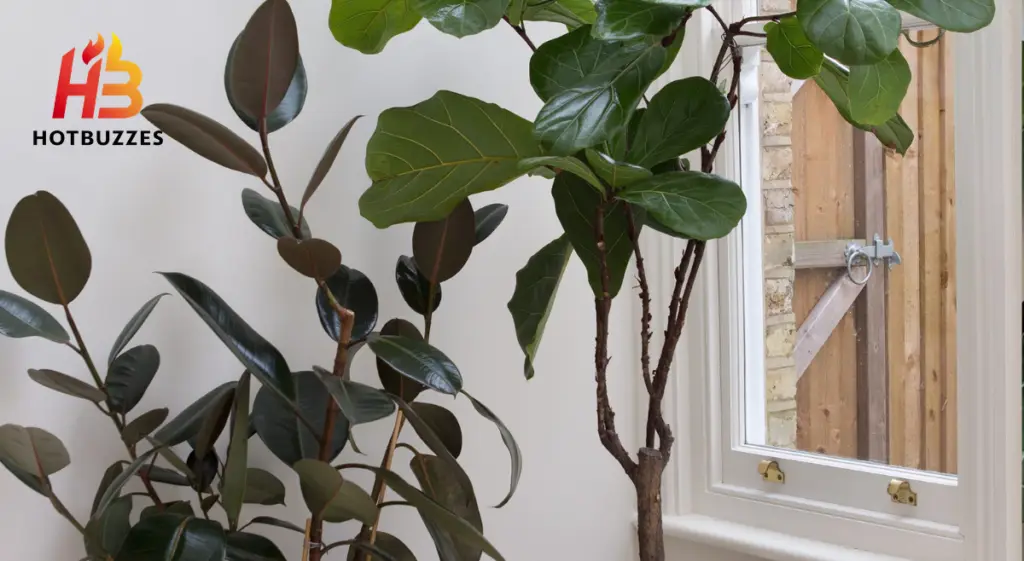
Visit a stylish living room, browse an interior design account, or stop by a good plant shop. You’ll likely find a fiddle leaf fig. It is tall, dramatic, sculptural, and has become one of the defining houseplants of the last decade. It also has a reputation for being difficult, a plant that drops leaves at the first sign of change, punishes inconsistency, and challenges even experienced plant owners.
That reputation is not entirely unfair. But it is often overstated. The fiddle leaf fig is not impossible. It is particular. It has specific preferences around light, water, stability, and humidity, and when those preferences are met, it grows confidently and looks genuinely spectacular indoors. The problems start when its needs are guessed at rather than understood.
This guide takes the guesswork out. This guide explains where the plant comes from and how to care for it. It also helps you identify common problems and keep your fiddle leaf fig healthy from the day you bring it home.
What Is a Fiddle Leaf Fig?
The fiddle leaf fig’s scientific name is Ficus lyrata. According to Wikipedia’s entry on Ficus lyrata, it is a species in the Moraceae family. It is native to West Africa but is grown worldwide as an ornamental plant. It has also received the Royal Horticultural Society’s Award of Garden Merit. This is one of the highest honors a garden plant can receive.
The name comes from the shape of its leaves. Wikipedia explains that the leaves are lyrate, meaning they resemble a lyre or fiddle. They are broad at the top and narrower in the middle. In ideal conditions, each leaf can grow up to 45 cm long and 30 cm wide. The leaves have a leathery texture, prominent veins, and wavy edges.
According to Plantz, Ficus lyrata is native to Sierra Leone and Cameroon. It grows in the lowland tropical rainforests of West Africa. The plant belongs to the Moraceae family. This family also includes mulberry and fig trees, along with more than 1,000 other plant species.
In its natural habitat, Wikipedia notes it can grow 9 to 12 meters tall outdoors. As a houseplant, it stays much smaller. It typically grows between 60 cm and 3 meters indoors, depending on the pot size and the care it receives.

Why the Fiddle Leaf Fig Is Called Difficult
The honest answer is that the fiddle leaf fig is not especially difficult to grow. Its care is much simpler than plants like calatheas or orchids. Its needs are not extreme. The challenge for beginners is that it reacts quickly to changes in its environment. Even small inconsistencies can cause it to drop its leaves. This can be alarming and is often misunderstood.
Blooming Expert’s complete care guide puts it well: the plant’s notorious sensitivity is not really about difficulty; it is about consistency. Give it a good spot and a steady routine, and it rewards you with lush, sculptural growth that few houseplants can match. Move it around, let it dry out completely, then overwater to compensate, and you will see those large leaves drop one by one.
The Plant Manual’s care guide is equally clear: most leaf drop and brown spot problems come from changes in light, water, roots, or temperature. Fix the consistency, and most problems resolve themselves. Looking for your next houseplant? Discover the top indoor plants everyone is growing in 2026.
Light: The Most Important Factor
Light is where fiddle leaf fig care begins, and getting it right makes everything else easier. Wikipedia states clearly that the plant thrives in bright, indirect light and can tolerate some direct sunlight.
Missouri Botanical Garden’s plant finder recommends bright indirect light or part shade indoors with protection from afternoon sun, the same recommendation given by virtually every major horticultural resource.
New York Botanical Garden explains why this requirement exists by connecting it to the plant’s natural habitat: in the wild, the fiddle leaf fig grows under the protection of a tropical canopy. As a houseplant, it needs strong light but protection from direct rays, mimicking that filtered canopy environment.
The Plant Manual provides the most practical guidance on placement. The safest indoor positions are near an east window for gentle morning sun, near a south or west window with a sheer curtain to filter the light, or slightly offset from hot glass to avoid direct afternoon sun.
A north window is usually too weak unless the room is unusually bright overall. Urbane Eight’s care guide confirms that low light conditions lead to slow growth and leaf drop, and that the plant should be rotated every few weeks to ensure even growth and prevent leaning.
One practical sign that light is working well: the plant shows steady new leaf growth during spring and summer, the leaves are a deep, healthy green, and the trunk stays upright and firm. If the plant leans toward the window, grows sparse new leaves spaced far apart, or drops lower leaves while the soil stays wet for a long time, inadequate light is likely part of the problem.
Watering: The Biggest Beginner Mistake
Watering is where most fiddle leaf fig problems begin. Getting it right requires understanding one key principle: water thoroughly, then wait. Blooming Expert gives what is perhaps the clearest rule: let the top 5 cm (2 inches) of soil dry out between waterings, then water thoroughly until it drains from the bottom of the pot.
In summer, this typically means watering every 7 to 10 days. In winter, every 10 to 14 days or less as growth slows. The exact interval depends on pot size, soil mix, temperature, and humidity; checking the soil with a finger rather than following a rigid schedule is always the more reliable approach.
New York Botanical Garden adds important context from the plant’s natural habitat: in the wild, the soil around fiddle leaf fig roots drains very quickly after rainfall. The roots evolved in conditions where they experience periods of moisture followed by periods of drying.
They are not adapted to sitting in consistently wet soil. In winter, from October through February, the plant takes up water more slowly, so the interval between waterings should be extended to match.
Greenery Unlimited’s care guide adds a technique that prevents one of the most common mistakes: when watering, pour water slowly and evenly over the entire soil surface until it flows from the drainage holes.
This deep, thorough soaking encourages healthy root growth throughout the entire pot. Shallow, frequent sips encourage surface roots only, leaving deeper roots dry and the plant chronically underserved.
Bloomscape’s care guide recommends waiting until 50 to 75% of the soil becomes dry before watering, then thoroughly drenching until water drains into the saucer. Empty the saucer if the water level is high so water does not pool around the roots.
How to tell overwatering from underwatering by the symptoms:
Blooming Expert identifies the pattern clearly. Overwatering shows up as brown spots that start in the center or at the edges of a leaf, appear dark brown to black, feel soft or mushy, and tend to appear on lower or inner leaves first. Underwatering shows up as dry, crispy, light brown spots that typically appear at the leaf tips and edges and feel papery and dry to the touch.
New York Botanical Garden also notes that soft, light-colored spots surrounding leaf veins that then turn brown indicate too much water in the soil from overwatering or poor drainage. Crisp, brown spots result from under- or irregular watering.

Soil and Potting
The right soil for a fiddle leaf fig does two things: it drains quickly enough to prevent root rot, and it retains just enough moisture to keep the roots from drying out completely between waterings.
New York Botanical Garden recommends a conventional, soil-based potting mixture with some added perlite for good drainage. Hey Rooted’s care guide describes the best soil as a well-draining potting mix that still holds some moisture, avoiding both the waterlogged conditions that cause root rot and the completely dry conditions that stress the roots.
Grokipedia’s scientific entry on Ficus lyrata confirms from a botanical perspective that the plant’s native soil characteristics ensure adequate moisture retention without impeding drainage, supporting robust root growth.
In its natural tropical understory habitat, annual rainfall ranges from 1,500 to 2,500 mm but is distributed in ways that prevent prolonged dry spells, consistent moderate moisture rather than extreme swings in either direction.
The pot must have a drainage hole. The New York Botanical Garden specifically notes that many fiddle leaf fig problems start with keeping the plant in a decorative container without a drain hole.
If you love a decorative pot without drainage, place the fiddle leaf fig in a plastic nursery pot with drainage holes inside the decorative container. When watering, remove the nursery pot, water thoroughly, let it drain completely, and then return it.
New York Botanical Garden notes that fiddle leaf figs like to be slightly root-bound and can stay in the same pot for several years. When roots appear above the soil line or through the drain hole, move up just one pot size in spring. The new pot should still feel slightly tight; a container that is too large holds excess soil that stays wet for too long.
Temperature: Stability Above Everything
If there is one word that sums up the fiddle leaf fig’s temperature preference, it is stability. House Plants Expert notes that the plant grows in warm, wet areas naturally and prefers consistent warmth indoors.
Hey, Rooted is specific about the lower limit: once temperatures start dropping below 55 degrees Fahrenheit (13 degrees Celsius), the plant begins to struggle. Cold rooms, drafty windows, and high overnight temperature drops lead to stress, leaf damage, and leaf loss.
Wikipedia confirms the plant is hardy down to 10 degrees Celsius (50 degrees Fahrenheit), so specimens may be placed outside during warm periods, but should be brought in well before autumn temperatures drop near this threshold.
The Plant Manual adds a point many beginners overlook: do not place the plant near air conditioning vents, heating vents, or drafty windows. Even if the temperature in the room overall is fine, a direct blast of cold conditioned air or hot, dry air from a vent causes localized stress that shows up in the leaves. The plant does not distinguish between the room temperature and what it feels immediately around its leaves.
Humidity
The fiddle leaf fig is a rainforest plant and appreciates moderate to high humidity, but it is more adaptable to standard home conditions than most tropical houseplants. The New York Botanical Garden gives a very practical threshold: if you can keep the humidity above 40%, that is enough to prevent brown leaf tips.
Most homes sit between 40 and 50% humidity during warmer months, which is adequate. In winter, when central heating drops indoor humidity to 25 to 35%, the plant may develop dry, crispy leaf edges. Blooming Expert confirms this range of 40 to 65% relative humidity as the target for keeping the plant healthy year-round. Discover the signs of a dying plant and the practical steps you can take to help it recover.
New York Botanical Garden recommends standing the plant on a tray of wet pebbles during dry months. As the water evaporates, it raises humidity immediately around the plant without getting the soil wet. Buying a simple hygrometer to keep near the plant allows you to monitor humidity levels and know when extra measures are needed.
The Plant Manual cautions against misting as the main humidity strategy, noting that it rarely changes room humidity for long and can leave water sitting on large leaves. A more useful approach is stable placement away from vents and keeping the leaves clean.
Fertilizing
A healthy fiddle leaf fig in the active growing season benefits from regular feeding, but the approach needs to be measured rather than aggressive. New York Botanical Garden recommends feeding in spring and summer only, with a balanced organic fertilizer used every other week at half strength.
Bloomscape gives a simpler schedule: feed once in spring and then monthly throughout summer. Both sources agree that no fertilizer is needed in winter when growth naturally slows.
The Plant Manual makes an important point about what fertilizer can and cannot do: feed only when the plant is stable and actively growing. Fertilizer does not fix weak light, wet roots, cold drafts, or shock from moving. Overfeeding can burn leaf margins and cause additional damage on top of whatever problem already exists.
The most important rule is to never fertilize a stressed plant. If the plant is dropping leaves, showing brown spots, or has recently been moved, let it stabilize first. Feed only once it is clearly growing again.
Cleaning the Leaves
Those large, glossy leaves are one of the fiddle leaf fig’s best features, and they collect dust faster than any other common houseplant because of their sheer surface area. Greenery Unlimited recommends rinsing the plant’s leaves with room temperature water every three months.
This removes accumulated dust and ensures the leaf surface can absorb and photosynthesize sunlight efficiently. For regular maintenance between rinses, wiping each leaf with a soft, damp cloth works well.
New York Botanical Garden lists keeping leaves dust-free as one of its key care recommendations. A clean leaf surface allows the plant to use incoming light as effectively as possible, which matters especially in the lower-light conditions of winter.

Pruning and Shaping
Pruning is not something fiddle leaf figs need often, but it becomes relevant as the plant matures and either gets too tall or develops leggy, spindly growth. The Plant Manual recommends pruning leggy branches to a node in spring if growth looks sparse and weak.
New York Botanical Garden gives the same advice, adding that after pruning, the plant should be moved to a location with brighter indirect light to support the new growth it produces.
Pruning can also be used to encourage branching. A fiddle leaf fig left entirely on its own tends to grow as a single tall trunk with a cluster of leaves at the top. Cutting the main growing tip, a practice called notching or topping, encourages the plant to produce side branches, creating a bushier, more tree-like shape over time.
Use clean, sharp scissors or pruning shears for all cuts. The plant produces a white milky sap when cut; wear gloves and avoid getting this on skin or eyes.
Propagation
The fiddle leaf fig can be propagated, though it requires patience. Wikipedia lists the main propagation methods as division, stem cuttings, and air layering. Hey Rooted explains the options in practical terms.
Stem cuttings can be rooted in water or placed straight into moist potting mix. Water propagation lets you watch the roots develop, while soil propagation skips the transfer step.
Blooming Expert notes that success rates for stem cuttings are around 50 to 60%, and recommends cutting each remaining leaf in half horizontally to reduce moisture loss from the cutting and improve outcomes.
Air layering is a more reliable but more involved method, with success rates of 80 to 90% according to Blooming Expert. It involves making a cut in the stem, packing it with moist sphagnum moss, wrapping it in plastic, and waiting for roots to form before removing the new plant from the parent.
Toxicity
The fiddle leaf fig is toxic to both humans and pets. House Plants Expert also notes that the plant contains a toxic, milky sap. If ingested, it can cause mouth irritation, vomiting, excessive drooling, burning of the mouth, tongue, or lips, and difficulty swallowing.
The Plant Manual also notes that NC State Extension classifies Ficus lyrata as toxic if eaten. It contains insoluble calcium oxalates that can irritate the mouth. Keep this plant out of reach of cats, dogs, and young children.
Common Problems and How to Fix Them
Brown spots on leaves:
The pattern of the spots tells you the cause. Soft, dark brown spots with yellowing around them, appearing on lower leaves first, point to overwatering. Dry, crispy brown spots at the edges and tips point to underwatering or low humidity. Brown patches on leaves facing a window, often with a bleached appearance, indicate sun scorch. For overwatering, let the soil dry out completely and check the drainage.
Leaf drop:
Hey, Rooted explains that leaf drop after moving the plant to a new location is extremely common. Ficus trees are sensitive to environmental change and will temporarily drop leaves when the conditions around them shift. Place the plant in its permanent location. Do not move it again. Give it time to settle.
Leggy or unstable growth:
The New York Botanical Garden identifies inadequate light as the cause of leggy growth. The plant grows tall and weak with leaves spaced far apart on long branches. Move the plant to a spot with brighter indirect light. In spring, prune leggy branches back to a node.
Soil that resists watering:
The New York Botanical Garden notes that soil that resists hydration, where water runs straight around the edges rather than soaking in, is not uncommon in fiddle leaf figs. This happens when the soil has dried out too thoroughly and compacted. The best solution is bottom watering. Place the pot in a shallow tray of water for 15 to 30 minutes. The soil absorbs moisture from below, rehydrating it from the roots upward.
Pests:
Fiddle leaf figs can occasionally attract spider mites, mealybugs, and scale insects, particularly in dry conditions. Wipe leaves regularly to prevent dust accumulation, which encourages pests, and inspect the undersides of leaves during routine care. For active infestations, wipe leaves with insecticidal soap or neem oil solution applied weekly until clear.
FAQs
Q1: How often should I water my fiddle leaf fig?
Every 7 to 10 days in spring and summer, and every 10 to 14 days or less in winter. Always check the soil first. Water only when the top two inches feel completely dry, then water thoroughly until it drains from the bottom.
Q2: Why is my fiddle leaf fig dropping leaves?
The most common causes are overwatering, recent relocation, cold drafts, or too little light. Identify which of these applies and address it. Once the cause is removed and conditions are stable, leaf drop usually stops and new growth returns.
Q3: Can a fiddle leaf fig survive in low light?
No. Urbane Eight is direct: low light conditions lead to slow growth and leaf drop. This plant genuinely needs bright indirect light to stay healthy. If natural light is not available, a grow light is necessary.
Conclusion
The fiddle leaf fig earned its status as one of the most coveted houseplants in the world for good reasons. When its needs are met, it is genuinely one of the most striking plants you can keep indoors. Those large, leathery, violin-shaped leaves on a clean, upright trunk are a statement that no other common houseplant quite replicates.
What beginners most need to understand is that the fiddle leaf fig is not difficult; it is particular about consistency. Bright indirect light near a good window. Water only after the top two inches of soil dry out.
A stable position away from vents and drafts. Humidity above 40%. A well-draining potting mix. Those five things, applied consistently, cover almost everything this plant needs.

Asim Usman is a plant enthusiast and content writer who specializes in creating informative, reader-friendly articles on plant care and gardening. He combines thorough research with practical insights to provide accurate, easy-to-follow guidance that helps readers grow healthy plants with confidence. His goal is to make plant care simple, enjoyable, and accessible for everyone.