
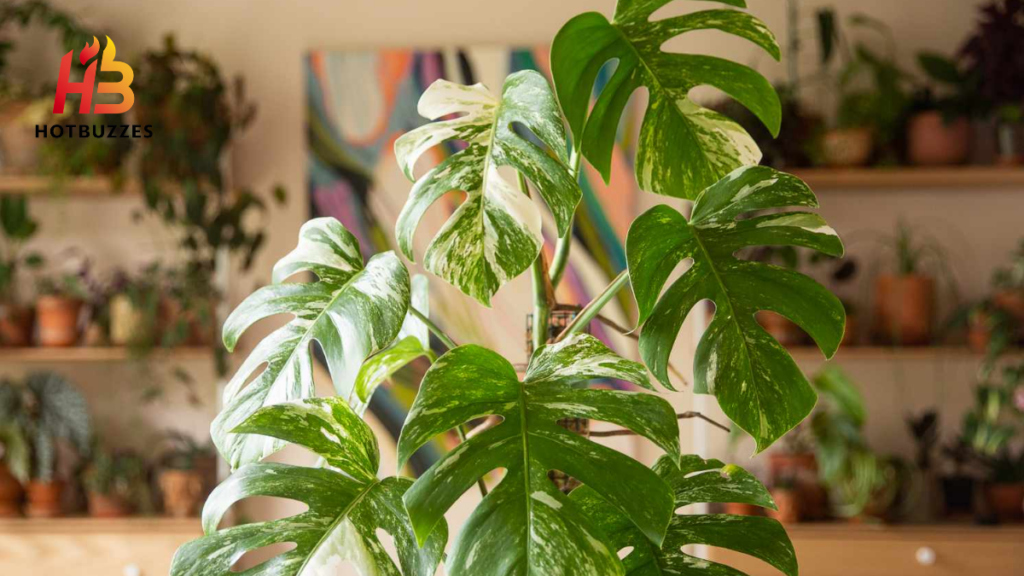
A regular Monstera deliciosa costs around 20 dollars. A variegated one can run 200 dollars, sometimes well over 2,000, for what looks at a glance like the same plant with a few white streaks added. That price gap is not marketing or hype dressed up as scarcity. It comes down to genuine biology, genuinely difficult propagation, and a market where demand has consistently outpaced supply for years.
This guide breaks down exactly what drives variegated plant prices, from the genetic mutation itself to real current price ranges across popular species. It also includes a side-by-side comparison table, a section on research-backed facts about how variegation actually works at the cellular level, and guidance on what separates a fair price from an inflated one.
What Variegation Actually Is
Before understanding price, it helps to understand what is actually happening inside a variegated leaf.
A Genetic Mutation, Not a Style Choice
Variegation happens when some plant cells lose the ability to produce chlorophyll, the pigment responsible for both a leaf’s green color and its ability to photosynthesize, according to Botany Breakdown’s explainer on variegated plant pricing. The white or pale sections of a variegated leaf are essentially non-functional tissue, unable to convert sunlight into energy, which means the plant is quite literally growing with a genetic defect rather than a decorative trait.
Why This Makes the Plant Weaker, Not Just Prettier
According to Botany Breakdown’s explainer, white leaf tissue cannot photosynthesize. The plant must support it using energy from its remaining green sections. If a variegated plant produces too many fully white leaves in a row, that section of growth can die back entirely from lack of energy, which is part of why variegated plants grow more slowly and are more vulnerable to stress than their solid green counterparts, according to PlantJoys’ breakdown of variegated Monstera pricing.
Why Rarity Alone Does Not Explain the Price
It would be easy to assume variegated plants are simply rare in the way a limited edition product is rare, but the underlying reason is more specific than that.
Seeds Do Not Reproduce Variegation
A variegated Monstera is not a distinct species but a genetic mutation, and because of that, the only reliable way to reproduce the trait is by taking cuttings from a plant that already carries the mutation, since seeds from a variegated plant will not reliably produce variegated offspring, according to PlantingGeek’s guide to variegated Monstera pricing. This single fact is the root of the entire supply problem, since it means growers cannot simply plant a field of seeds to flood the market the way they could with an ordinary greenhouse plant.
A Slow, Cutting-by-Cutting Supply Chain
Because propagation depends entirely on cuttings, and each parent plant can only produce a limited number of viable cuttings at a time, supply grows slowly no matter how high demand climbs, according to PlantingGeek’s guide. This bottleneck, combined with genuinely high demand, is what keeps prices elevated in a way that ordinary scarcity marketing could never sustain on its own.

Stable vs Unstable Variegation
Not all variegation behaves the same way, and this distinction has a direct and significant effect on price. Learn why rare plant prices vary and how factors such as genetics, availability, and demand affect the cost.
What Chimeral Variegation Means
Some variegation results from chimerical mutations, meaning only certain cell layers carry the mutation. This makes the pattern unpredictable from leaf to leaf, according to Rare Plant Fairy’s guide to variegation stability. Collectors prize plants with unstable variegation, such as Monstera deliciosa ‘Albo Borsigiana’, because each leaf can develop a unique pattern. They often pay a premium for this one-of-a-kind, unrepeatable quality.
Why Unstable Varieties Cost More Than Stable Ones
Monstera ‘Thai Constellation’ was developed in a lab through tissue culture to produce stable, predictable speckled variegation. Although it remains expensive, it is generally more affordable than ‘Albo’ varieties because growers can mass-produce it more reliably, according to PlantJoys’ pricing breakdown. ‘Albo Borsigiana’, by contrast, carries spontaneous, unstable variegation and is often the most expensive per node or cutting precisely because of the rarity and risk involved in propagating it successfully.
How to Judge Stability in a Plant You’re Considering
If every new leaf on a plant shows consistent color and pattern, the variegation is likely genetically stable, while variegation that varies wildly between leaves or reverts to solid green in places is chimerical and inherently less predictable, according to Rare Plant Fairy’s guide. Ask the seller whether the plant has stable or chimerical variegation. A knowledgeable answer can help you judge its likely long-term appearance and whether the asking price is justified.
Current Price Ranges for Popular Variegated Plants
The table below reflects typical listed price ranges for cuttings and rooted plants of commonly collected variegated species, based on current marketplace listings.
| Plant | Typical Price Range | Notes |
|---|---|---|
| Monstera Albo (medium variegation) | $55 to $285 | Price rises sharply with more white variegation |
| Monstera Albo (extra high variegation) | $165 to $440 | Higher white content increases both value and rot risk |
| Monstera Aurea | $55 to $295 | Yellow variegation, generally rarer than white Albo forms |
| Half Moon Monstera Albo | $115 to $325 | Sectoral pattern with a clean half-green, half-white leaf split |
| Philodendron Pink Princess | $20 to $100+ | Price varies enormously with the pink percentage per leaf |
| Philodendron White Princess (tricolor) | $35 to $80 | Multiple variegated colors on one leaf |
| Philodendron Caramel Marble | Up to $975 | Among the rarest and most expensive philodendron cultivars |
| Rhaphidophora Tetrasperma Albo (Mini Monstera) | $110 to $150 | Smaller growth habit, still commands a strong premium |
The Four Factors Behind Variegated Monstera Pricing
For the most collected and researched variegated species, pricing tends to break down into four consistent factors.
Rarity and Genetic Mutation
As covered earlier, the spontaneous, unstable genetic mutation behind traditional variegation cannot be reliably reproduced from seed. This limits supply to the number of cuttings that existing variegated plants can produce, according to PlantingGeek’s guide.This single constraint underlies nearly every other pricing factor that follows.
Slow Growth and Low Survival Rate
The white or yellow, chlorophyll-free portions of a variegated leaf cannot photosynthesize, which makes the plant grow more slowly overall, be more vulnerable to disease, and be harder to propagate successfully, according to Biology Insights’ analysis of Monstera pricing. A cutting that fails to root or reverts to solid green during propagation causes a real financial loss for the grower. This risk gets factored into the price of every successful cutting sold.
Demand Driven by Social Media
Widespread visibility on platforms like Instagram and TikTok has made variegated Monstera a status symbol. This has fueled a plant-collecting culture where rarity and visual impact are highly prized, according to Biology Insights’ analysis. This demand is particularly acute for variegated forms specifically, positioning them as collectible, almost speculative assets in a market where prices can rise dramatically based on visibility and trend cycles rather than supply alone.
Auction Dynamics and Competitive Bidding
Many rare variegated cuttings are sold at auction, where competition between buyers pushes prices higher. The higher the prices rise, the more buyers may be willing to pay, according to PlantingGeek’s guide. This auction dynamic can create prices that exceed what a plant’s biological rarity alone would suggest. Bidding wars ultimately depend on how many collectors want the same cutting at the same time.
Care Requirements That Justify Part of the Price
Beyond rarity and demand, variegated plants also genuinely cost more to grow well, which factors into their retail price.
Higher Light Needs
Variegated plants often require more light than their solid green counterparts, since their reduced chlorophyll means each leaf has less photosynthetic capacity to work with, and leaf patterns can fade or disappear entirely without adequate light exposure, according to Rare Beauty Unveiled’s guide to variegated plant costs. Growers raising variegated plants for sale often need to invest in supplemental grow lighting specifically to maintain strong, sellable variegation, an added production cost passed on to the buyer.
More Attentive Monitoring
Growers must invest extra time monitoring and adjusting growing conditions to maintain colorful, healthy foliage on variegated plants, according to the same guide, since these plants are simply less forgiving of neglect than an all-green counterpart with full photosynthetic capacity. This care intensity is part of what justifies and helps recover the higher production costs behind a variegated plant’s retail price.
Spotting an Inflated or Misrepresented Price
Not every high price reflects genuine rarity, and knowing a few warning signs helps buyers avoid overpaying. Discover which pots work best for trending houseplants and how to match them with your plant’s needs.
Photos That Do Not Match What Ships
Because variegation patterns are unique to each individual leaf, a seller advertising a plant using an especially striking photo, without clarifying that the shipped plant may look different, is a common source of buyer disappointment. Reputable sellers typically note plainly that images represent a general size and color range rather than guaranteeing the exact pattern a buyer will receive, since variegation genuinely does vary that much between individual leaves.
Pricing That Ignores Actual Variegation Percentage
Since price often depends on how much of the leaf shows variegation, question any high-end listing without clear photos or a stated variegation percentage. Compare the listing’s price with the general ranges in the table above and other current listings for the same species and variegation level. This helps determine whether the asking price is reasonable or inflated.
Unverified Claims About Stability
Stable variegation commands a premium over chimeral variegation, as covered earlier in this guide. A seller claiming stable variegation without showing consistent growth across multiple leaves makes a claim that is difficult to verify at the time of sale. Asking for growth photos over time, rather than one current image, gives a clearer picture of whether the variegation pattern remains consistent from leaf to leaf.
Research-Based Facts About Variegation Biology and Value
Beyond general pricing logic, the underlying plant science offers a more precise explanation for why the market behaves the way it does.
The Photosynthetic Tradeoff
Chloroplasts are responsible for photosynthesis. They are absent or non-functional in variegated tissue, so that part of the leaf relies on energy produced elsewhere in the plant, according to Botany Breakdown’s explainer. This is a biological tradeoff, not just a cosmetic feature. It helps explain the slower growth, higher care demands, and greater propagation risk that contribute to the price premium collectors pay.

Why Reversion Happens and Cannot Be Reversed With Care
Variegation fades when green tissue outcompetes lighter variegated cells. This can happen naturally over time or be accelerated by low light and overfeeding, according to Rare Plant Fairy’s guide. Once a growth point fully reverts to green, no amount of fertilizer, humidity, or light adjustment can restore the original genetic pattern. The issue is genetic, not environmental. This distinction matters for anyone hoping to “fix” a plant that has lost its variegation after purchase.
FAQS
Q1. Why is a variegated Monstera so much more expensive than a regular one?
The variegation is caused by a genetic mutation that cannot be reliably reproduced from seed, only from cuttings taken from an already variegated plant. This limits supply considerably, and combined with slower growth, higher propagation risk, and strong collector demand, it drives prices well above those of a standard green Monstera.
Q2. Is Thai Constellation cheaper than Monstera Albo?
Generally yes. Thai Constellation was developed through tissue culture to produce stable, predictable variegation that can be mass-produced more reliably, while Albo carries unstable, spontaneous variegation that is harder to propagate successfully, which typically makes Albo the more expensive of the two.
Q3. Can I turn a reverted, all-green plant back into a variegated one?
Not through care alone if the reversion is genetic. Once a growth point has fully reverted to solid green, no amount of additional light, fertilizer, or humidity will restore the pattern, since the underlying cause is a change at the cellular level rather than an environmental deficiency.
Q4. Is it worth paying a premium for a plant with unstable variegation?
It depends on personal priorities. Unstable, chimeral variegation produces genuinely one-of-a-kind leaf patterns that collectors specifically value, but it also comes with a higher risk of reversion or dieback. Stable varieties offer more predictable, consistent results at a generally lower price point.
Q5. How can I tell if a variegated plant’s price is fair?
Compare the specific variegation percentage and pattern against current listings for the same species and similar variegation level, rather than judging by species name alone. A high price should correspond to visibly high variegation, confirmed stability where claimed, and clear, accurate photos of the actual plant being sold.
Q6. Do all variegated plants eventually lose their variegation?
Not necessarily, but many can fade or revert over time, particularly under insufficient light or with overfeeding. Regularly pruning back to a node that still shows strong variegation and providing adequate bright, indirect light help maintain a plant’s pattern for as long as possible.
Conclusion
Variegated plant prices are not arbitrary, even when they reach hundreds or thousands of dollars for a single cutting. A genetic mutation that cannot be reliably reproduced from seed, slower and riskier propagation, additional care demands, and intense collector demand all help explain these prices. Together, these factors separate genuine rarity from ordinary scarcity marketing.
Understanding variegation stability, growth patterns, and the biology behind it gives buyers a clearer way to judge whether an asking price reflects genuine rarity or simply an inflated listing riding the collector wave. For anyone entering this market, starting with a more affordable tissue-cultured variety like Thai Constellation or a lower-variegation cutting of a classic species offers a way to experience collecting with less financial risk. This avoids the higher risk of the rarest and most unstable cultivars.
As with any collectible market, price and biological rarity tend to track closely. However, this only helps buyers who take the time to understand what they are paying for.

Asim Usman is a plant enthusiast and content writer who specializes in creating informative, reader-friendly articles on plant care and gardening. He combines thorough research with practical insights to provide accurate, easy-to-follow guidance that helps readers grow healthy plants with confidence. His goal is to make plant care simple, enjoyable, and accessible for everyone.