
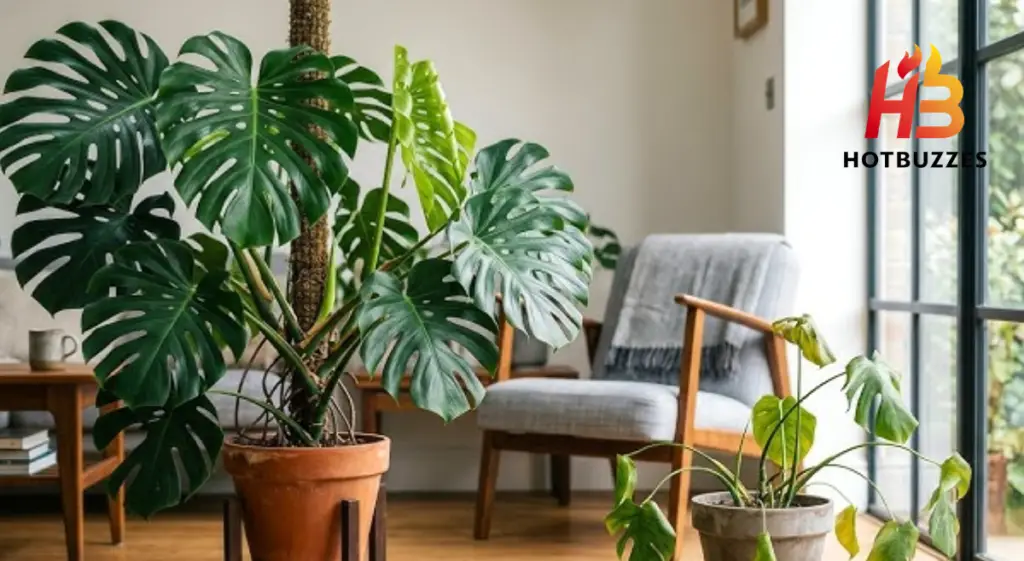
You bought your monstera with high hopes. You found the perfect spot, you water it regularly, and you wait. And wait. And wait some more. Weeks go by. Maybe even months. But no new leaf appears. The plant just sits there, looking the same as the day you brought it home.
This is one of the most common frustrations monstera owners run into, and it has a surprisingly clear set of causes. Once you know what is actually happening and what your specific plant is missing, the solution usually becomes obvious.
In the right conditions, a healthy monstera can push out a new leaf every four to six weeks during the growing season. If yours is not doing that, something in its environment or care routine is off. This article covers every reason a monstera stops producing new leaves, what is happening inside the plant in each case, and exactly what to do to get it growing again.
Understanding the Monstera First
According to Wikipedia’s entry on Monstera, the genus Monstera contains 59 species of flowering plants in the arum family, Araceae, native to tropical regions of central and South America. The genus name comes from the Latin word for monstrous or abnormal, referring to the unusual leaves with natural holes called fenestrations that most species develop.
These plants are evergreen vines that grow to heights of 20 meters in trees, climbing by means of aerial roots that act as hooks over branches. Wikipedia’s entry on Monstera deliciosa explains that the plant is native to humid tropical forests in the south of Mexico and Central America, including Costa Rica, Guatemala, and Panama.
It prefers bright indirect light and temperatures of 20 to 30 degrees Celsius (68 to 86 degrees Fahrenheit). It is usually watered when the soil has slightly dried out, and it requires well-draining, peat-based soil to thrive.

Wisconsin Horticulture Extension at the University of Wisconsin adds important context about how monstera behaves in the wild: seedlings actually grow toward the darkest area first until they encounter a tree, then climb upward. The leaves start small and without holes, gradually developing the characteristic fenestration as the plant matures and climbs higher toward the light.
Reason 1: Not Enough Light
Light is the single most common reason a monstera stops growing, and it is the first thing to check before anything else. Ohio Tropics is direct about this: distance from a window is probably the biggest factor in a monstera not growing. Keep your plants thriving by understanding how to treat root rot and prevent it from returning.
The plant needs bright indirect light to produce the energy required for new leaf growth. Without enough light, it simply does not have the photosynthetic output to support new tissue development.
We The Wild’s monstera growth guide describes the monstera as a jungle creature that loves bright indirect light filtering down from the canopy above. If you are seeing small leaves that do not develop fenestrations or splits, it is a strong sign that the plant needs more consistent light.
Wisconsin Horticulture Extension confirms this biology: the fenestrations in the leaves allow the plant to spread over a greater area to increase sunlight exposure and to allow light to reach other leaves below, while using less energy to produce those leaves. That means good light not only drives growth, it directly shapes whether new leaves come out with the characteristic holes monstera owners love.
According to Ohio Tropics, north-facing windows in the northern hemisphere provide only indirect light with no direct sun and the lowest light of any window exposure. East and west-facing windows are a much better choice. South-facing windows provide the most light overall.
The monstera should be placed immediately in front of the window rather than pulled back into the room; every foot of distance from the window reduces light intensity significantly.
Reason 2: Watering Problems — Too Much or Too Little
Both overwatering and underwatering can halt new leaf production, and both create different but equally serious problems at the root level. How To Grow And Tips explains the watering balance clearly: too much water can cause the roots to rot, while too little can stress the plant and slow its growth.
A healthy watering routine is essential. Wait until the top two inches of soil feel dry before watering, and make sure the pot has proper drainage so excess water can escape.
Overwatering is the more dangerous of the two. When soil stays wet for too long, roots are deprived of oxygen and begin to rot. Once root rot sets in, the plant cannot absorb water or nutrients regardless of how much sits in the soil.
According to Plantelio’s monstera care guide, overwatered monsteras often stop growing entirely, with common signs including yellow leaves, drooping leaves, wet soil, and the early stages of root rot. The plant halts leaf production because it is directing whatever remaining energy it has toward survival rather than growth.
Underwatering creates a different kind of stress. Ohio Tropics explains that if you leave pockets of dry soil for extended periods, the roots in those dry zones will die out. Without a healthy root system, the plant cannot grow.
When watering, the goal is to water thoroughly, until water escapes from the drainage hole, so that moisture reaches the entire root zone rather than just the top layer.
Reason 3: Insufficient Nutrients
A monstera needs fuel to grow. Indoors, that fuel has to come from fertilizer because potting soil depletes its nutrients over time, and there is no natural ecosystem replenishing them.
The Plant Aide’s monstera guide explains that monstera plants require a balanced supply of nutrients, particularly nitrogen, phosphorus, and potassium, to produce new leaves. Nitrogen drives leafy green growth specifically; it is what the plant needs most when producing new foliage. A lack of these nutrients stunts growth.
Ohio Tropics puts this bluntly: if a plant has been in the same pot for more than a year, the nutrients are largely depleted. The soil started with a certain amount of nutrients, but watering washes them out over time, and the plant uses up what remains. What is left after a year is largely inert growing medium with almost no nutritional value.
Houseplant Authority’s monstera growth guide notes that monsteras are technically epiphytes, plants that in the wild get nutrients from the air, rainwater, and debris that collects around the base. Indoors, they do not have access to any of that, so fertilizing during the active growing season is the only way to keep the nutrient supply steady.
Reason 4: Root Bound — The Pot Is Too Small
A monstera that has run out of room in its pot will slow down and eventually stop producing new leaves. When roots circle densely around the inside of the pot with no room left to expand, they can no longer absorb water and nutrients efficiently.
We The Wild describes this clearly: as a monstera grows, its roots fill the pot. Once it starts to outgrow its current home, growth slows. If the plant was once healthy and fast-growing but has suddenly stalled, the pot is often the reason.
The Plant Aide recommends checking the root system by gently removing the plant from its pot. If roots are circling densely with very little soil visible between them, it is time to repot into a container one to two inches larger in diameter with fresh, well-draining soil.
Epic Gardening’s monstera problems guide confirms that compacted roots prevent the plant from absorbing enough water and nutrients, weakening it overall. Two of the most visible signs of a root-bound monstera are roots poking out from the drainage holes and soil that dries out extremely fast after watering because the root mass has displaced most of the soil volume.

Reason 5: Low Humidity
Monstera deliciosa is a tropical plant. In its native rainforest habitat, humidity levels are consistently high throughout the year. Most indoor environments, especially in winter with central heating running, are significantly drier than what a monstera naturally experiences.
According to The Plant Aide, monstera plants prefer humidity between 60 and 80%. Dry air causes stress that leads to slower growth or brown leaf edges. The plant redirects its energy toward managing moisture loss from its existing leaves rather than investing in producing new ones.
How To Grow And Tips notes that increasing humidity can make a big difference for a monstera that has stalled. Practical approaches include misting the leaves, placing a humidifier nearby, or keeping a shallow tray of water near the plant so moisture evaporates into the surrounding air. Grouping several plants also creates a naturally more humid microclimate around all of them.
Reason 6: Temperature Stress and Cold Drafts
Temperature affects a monstera more than most plant owners realize. The plant prefers a stable range of 18 to 29 degrees Celsius (65 to 85 degrees Fahrenheit) and does not respond well to sudden drops, cold drafts, or exposure to air conditioning vents.
Wikipedia confirms that Monstera prefers temperatures between 20 and 30 degrees Celsius. Below this range, growth slows. In cold conditions near drafty windows or air conditioning units, it can stop entirely. Discover safe and effective methods to remove spider mites and restore your houseplants to good health.
The Plant Aide advises keeping the monstera away from air conditioning vents, heaters, and drafty windows. Temperature stability matters as much as the actual temperature. Sudden fluctuations, even within the normal preferred range, can cause stress that halts new leaf production temporarily.
Reason 7: Seasonal Dormancy — Winter Slowdown
This is perhaps the most important thing for new monstera owners to understand: it is completely normal for a monstera to stop or dramatically slow its leaf production in autumn and winter.
How To Grow And Tips confirms this directly: in the right conditions, a healthy monstera can produce a new leaf every four to six weeks during the growing season. But it also notes that monsteras naturally slow during colder months due to shorter daylight hours and cooler temperatures.
Epic Gardening’s monstera problems guide explains that while monsteras usually grow slowly during colder months, they can sometimes still sprout new baby leaves in winter. Those leaves may come out without fenestrations at first, with splits appearing only once temperatures rise and the growing season begins again.
If your monstera stopped producing new leaves in October or November and you are now reading this in January or February, the most likely explanation is simply dormancy.
Reason 8: No Support Structure for Climbing
This is a cause that catches many monstera owners off guard. Because Monstera is a natural climber that uses aerial roots to attach to trees and grow upward in the wild, it responds to indoor support structures in ways that genuinely affect leaf production and size.
Alibaba Lifetips’ aerial roots guide explains that monstera aerial roots serve three primary biological functions: structural support, moisture absorption, and nutrient scavenging. They are not optional ornaments; they are vital adaptations that enable the plant to climb, anchor, and thrive. Removing all aerial roots weakens long-term vigor, reduces leaf size, and delays fenestration.
Our Houseplants’ monstera care guide adds that the larger the plant, the more splits and fenestrations appear in the leaves, but the aerial roots need something to secure themselves to first. If there is nothing to attach to, fenestrations will be limited or nonexistent.
The Plant Aide confirms that Monstera plants are natural climbers that use aerial roots to attach to supports in their native habitat. Without a moss pole or trellis, the plant may grow more slowly and produce smaller leaves. Providing a support structure encourages vertical growth and larger, more fenestrated leaves.
Reason 9: Pests Weakening the Plant
Spider mites, mealybugs, thrips, and scale insects all feed on plant sap. As they do this over time, they steadily reduce the plant’s ability to photosynthesize and produce the energy needed for new growth. Epic Gardening and How To Grow And Tips both identify pest infestations as a reason Monstera stop pushing out new leaves.
The tell-tale signs are webbing on stems and leaf undersides (spider mites), small white cottony clusters in leaf joints (mealybugs), tiny fast-moving insects on new growth (thrips), or brown, scaly bumps on stems (scale). Regular inspection of the undersides of leaves during routine care catches infestations early before they become serious enough to affect growth.
How To Grow And Tips recommends treating pest problems by regularly inspecting leaves for tiny insects, webbing, or spots. If pests are found, wiping the leaves with soapy water or using neem oil can help clear the infestation. For fungal problems that affect leaf production, improving airflow around the plant and avoiding keeping the soil constantly wet are the first steps.

How to Get Your Monstera Growing Again: Quick Reference
Here is a practical summary of what to check and change based on what you observe:
No new leaves and the plant is in a dim location: Move it to within one to two feet of an east or south-facing window. If winter light is low, supplement with a grow light for 12 to 14 hours per day.
No new leaves and the soil is always wet: Reduce watering immediately. Check for root rot by removing the plant from its pot. Repot in fresh, draining soil if the roots smell bad or feel mushy.
No new leaves and the soil is always dry: You are underwatering. Water thoroughly until it drains from the bottom every time, and check the soil every few days rather than watering on a fixed schedule.
No new leaves despite good light and watering: Check when you last fertilized. If it has been more than six weeks during the growing season, the plant is nutrient-depleted. Start a regular feeding routine with a balanced liquid fertilizer.
Leaves are emerging, but they are small and lack fenestrations. The plant needs more light and probably a climbing support. Add a moss pole and move it closer to a brighter window.
No new leaves since autumn: This is likely dormancy. Reduce watering, stop fertilizing, keep the plant warm, and wait for spring.
FAQs
Q1: How fast should a Monstera grow?
In good conditions during spring and summer, a healthy monstera produces a new leaf every four to six weeks. Growth slows in autumn and may stop entirely in winter. Young plants and recently propagated cuttings grow more slowly as they establish their root systems.
Q2: Why are my monstera’s new leaves coming out without holes?
Small leaves without fenestrations are almost always a light issue. According to Wikipedia on Monstera, the fenestrated leaves allow the plant to spread over a greater area to capture sunlight. When light is insufficient, the plant produces plain leaves as a more energy-efficient strategy. Move the plant closer to a bright window and provide a climbing support to encourage larger, fenestrated leaves.
Q3: My monstera grew well last year but has stopped this year. What changed?
The most likely causes are nutrient depletion (the soil is exhausted after a year of growth), the plant becoming root-bound and needing a larger pot, or a change in seasonal light levels. Check all three and address whichever applies.
Conclusion
A monstera that is not growing new leaves is missing something it needs. Most of the time, something is light, the single most common limiting factor for indoor monsteras. After light, watering problems, and nutrient depletion are the most frequent culprits. In winter, dormancy explains the slowdown more often than anything else.
The good news is that every cause on this list is fixable. Move the plant closer to a window, adjust the watering routine, start a fertilizing schedule, repot when the roots are crowded, add a moss pole, and raise the humidity.
Address whichever of those factors applies to your plant, give it a few weeks to respond, and new growth will follow. Monstera are naturally vigorous plants that want to grow. When the conditions are right, they make that very clear.

Ajwa Asif is a writer with a passion for plants, gardening, and creating educational content. She researches plant-related topics using reputable horticultural resources and shares practical advice to help readers grow healthier plants and build confidence in their gardening journey. Her content focuses on delivering clear, reliable, and user-focused information.