
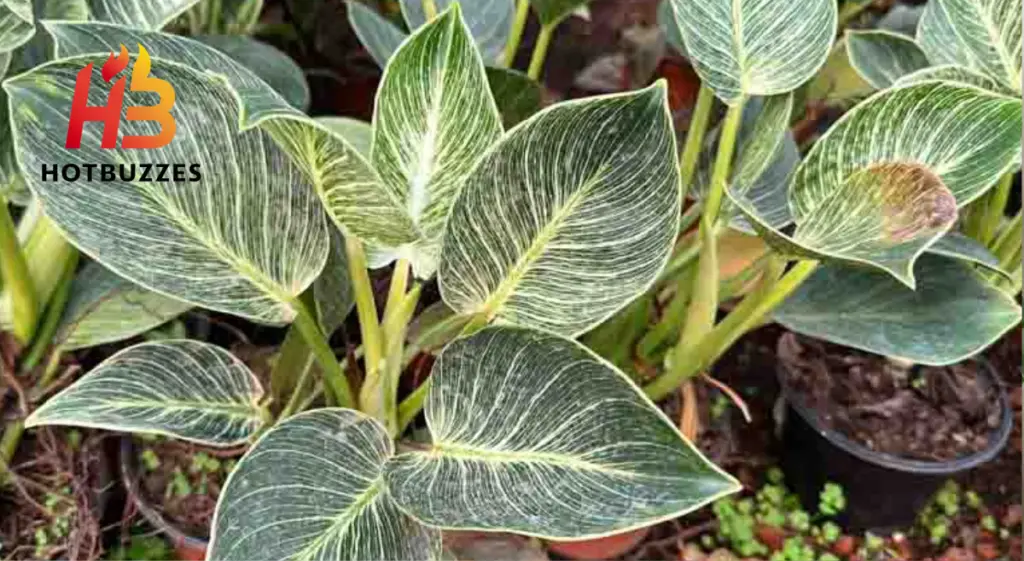
Some plants blend into a room, and others stop people in their tracks. The Philodendron Birkin is firmly in the second category. Its deep green leaves are lined with precise creamy-white pinstripes that run from the central vein outward, and no two leaves carry the same pattern.
It is compact enough for a desk or shelf, slow-growing enough to stay manageable, and striking enough to become the most talked-about plant in any room it sits in. What makes the Birkin even more interesting is its origin story. This is not a plant you would find growing in a forest somewhere.
It is a cultivated cultivar that emerged from a spontaneous mutation and has since become one of the most popular houseplants of recent years. Understanding where it came from helps explain why it looks the way it does and what it needs to stay looking that way.
This guide covers everything from the plant’s background and biology to a full breakdown of light, watering, soil, humidity, fertilizing, repotting, propagation, and every common problem you are likely to encounter.
What Is the Philodendron Birkin?
The Philodendron Birkin is not a naturally occurring species. It is a cultivated chimera, a stabilized sport mutation of Philodendron Rojo Congo. According to Alibaba Lifetips’ detailed Birkin care guide, it is botanically classified as Philodendron Birkin. It is a compact, slow-growing, evergreen aroid. It is prized for its striking pinstriped leaves. Each leaf has unique creamy-white to pale yellow stripes on a deep green background.
Fast-Growing Trees’ Birkin growing guide puts the origin in plain terms: the Birkin is not found in nature. It is a unique offspring of the Philodendron Rojo Congo. It developed a mutation that causes a lack of pigment in parts of the leaves. This gives the plant its signature white variegation.
Sometimes called the White Wave, the origin of the Birkin’s name is unclear. It may have been inspired by the famous Hermès Birkin handbag from the 1980s. According to Brittany Goldwyn’s care guide, the Philodendron genus contains 489 species. Most species grow in tropical, humid climates.
They are known for their large, beautiful leaves and are among the world’s most popular houseplants. The Birkin traces its origin to the tropical regions of Central and South America and the Caribbean through its parent plant. This is confirmed by Greg App’s plant care database.

Unlike most philodendrons, the Birkin does not climb or vine. It grows upright and bushy, making it ideal for desks, shelves, and small spaces. It reaches between 1 and 3 feet indoors in most conditions, growing at a slow but steady pace that produces a new leaf roughly every three to four weeks when conditions are consistent. Discover everything you need to know to keep your Monstera healthy and thriving indoors.
Light: The Key to Keeping the Pinstripes Vivid
Light is the single most important factor in keeping the Birkin’s distinctive variegation sharp and visible. Get the light right, and the white stripes stay crisp and defined. Give the plant too little, and those stripes begin to fade as the plant produces plainer, greener leaves.
Healthy Houseplants’ Birkin care guide explains why light is so crucial for the variegation, specifically: bright indirect light promotes vibrant leaf colouration without risking leaf burn. If the plant receives too little light, new leaves may come out plain green instead of their usual pinstriped pattern.
Plants and Pondering’s care guide confirms this from personal experience: if a Birkin is not receiving enough light, new leaves will be plain green rather than variegated. The pinstripes depend on adequate light to develop and maintain their brightness.
Ideal Placement
The ideal place is near an east-facing window, where the plant gets gentle morning sun. It can also be placed a few feet away from a south- or west-facing window. This provides bright, indirect light, which the plant prefers.
It also protects the leaves from harsh afternoon sun that can cause scorching. Alibaba Lifetips notes that direct sun exposure is one of the top four causes of Birkin decline. There is also a risk at the other extreme of the light spectrum. Greg App shares the experience of a plant owner. They noticed that too much bright light can cause the plant to produce pure white leaves.
These leaves contain very little chlorophyll and cannot photosynthesize effectively. This is an extreme response to excessive light. Moving the plant to a slightly less bright location usually solves the problem.
Intuitive Plants’ care guide adds a practical watering note connected to light: if your Birkin is situated near a source of strong indirect light, monitor soil moisture more closely as it may dry out faster and need more frequent watering to compensate for the increased evaporation.
If natural light is limited, use a grow light instead. Place it within three feet of the plant. Keep it on for 12 to 14 hours each day. This helps maintain healthy growth and variegation. Plant owners in the Greg App community have reported good results with grow lights. One owner even noted slow but steady growth using a 60-watt grow light placed almost three feet away.
Watering: The Number One Cause of Problems
Overwatering is the single most common reason Birkin plants decline. This applies to most philodendrons. The Birkin is no exception. It is sensitive to wet soil. Root rot can develop quickly if the soil stays saturated for too long.
Alibaba Lifetips gives the most precise guidance: water when the top one to one and a half inches of soil feel dry to the touch, and only then. This typically translates to once every seven to twelve days in spring and summer and every fourteen to twenty-one days in fall and winter. But calendar-based schedules fail because soil moisture loss varies dramatically with the environment. Always verify with your finger, not a schedule.
When watering, do so thoroughly: pour room-temperature, filtered or rainwater slowly until it runs freely from the drainage holes. Discard excess water from the saucer within fifteen minutes. Never let the pot sit in standing water, even for thirty minutes.
Soggy soil creates anaerobic conditions within forty-eight hours, triggering Fusarium or Pythium root rot. Symptoms appear first as yellowing lower leaves, then mushy blackened stems at the base, and finally a sour odour from the soil.
Brittany Goldwyn shares her personal watering approach that has worked well: water thoroughly, letting excess drain from the bottom, then wait until the soil completely dries out before watering again. This approach has kept her Birkin free of yellowing leaves.
Fast-growing trees give a practical seasonal schedule as a starting point: water every week in summer and every two weeks in winter. They also recommend bottom-watering as a useful technique for owners who travel or struggle to remember watering. Place the pot in a basin of water and let the soil absorb moisture from the bottom up; this delivers exactly what the plant needs without the risk of oversaturating the surface layer.
Overwatering and Underwatering Symptoms
The distinction between overwatering and underwatering symptoms is important to know. Fast-Growing Trees describes the patterns clearly. Brown spots on leaves are most commonly a fungal issue connected to overwatering. Yellowing leaves and soft stems indicate root rot. Leaves curling inward signal that the soil is too dry. Older leaves turning yellow with no browning points to underwatering, with a resulting lack of nutrients.
Soil: Well-Draining and Nutrient-Rich
Because overwatering is the biggest risk to the Birkin, soil that drains efficiently is not optional; it is essential. The right mix allows water to move through quickly so roots are never sitting in saturation, while retaining just enough moisture to support the plant between waterings.
Healthy Houseplants recommends a mix with a pH range of 5.5 to 6.5 and describes the ideal composition as peat moss, perlite, and orchid bark. This combination mimics the plant’s natural habitat, allowing for proper root development and nutrient uptake while ensuring water moves through efficiently. Coarse sand or extra perlite can be added if drainage needs further improvement.
Alibaba Lifetips gives the same soil pH guidance of slightly acidic conditions, confirming that a well-draining, aerated potting mix rich in organic matter is the foundation of good Birkin care. Brittany Goldwyn adds a useful practical note: soil in unglazed clay or terracotta pots dries out faster than in glazed or plastic containers.
If you are using terracotta, your watering frequency will naturally increase compared to the same plant in a plastic pot with the same soil mix. Factor the pot material into how you schedule your checks.
Fast Growing Trees specifies that acidic to neutral soil with a pH between 6 and 7 is best and that most standard commercial potting soils will fall within this range. Their key requirement is that the soil is fertile and well-draining, avoiding over-saturation, which leads directly to root rot.
Pot Size and Repotting
The Birkin grows slowly and does not need frequent repotting, but choosing the right pot size at each stage is important for preventing the waterlogged soil conditions that cause most of its problems.
Intuitive Plants makes the sizing principle clear: when repotting, choose a container only one to two inches larger in diameter than the current root ball. A larger pot provides room for growth without the risk of waterlogged soil that sits too far from the roots. Excess soil that the roots cannot reach stays wet for much longer, creating exactly the conditions root rot needs.
Gardenia.net’s Birkin entry recommends repotting every two to three years or when roots start to crowd the pot and emerge from the drainage holes. Fast-growing trees give a similar timeline of every one to two years, with spring and summer being the ideal seasons when the plant is actively growing and recovers most quickly from the disturbance.
Always use pots with drainage holes. Alibaba Lifetips lists the pebble tray method for raising humidity and specifically cautions: set the pot on top of the tray, not in the water. The same logic applies to the pot itself; drainage holes are non-negotiable for a plant this sensitive to wet roots.
Intuitive Plants also advises emptying any water that collects in saucers within a short time after watering. If left, the plant may reabsorb it, leading to overwatering problems even when the initial watering was measured carefully.
Temperature: Stable Warmth and No Cold Drafts
The Birkin is a tropical plant that does best in stable, warm conditions. Sudden temperature changes and cold exposure are among the top causes of stress and decline.
Alibaba Lifetips specifies the ideal range as 65 to 85 degrees Fahrenheit (18 to 29 degrees Celsius). Intuitive Plants narrows this slightly to 65 to 78 degrees Fahrenheit (18 to 26 degrees Celsius) as the optimal comfort zone, noting that sudden drops below this range trigger the plant’s defence mechanisms and lead to slowed or stunted growth.

Fast-growing trees give the outdoor cold threshold as 55 degrees Fahrenheit; anything below that will cause damage or death. This means the Birkin should be brought indoors before autumn temperatures approach this level if it has been outside during warmer months.
The practical application for indoor owners is straightforward: keep the plant away from air conditioning vents, heating vents, drafty windows, and any location where temperature fluctuates significantly through the day or night. The Birkin does not need exotic conditions; standard room temperature in most homes is perfectly adequate. What it cannot tolerate is inconsistency and cold exposure.
Humidity: Above 40 Percent, Higher Is Better
The Birkin’s tropical origins mean it appreciates humidity, but it is more adaptable to standard home conditions than the reputation of tropical plants might suggest. Explore the fascinating world of variegated plants and what makes them so desirable.
Healthy Houseplants identifies the preferred humidity range as 50 to 60 percent, reflecting its tropical origins and noting that higher humidity promotes lush growth and prevents leaf issues. Alibaba Lifetips places the ideal range slightly higher at 50 to 70 percent while confirming the plant adapts well to average indoor humidity of 40 to 60 percent.
Below 40 percent, the signs become clear: brown, crispy leaf edges, curling leaves, slower growth, and brittle petioles. Alibaba Lifetips also notes that above 80 percent without adequate airflow invites fungal issues like Phytophthora or bacterial leaf spot, so very high humidity needs to be balanced with good air circulation.
The most effective practical options for raising humidity are grouping plants to create a localized microclimate, using a shallow pebble tray filled with water under the pot (with the pot resting on top of the tray, not in the water), or running a cool-mist humidifier on a timer for four to six hours during daylight hours, placed three to four feet from the plant.
Interestingly, Fast Growing Trees notes that while the Birkin receives lots of humidity in the rainforest where its parent species originates, the Birkin philodendron seems to do just fine in regular interior humidity, suggesting it is more adaptable than some care guides imply.
Reversion: What to Do When Green Takes Over
One of the more fascinating aspects of the Birkin is what happens when it reverts. Because the white variegation is the result of a chimeric mutation, individual stems can sometimes push out leaves that are partially or mostly solid red-green rather than pinstriped.
Brittany Goldwyn explains this clearly: the Birkin is a result of a rare mutation from the Philodendron Rojo Congo and can revert to solid red-hued leaves. When this happens, the recommended approach is to cut the plant back to the most recent variegated leaf to encourage variegation on new growth.
This reversion is not a sign of poor care; it is a genetic characteristic of the plant’s chimeric nature. Some stems simply revert, while others continue producing striped leaves. Managing it requires monitoring new growth and pruning back any stems that have reverted to solid colour before the non-variegated growth dominates the plant.
Pruning and Cleaning
The Birkin rarely needs significant pruning. Its compact, upright growth habit means it does not sprawl or become unruly the way vining philodendrons can. Gardenia.net confirms this: pruning is not necessary, and the only routine maintenance needed is removing yellow or damaged leaves as they appear.
For owners who want a bushier plant, Brittany Goldwyn outlines three practical approaches. Pinching the tips of stems encourages branching and bushier growth. Use fingers or clean scissors to gently remove the growing tip. Propagating stem cuttings and keeping the new plants alongside the mother plant fills out the appearance. And repotting with fresh soil can also promote a more vigorous, fuller growth response.
Cleaning the leaves regularly removes dust that reduces photosynthetic efficiency and helps you catch any early pest activity before it becomes an infestation. Wipe each leaf gently with a damp cloth, paying attention to the underside where pests tend to hide.
Propagation: Step by Step
Propagating a Philodendron Birkin is straightforward and produces reliable results from stem cuttings. Healthy Houseplants provides a clear step-by-step process.
Choose a healthy stem with at least two to three leaves and one visible node. Using clean, sharp scissors or pruning shears, cut the stem just below the node. Remove the lower leaves, leaving one to two at the top. Dip the cut end in rooting hormone powder, optionally; this step is not required, but it can speed up rooting.
Place the cutting in a container of clean water with the node submerged but the leaves above the waterline. Position it in a warm spot with bright indirect light. Change the water every three to five days to prevent bacterial growth. Alibaba Lifetips reports that roots typically emerge in ten to twenty-one days.
Once roots reach one to one and a half inches long, transplant the cutting into a small pot with well-draining, pre-moistened soil mix. Cover loosely with a clear plastic bag for five to seven days to maintain humidity during the transition, then remove the covering gradually over three days to allow the cutting to adjust to standard indoor air.
Plants and Pondering recommends letting the cutting sit out for a few hours before placing it in water to allow a callous to form over the exposed stem, a small step that reduces the risk of bacterial rot at the cut surface. Spring and early summer are the best times to propagate, taking advantage of the plant’s active growing period for the fastest root development.

Common Problems and Fixes
Yellow leaves: Most often caused by overwatering. Check that the soil is not soggy and that the pot drains properly. Let the soil dry out between waterings and reduce watering frequency going forward. If yellowing is paired with soft stems and a soil odour, root rot has likely set in and repotting in fresh dry soil is necessary.
Brown, crispy leaf tips and edges: Almost always low humidity or inconsistent watering. Alibaba Lifetips recommends ruling out fluoride or chlorine sensitivity by switching to rainwater or filtered water for two weeks to see if the brown tips improve.
Plain green leaves with no pinstripes: The plant is not getting enough light. Move it closer to a bright window or add a grow light. Plants and Pondering confirms from direct experience that insufficient light consistently causes new leaves to come out solid green rather than variegated.
Leggy growth with sparse leaves: Insufficient light causes the plant to stretch toward the nearest light source. Moving it to a brighter position is the primary fix. Alibaba Lifetips specifically advises against pruning as the first response, addressing the light cause first.
Leaves curling inward: Fast-Growing Trees identifies this as a sign that the soil is probably too dry. Water thoroughly and check the soil every few days going forward.
Sudden leaf drop: Often follows abrupt temperature shifts, repotting shock, or severe underwatering. Stabilize conditions, stable temperature, appropriate watering, no fertilizer for four weeks, and give the plant time to recover.
Pests: Spider mites are the most common pest, particularly because the Birkin thrives in the higher humidity that mites also favour. Gardenia.net recommends identifying spider mites by the fine webs they produce and treating with increased humidity and a strong stream of water, followed by insecticidal soap or neem oil for severe infestations. Mealybugs are the second most common issue, remove with alcohol-dipped cotton swabs or neem oil applied directly.
FAQs
Q1: How often should I water my Philodendron Birkin?
Every seven to twelve days in spring and summer, and every fourteen to twenty-one days in fall and winter, as a general starting point. Always check the top one to two inches of soil first, and water only when that layer is completely dry.
Q2: Why are my Birkin’s new leaves coming out plain green?
The plant needs more light. When a Birkin does not receive adequate bright indirect light, new leaves lose their pinstripe pattern and emerge as solid green. Move the plant closer to a bright window and monitor new growth over the following weeks.
Q3: How do I make my Birkin grow faster?
The Birkin is naturally a slow grower. The fastest it will grow is in bright indirect light with regular feeding during the growing season and humidity above 50 percent. Providing a consistent environment rather than frequent changes gives it the best conditions for steady new leaf production.
Conclusion
The Philodendron Birkin earns its place in any plant collection, not just for how it looks but for how it grows. Each new leaf that unfurls carries its own version of the white pinstripe pattern, slightly different from the one before it, slightly different from any other plant of the same species. That unpredictability within a stable, reliable framework is what makes growing a Birkin genuinely engaging over time.
Its care requirements are consistent with its tropical background: bright indirect light to keep the variegation vivid, measured watering that lets the soil dry out between sessions, well-draining soil in a pot that fits the root ball, stable warmth away from cold drafts, and moderate humidity.
None of those requirements is demanding. Together, they create conditions that allow the Birkin to produce new leaves steadily and look striking month after month.

Ali Hassan is a plant enthusiast and content writer who creates practical, easy-to-follow articles about plant care, gardening, and indoor plants. He combines thorough research with reliable horticultural resources to provide accurate, beginner-friendly advice. His goal is to help readers grow healthier plants and make plant care simple, enjoyable, and accessible for everyone.