
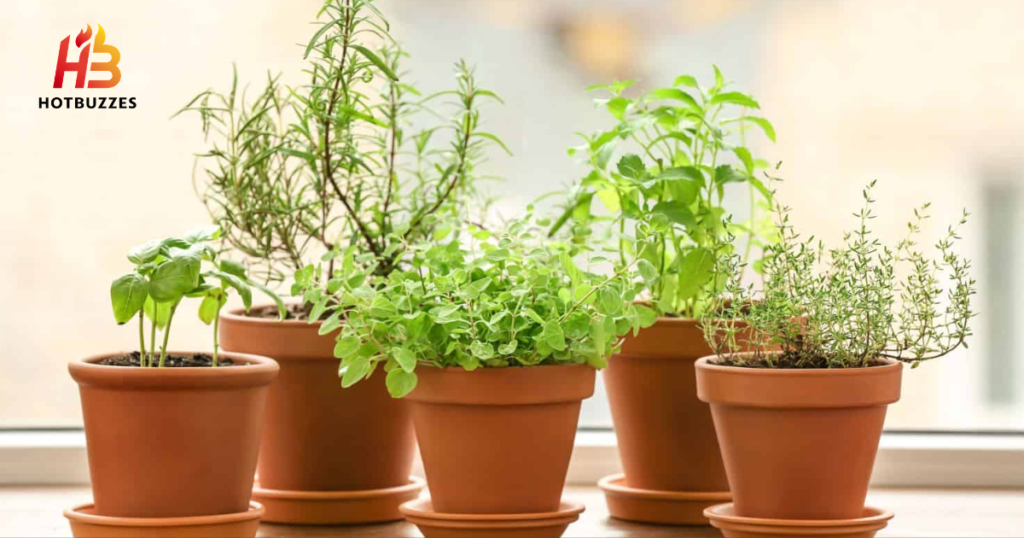
A kitchen windowsill herb garden is one of the most rewarding small-scale growing projects available to anyone with a reasonable window and a handful of pots. The return on investment is immediate: fresh basil pinched directly onto pasta, chives snipped over scrambled eggs, mint torn into a drink, and it compounds daily as the herbs you grow become part of how you cook rather than ingredients you remember to buy when you happen to think of them.
The challenge is that a kitchen windowsill is not a controlled growing environment. It has real constraints: limited space, glass that filters the light spectrum, radiators below the sill that dry the air, and kitchen steam that occasionally raises humidity unpredictably. Understanding which herbs genuinely suit these conditions, and which ones look promising but consistently disappoint, makes the difference between a collection that produces reliably all year and a succession of plants that start well and gradually decline.
This guide covers the specific herbs that perform best in kitchen windowsill conditions, with the precise care details that apply specifically to growing in this environment rather than in a garden bed or a more controlled indoor setup.
What a Kitchen Windowsill Actually Provides
Plantura’s windowsill herb guide identifies a factor that most indoor herb guides skip: plants do not receive the full spectrum of light through today’s double-glazed and coated windows that they would outdoors. Modern window glass filters UV radiation and reduces the intensity of the light spectrum that reaches the herbs. The consequence is slower growth than outdoor herbs of the same species and a tendency toward long, weak stems with few and small leaves if the windowsill does not receive substantial direct light for several hours per day.
The kitchen environment adds specific advantages that other rooms do not provide. Kitchen temperatures are more consistently warm than other rooms because of cooking activity, which suits most culinary herbs. The proximity to cooking means harvesting is genuinely convenient rather than requiring a trip to another room or outdoors. The ambient humidity from boiling and steaming moderates the drying effect of radiators below the windowsill, which benefits moisture-loving herbs like basil and parsley.
Blooming Expert’s May 2026 comprehensive windowsill herb guide notes that tiered stands placed on the windowsill improve air circulation between pots, which reduces fungal problems on moisture-sensitive herbs. This practical detail- that physical arrangement affects air movement around the herbs- is one of the differences between a windowsill collection that stays healthy and one that repeatedly develops mould, mildew, or fungal spot issues. Discover the easiest herbs to grow indoors and enjoy fresh flavors in every season.
Matching Herbs to Window Direction Before Buying Anything
The most important decision in a kitchen windowsill herb garden is made before any plant is purchased: which direction does the window face? Kim Schob’s herb garden guide gives the baseline requirement: most herbs need at least four to six hours of direct sunlight daily. South-facing windows are ideal, but east or west-facing windows can also work for many herbs.
South-facing windows receive the most total sunlight through the day across all seasons, making them suitable for the most light-demanding herbs: basil, rosemary, thyme, and sage. These herbs want as much light as a windowsill can provide and reward south-facing positions with the most flavourful, aromatic leaves.
East-facing windows receive gentle morning sun for several hours, then indirect light for the rest of the day. Mint, parsley, chives, and coriander all handle east-facing positions comfortably. These herbs produce well in moderate light and often perform better here than in the intense afternoon sun of a west-facing window.
West-facing windows receive direct afternoon sun, typically the most intense light of the day. Most Mediterranean herbs tolerate this well, but tender herbs like basil and coriander can be stressed by the sustained heat that west-facing windows generate on sunny days. Placing these herbs a few inches back from the glass moderates the intensity.
North-facing windows rarely receive direct sunlight in the Northern Hemisphere and produce the most challenging conditions for culinary herbs. Savvy Gardening’s kitchen window herb guide is practical about supplementing inadequate window light: a grow light or a supplemental grow light turned on for a few hours after the sun sets each evening makes north-facing window growing genuinely viable. Without supplemental light, only chives and mint reliably survive in north-facing kitchen windows.
Radiator Problem That Most Guides Miss
The radiator, typically positioned beneath a kitchen window, is one of the most consistent causes of windowsill herb failure and one that almost no guide addresses directly.

Radiators heat the air directly above them, which creates a warm updraft that passes through the pots on the windowsill above. This warm, dry airflow does two things simultaneously: it dries the soil significantly faster than in other locations, and it lowers the relative humidity directly around the herb foliage.
The combined effect of faster soil drying and lower ambient humidity creates moisture stress in herbs that prefer consistent moisture. Basil is particularly vulnerable because it wilts noticeably within hours of the soil drying when in a warm, dry environment. A basil pot on a windowsill directly above a radiator may need watering every day or two during winter rather than the every-five-to-seven-day schedule typical of other indoor positions.
The practical solutions: place pot saucers filled with pebbles and water directly on the windowsill beneath the herb pots. As the radiator heat causes the water in the saucers to evaporate, it raises the local humidity around the foliage. Alternatively, use larger pots with more soil volume; more soil takes longer to dry out and buffers the dehydrating effect of the radiator airflow. Blooming Expert confirms that vertical planters and wall-mounted systems dry out faster than standard pots, a concern that applies equally to shallow pots sitting above radiators.
1. Basil (Ocimum basilicum)
Basil is the herb that defines the kitchen windowsill aesthetic and delivers the most immediate culinary return of any herb you can grow. A healthy basil plant on a sunny windowsill produces enough leaves for daily use within weeks and continues producing for months with the right management.
Practical Home Guides’ February 2026 windowsill guide describes it as the superstar of windowsill herbs and one of the easiest to grow indoors. Sweet basil, Genovese basil, and compact bush varieties all perform excellently indoors. Keep basil warm — never below 50 degrees Fahrenheit (10 degrees Celsius) — and pinch off flower buds as they appear to encourage more leaf production. With proper care, a single basil plant can provide fresh leaves for months.
Savvy Gardening identifies light as the single non-negotiable requirement: basil is easy to grow, but to grow well indoors it needs plenty of light. A south-facing window is good, but a grow light or a supplemental grow light turned on for a few hours after the sun has set each evening is even better.
The specific variety choice matters more for windowsill basil than for garden basil. Compact bush basil varieties — sold under names like Spicy Globe, Aristotle, and Boxwood basil produce smaller leaves on more compact plants that suit limited windowsill space better than the large-leaved Genovese varieties. They also tend to bolt more slowly, extending the productive leaf-harvesting period before flowers appear. Keep your indoor basil plant alive with the right light, watering, and care techniques.
Window position: South-facing is ideal. East-facing with supplemental light. Cannot handle north-facing without a grow light. Harvest method: Always pinch from the top, cutting just above a leaf pair to stimulate lateral branching rather than upward elongation. Key risk: Cold drafts and temperatures below 10 degrees Celsius cause immediate visible damage.
2. Chives (Allium schoenoprasum)
Chives are among the most reliably productive herbs for kitchen windowsill conditions because they tolerate a wider range of light levels than most culinary herbs while delivering a fresh, mild onion flavour that suits a genuinely wide range of everyday cooking.
Savvy Gardening identifies chives as probably the easiest herb to grow with a mild onion taste that lends flavour to scrambled eggs, quiche, pasta, soups, baked potatoes, and more. Positive Bloom’s kitchen herb guide notes chives are compact and easy to manage, producing delicate hollow leaves that add mild onion flavour to dishes.
The growth habit of chives is uniquely suited to continuous harvest. Unlike basil or parsley, where harvesting whole stems affects plant structure, chives regenerate in the same way grass does: cut the hollow leaves down to two inches above the soil and they regrow quickly from the same base without any visible impact on plant health. A mature clump of chives on a windowsill provides enough leaves for weekly use from a single four-inch pot.
Chives also produce edible purple-pink flowers in spring and summer that are ornamentally attractive on the windowsill and culinarily useful; they have the same mild onion flavour as the leaves and can be used as garnish or chopped through salads and soft cheeses.
Blooming Expert gives the positioning advice that applies specifically to tiered windowsill arrangements: chives belong at the front on lower tiers, allowing taller herbs to benefit from the back position without shading the lower-growing chives.
Window position: East, west, or south-facing. One of the most tolerant herbs for lower light levels. Harvest method: Cut to two inches above soil level. The clump regrows without structural damage to the plant. Key advantage: Edible flowers add seasonal ornamental interest alongside culinary utility.
3. Mint (Mentha species)
Mint is one of the most forgiving herbs for kitchen windowsill growing, tolerating partial shade better than almost any other culinary herb while producing reliably and quickly.
Practical Home Guides describes mint as nearly impossible to kill, with a vigorous growth habit that means plenty to harvest for teas, cocktails, and culinary uses. Spearmint and peppermint are the most popular varieties, but chocolate mint and apple mint offer interesting flavour variations.
The one absolute requirement for windowsill mint that differentiates it from every other herb on this list: it must grow in its own dedicated pot. Mint spreads by underground runners called stolons that extend horizontally through soil. In a shared pot with other herbs, these runners quickly take over the available root space and displace every other herb. A mint plant in its own pot, however, provides a continuous harvest that only increases in vigour over time.
For the windowsill specifically, regular harvesting is the management technique that keeps mint from becoming a straggly, overgrown sprawl. Cutting stems back to just above a leaf pair every two to three weeks produces compact, bushy plants with the densest, most fragrant foliage. Let mint grow unchecked, and it becomes leggy with older leaves that are less aromatic than new growth.
Blooming Expert positions mint at the back on upper tiers of windowsill arrangements because of its taller growth habit relative to chives and thyme. This positioning also allows any lower-growing herbs in front to receive adequate light without being shaded by the mint’s more vigorous foliage.
4. Thyme (Thymus vulgaris)
Thyme is the herb that rewards neglect. Where basil wilts at the first sign of dryness and coriander bolts in warm temperatures, thyme simply gets on with it, producing steadily from its compact, woody base with minimal intervention.
Positive Bloom describes thyme accurately: tiny leaves pack powerful flavour that enhances soups, stews, and meat dishes. This compact herb grows slowly but steadily, forming a small bush that fits perfectly on crowded windowsills. Growing thyme indoors requires minimal effort — it thrives in average light and prefers drier conditions. The woody stems hold up well to long cooking times, making it perfect for slow-cooked dishes. Thyme is remarkably forgiving if you forget to water it occasionally.
The slow growth rate that Positive Bloom notes is a genuine practical advantage on a windowsill where you are not looking for maximum volume but for a steady, reliable supply. A single thyme plant started in spring produces enough leaves for weekly cooking use and continues doing so for months without the intensive management that faster-growing herbs like basil require.
Thyme is available in several varieties beyond the standard Thymus vulgaris. Lemon thyme Thymus citriodorus produces the same flavour profile with an added citrus note that suits fish dishes, vegetables, and salad dressings. It is equally easy to grow and handles windowsill conditions with the same low-maintenance reliability as standard thyme.
Window position: South-facing is ideal for most aromatic leaf production. Tolerates east or west-facing positions. Harvest method: Snip small sprigs from the growing tips. Avoid cutting into old woody stems without green growth; these do not regenerate. Key advantage: The herb most forgiving of occasional missed waterings. Suits windowsills directly above radiators.
5. Rosemary (Salvia rosmarinus)
Rosemary is simultaneously one of the most rewarding windowsill herbs; few scents in a kitchen compete with fresh rosemary and one of the most commonly mismanaged. Its care requirements are the reverse of what most people assume, and understanding this makes it genuinely easy rather than frustratingly temperamental.
Plantura identifies rosemary as one of the easiest kitchen herbs to grow, with an aroma that enhances a variety of dishes from hearty stews to roast vegetables and soups.
The key mismanagement: rosemary is consistently killed by overwatering. It is a Mediterranean plant from hot, dry hillsides where rain is seasonal and soils drain rapidly. On a kitchen windowsill, the instinct to keep herbs moist kills rosemary while the same moisture level keeps basil and parsley comfortable. Rosemary needs to dry out noticeably between waterings; the top two to three inches of soil should be completely dry before water is added.
The second common mistake is inadequate light. Practical Home Guides notes that rosemary needs maximum available light to produce the aromatic oils that make it useful in cooking. A south-facing window is genuinely required for rosemary to produce flavourful leaves worth using. In lower light positions, rosemary survives but produces thinner, less aromatic growth.
Rosemary grows slowly on a windowsill, which means a single well-established plant provides ongoing harvests without needing replacement. Unlike fast-growing herbs that exhaust themselves within a season, a rosemary plant can remain on the same windowsill for years, gradually developing a more substantial woody base and producing more growth each season.
6. Coriander (Coriandrum sativum)
Coriander is the herb that most consistently surprises windowsill growers in both directions. When conditions suit it, it grows prolifically and produces a continuous supply of leaves for weeks. In the wrong conditions, it bolts to seed almost immediately, producing a few leaves and then a flower spike with no usable harvest.
Positive Bloom captures the key fact about coriander that makes it different from every other herb on this list: cilantro prefers cooler temperatures and partial shade. This is the biological characteristic that defines windowsill success with coriander it is a cool-season herb that performs best in autumn, winter, and early spring rather than the summer months when most herbs are at their most productive.
Gardening Know How’s January 2026 guide to fast-growing herbs identifies coriander as one of the speed demons for winter windowsill growing — herbs that germinate quickly and tolerate lower light levels. Starting coriander seeds in January on a south-facing windowsill can produce harvestable leaves by March, making it one of the best herbs for extending the growing season into the coldest months. In cooler months, the south-facing position suits it well.
Successive sowing every three to four weeks ensures a continuous supply. Rather than maintaining one large coriander plant, start a new pot of seeds regularly and harvest each pot heavily before it bolts. This succession approach matches coriander’s fast lifecycle more effectively than trying to extend individual plants beyond their natural bolting tendency.
Window position: East-facing or slightly shaded south in summer. South-facing in autumn and winter. Harvest method: Harvest leaves continuously from the outside of the plant. Begin harvesting as soon as the plant has several sets of true leaves to delay bolting. Key strategy: Successive sowings every three to four weeks rather than one large plant maintained long-term.
7. Parsley (Petroselinum crispum)
Parsley is one of the most consistently productive windowsill herbs and one of the most versatile culinarily. Both flat-leaf Italian parsley and curly parsley grow well on windowsills, with flat-leaf generally considered more flavourful and curly more compact and ornamentally tidy.
Savvy Gardening gives a personal endorsement from a kitchen window grower whose grandmother always kept a pot of curly parsley because of the fresh flavour and scent. This domestic familiarity with windowsill parsley across generations reflects how reliably it performs in kitchen window conditions.
Epic Gardening’s windowsill herb guide notes that parsley grows year-round indoors, making it one of the most dependable herbs for a continuous supply regardless of the season outside. This year-round reliability is particularly valuable in winter when outdoor fresh herbs are unavailable, and supermarket parsley is at its most expensive.
The biennial nature of parsley creates an important practical consideration. In its first year, parsley produces only leaves. In its second year, it produces a flower stem, sets seed, and then dies. For continuous windowsill supply, start a new parsley pot annually rather than maintaining the same plant indefinitely.
Parsley seeds are notoriously slow to germinate, often taking three to four weeks even under ideal conditions. Soaking seeds in warm water for twenty-four hours before sowing significantly speeds germination. Alternatively, nursery transplants provide an immediate harvest without waiting through the slow seed germination period.
Window position: East, west, or south-facing. More tolerant of moderate light than most culinary herbs. Harvest method: Harvest outer stems first, allowing the central crown to continue producing new growth from the inside outward. Key biological fact: Biennial plant that flowers and dies in its second year. Replace with a new plant annually for continuous harvest.
8. Oregano (Origanum vulgare)
Oregano is the overlooked herb of the kitchen windowsill, rarely mentioned in beginner guides despite being one of the most reliable, low-maintenance, and genuinely useful culinary herbs available.
Epic Gardening identifies oregano as one of the fifteen best herbs for kitchen window growing. It produces a steady supply of small, aromatic leaves that are the defining flavour in pizza, pasta sauces, Greek salads, and a range of Mediterranean and Middle Eastern dishes.
Like thyme, oregano is a Mediterranean herb that prefers drier conditions and handles occasional missed waterings without decline. Unlike rosemary, it tolerates more moderate light levels than a pure south-facing window requirement, making it a versatile choice across different kitchen orientations.
Blooming Expert specifically includes oregano in the group of compact, shallower-rooted herbs suitable for front-of-windowsill positioning on lower tiers or in wall-mounted vertical pocket planters. Its compact growth habit means it suits smaller containers without the rapid root expansion that mint or parsley can produce.
Greek oregano Origanum vulgare subsp. Hirtum is the variety most commonly used in cooking and the most flavourful for culinary purposes. It has smaller, more densely packed leaves than common oregano and a more intense aroma. For a windowsill collection focused on cooking rather than decoration, Greek oregano is the variety worth seeking out.

Window position: South, east, or west-facing. Handles moderate light better than rosemary. Harvest method: Pinch tips regularly to keep the plant bushy. Harvest before the plant flowers for the most intense flavour. Key advantage: Naturally compact growth suits limited windowsill space without aggressive management.
9. Lemon Balm (Melissa officinalis)
Lemon balm is not the first herb most people think of for a kitchen windowsill, but it earns its place through a combination of easy growing, exceptional light tolerance, and a fresh lemon scent that adds value both in cooking and simply as an aromatic plant in the kitchen.
Epic Gardening includes lemon balm in its kitchen window herb list, noting it thrives in indoor conditions. Lemon balm belongs to the mint family and shares mint’s characteristic vigour and tolerance for lower light levels. Unlike mint, it grows more upright rather than spreading via runners, which makes it more manageable in a shared windowsill arrangement.
Culinarily, lemon balm leaves add a gentle lemon flavour to herbal teas, cocktails, salads, desserts, and fish dishes. The fresh leaves are significantly more aromatic than dried lemon balm, making it one of the herbs where growing your own makes the most noticeable culinary difference compared to the dried product available commercially.
Lemon balm also provides a benefit that purely culinary guides do not mention: the scent. Fresh lemon balm on a kitchen windowsill releases fragrance when leaves are brushed or when warm kitchen air circulates through the plant. This aromatic quality along with that of rosemary and mint, contributes to the sensory experience of a kitchen herb collection that goes beyond pure culinary utility.
Window position: East, west, or south-facing. Handles lower light than most Mediterranean herbs. Harvest method: Cut stems to just above a leaf pair. Harvest before the plant flowers for the most lemony scent and flavour. Key value: Fresh lemon balm delivers significantly more flavour than the dried product — one of the herbs where homegrown makes the most noticeable culinary difference.
Arranging Multiple Herbs for Maximum Light and Air
The way herbs are arranged on a windowsill affects both their light access and their susceptibility to fungal problems two factors that experienced windowsill growers manage deliberately rather than by accident.
Blooming Expert gives the most specific arrangement guidance available: position taller herbs mint and parsley at the back on the upper tier of a tiered stand, and lower-growing herbs chives, thyme, and oregano at the front on lower tiers. This arrangement ensures each plant gets light without being shaded by its neighbours. Tiered stands also improve air circulation between pots, which reduces fungal problems on moisture-sensitive herbs.
This is practical advice that improves outcomes significantly. A single row of pots at the same height creates shading competition; the tallest plant at the front blocks light to everything behind it. A two-tier arrangement immediately doubles the effective light access for every plant in the collection.
Wall-mounted pocket planters are an alternative for kitchens where windowsill space is genuinely limited. Blooming Expert notes these work best with shallower-rooted compact herbs: chives, oregano, thyme, and small parsley. Avoid basil in very shallow pockets; it needs more root depth to establish well. Water vertical planters carefully as they dry out faster than standard pots and can drip onto lower levels.
Grouping herbs by their water requirements prevents the most common windowsill arrangement mistake. Rosemary, thyme, and oregano all prefer to dry out between waterings; they suit shared space in the same watering zone. Basil, parsley, and mint all prefer more consistent moisture; they suit grouping so they can be watered on the same schedule. Mixing drought-tolerant and moisture-preferring herbs without considering this when watering results in one group consistently struggling.
The Supermarket Herb Pot Rescue
One of the least discussed and most practical aspects of kitchen windowsill herb growing is what to do with the dense, cheap herb pots sold in supermarkets.
These pots, typically packed with many seedlings growing tightly together, are designed to be used quickly as a short-term product rather than maintained as living plants. The congested root systems and high plant density mean that left as sold, they typically decline and die within two weeks.
Savvy Gardening acknowledges that starting with purchased transplants from garden centres or farmers’ markets is faster and easier than growing from seed. The same logic applies to supermarket pots, but the key step is division.
To rescue a supermarket herb pot: water it well, then gently remove the root ball and separate it into three or four clumps, each containing several seedlings with their roots intact. Plant each clump into its own individual pot with fresh well-draining potting mix. Within two to three weeks of this division, the individual clumps establish properly, develop healthy root systems, and begin producing harvestable leaves continuously. What would have died as a single congested supermarket pot becomes four or five productive windowsill plants for the cost of the additional soil and containers.
This technique works reliably for basil, coriander, parsley, and chives. It does not work as well for thyme, rosemary, or oregano because these herbs are typically sold as individual rooted cuttings rather than dense seedling clumps and are better left intact.
FAQs
Q1: What is the best window direction for a kitchen herb garden?
South-facing provides the most light and suits the widest range of herbs, including basil, rosemary, and thyme. East-facing suits mint, chives, coriander, and parsley. West-facing works for most herbs but position basil slightly back from the glass to moderate afternoon heat. North-facing requires a grow light for almost all culinary herbs.
Q2: Can I mix herbs in one large pot?
With caveats. Thyme, oregano, and rosemary share similar watering preferences and grow harmoniously together. Basil and parsley share moisture preferences. Mint should always be in its own pot; its spreading roots take over any shared container. Coriander bolts faster in warm shared pots and does better individually.
Q3: How often should I replace windowsill herb plants?
Basil: replace seasonally or when it bolts. Parsley: annually because it is biennial. Coriander: every three to four weeks via successive sowing for continuous supply. Mint, chives, thyme, and oregano are perennials that can be maintained for years with regular harvesting and annual top-dressing with compost.
Q4: Why does my windowsill basil keep dying?
The three most common causes in order are: cold damage from contact with cold window glass or cold drafts, insufficient light, and overwatering. Move basil away from direct glass contact in winter, provide maximum available light, and water only when the top inch of soil is dry.
Q5: Do I need special potting mix for windowsill herbs?
Standard potting mix works for most herbs but benefits from the addition of perlite at a two-to-one ratio for improved drainage. The Old Farmer’s Almanac specifically recommends light, well-draining soil with perlite or coco coir. Never use garden soil in pots; it compacts and causes drainage problems.
Q6: Should I add a grow light even if I have a sunny south-facing window?
In spring, summer, and early autumn a south-facing window is usually sufficient for most herbs. In winter, a supplemental grow light turned on for a few hours after sunset extends the light day and maintains growth through the darkest months. Savvy Gardening recommends this supplement specifically for maintaining basil productivity through winter.
Conclusion
A kitchen windowsill herb garden becomes most reliable when it is built around the herbs that genuinely suit the specific conditions that window provides rather than the herbs you most want to grow regardless of fit. South-facing windows support the full range covered here. East-facing windows favour chives, mint, parsley, and coriander. Every direction can support a productive collection with minor adjustments to variety selection and the occasional supplemental grow light.
The habits that keep a windowsill herb collection productive rather than gradually declining are the same ones that apply to any indoor herb growing: harvest regularly to prevent bolting, water based on the individual herb’s preference rather than a single schedule for all pots, provide the best available light, and replace annual herbs annually.
What comes back in return is the kind of daily kitchen interaction with growing things that no dried herb packet or subscription service can replicate: fresh flavour added by pinching and cutting from living plants that are part of the kitchen itself.

Ali Hassan is a plant enthusiast and content writer who creates practical, easy-to-follow articles about plant care, gardening, and indoor plants. He combines thorough research with reliable horticultural resources to provide accurate, beginner-friendly advice. His goal is to help readers grow healthier plants and make plant care simple, enjoyable, and accessible for everyone.