
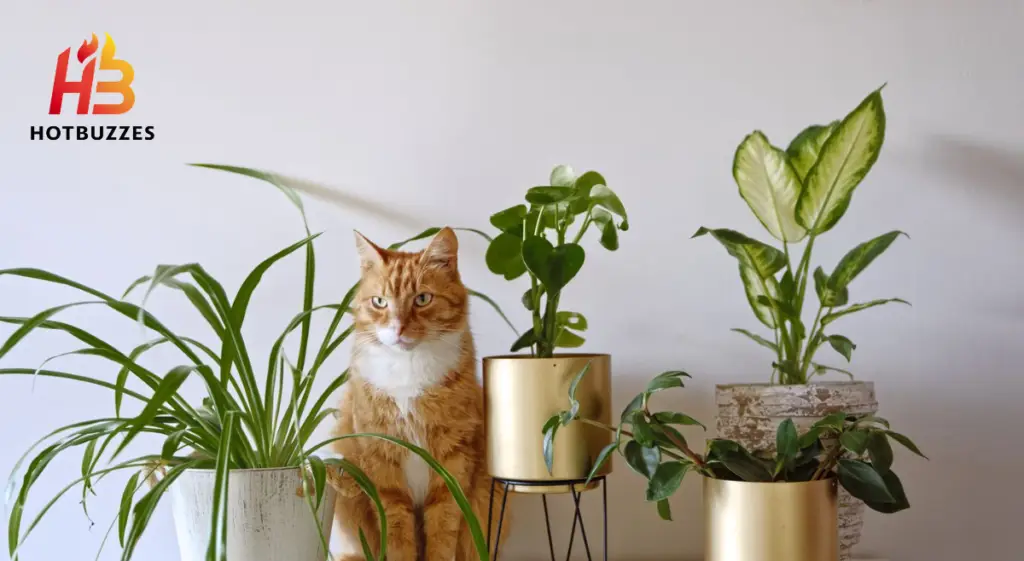
Sharing a home with pets and plants at the same time sounds simple until you start reading the toxic plant lists. Many of the most popular, most widely sold, most visually appealing houseplants of the last decade are on the ASPCA’s list of plants harmful to cats and dogs. For pet owners who also love plants, this creates a real problem that most plant content simply glosses over.
The solution is not giving up on houseplants. It is knowing which ones are genuinely safe, understanding what safe actually means, and building a collection around plants that you can enjoy without worrying every time your cat walks past a shelf or your dog sniffs a pot.
This guide covers every aspect of that problem, the science behind plant toxicity, a curated list of the best ASPCA-verified pet-safe houseplants, the popular plants that need to go or be relocated, practical placement strategies, and what to do if ingestion happens despite your best precautions.
How the ASPCA Classifies Plant Safety
Before getting into specific plants, understanding how the ASPCA determines plant safety matters, because knowing the system helps you make better decisions for your specific pets and home.
According to Blooming Expert’s ASPCA-verified pet-safe plant guide, the ASPCA Animal Poison Control Center maintains the most comprehensive plant toxicity database in North America, drawing on clinical case records, veterinary toxicology literature, and plant chemistry research. Their classifications cover three broad risk levels.
Non-toxic means no known toxic principle. Ingestion is not expected to cause systemic harm. Minor gastrointestinal upset can occur from eating any fibrous foreign material, but this is a mechanical response from the plant fibre itself, not a toxicity reaction.

ToxiPets’ pet-safe plant guide makes an important clarification: even non-toxic plants can cause mild stomach upset if a pet eats a large amount. Non-toxic means not poisonous; it does not mean designed to be eaten. A dog that consumes an entire fern might still vomit from the fibre, but there is no toxic compound causing harm. The distinction matters for understanding what level of risk you are actually managing.
Root and Reach Botanicals explains how to verify any plant before bringing it home: check the botanical Latin name, not just the common name, against the ASPCA Animal Poison Control Center database. Common names are dangerously misleading. Lucky Bamboo is not actually bamboo and is toxic to cats and dogs. The plant sold as a rubber plant can refer to multiple species with different safety profiles. Scientific names remove the ambiguity entirely.
The ASPCA Animal Poison Control Centre emergency line is (888) 426-4435. Your Pet and You by Elanco recommends keeping this number saved before you ever need it, alongside the Pet Poison Helpline at 855-764-7661.
Popular Houseplants That Are Toxic: Know What to Remove
Understanding which widely owned plants are dangerous gives context for why plant selection matters so much in a home with pets. Blooming Expert notes that the ASPCA Animal Poison Control Center lists over 400 plants toxic to cats and dogs, and many of them sit in millions of homes looking completely harmless.
Root and Reach Botanicals identifies the most commonly owned toxic houseplants: pothos, snake plants, ZZ plants, peace lilies, and monstera. Five of the most popular houseplants sold globally are all toxic to cats and dogs. Discover the best low-light plants that thrive in apartments with minimal sunlight and easy care.
Lilies deserve specific attention because the risk to cats in particular is acute. Your Pet and You explains that while peace, Peruvian, and calla lilies cause irritation to the mouth and throat, tiger lilies, daylilies, Asiatic lilies, Easter lilies, and Japanese show lilies are highly toxic to cats and can result in severe kidney failure. Cat owners should treat all lily species as potentially lethal until verified safe by species name.
Blooming Expert provides a clear diagnostic table in its guide covering 22 common species with toxic compound identification and specific symptoms. This is a useful reference for auditing what is currently in a home before bringing new plants in.
1. Spider Plant (Chlorophytum comosum)
The spider plant is one of the most recommended pet-safe houseplants available and appears consistently across every credible ASPCA-verified list for good reason. It is genuinely beautiful, easy to grow, thrives in a wide range of light conditions, and produces cascading pups on trailing stems that give it a distinctive, active quality unlike most static houseplants.
ASPCA’s official pet-friendly plant guide lists the spider plant as one of its 11 recommended pet-friendly houseplants, noting it grows 60 cm tall and removes formaldehyde, xylene, and toluene from the air, three air pollutants commonly found in indoor spaces. ToxiPets confirms it as non-toxic to both cats and dogs per ASPCA verification.
One realistic note for cat owners: cats are frequently attracted to spider plants and may chew on the long, arching leaves. ToxiPets explains this clearly: while chewing might cause mild gastrointestinal upset from the plant fibre, there is no toxicity concern. The appeal to cats is thought to be related to mild compounds in the plant that produce a gentle effect, but nothing that causes harm.
Blooming Expert recommends the spider plant as one of the most rewarding pet-safe plants for bright windowsills and notes it is one of the easier plants to propagate. The pups that develop on trailing stems can be rooted in water and shared with other plant-loving pet owners.
Safety status: ASPCA non-toxic to cats and dogs. Ideal for: Hanging baskets and high shelves where trailing stems cascade freely. Bright to medium indirect light. Water when the top two inches of soil are dry.
2. Parlour Palm (Chamaedorea elegans)
The parlour palm delivers the visual impact of a tropical palm without the toxicity risk, making it one of the most practical choices for pet-owning households that want a statement plant without the worry.
ASPCA’s official guide lists parlour palm as one of its 11 recommended pet-friendly plants, noting it is a slow grower that takes years to reach its full height of three to four feet, even with good sunlight. Tree Care Zone’s ASPCA-approved plant guide describes it as elegant with feathery fronds that bring vacation vibes indoors, with moderate difficulty in care that suits owners who are comfortable with consistent watering.
Root and Reach Botanicals names parlour palm as one of the most beginner-friendly ASPCA-verified non-toxic houseplants, noting it adapts well to lower light conditions, a quality that makes it particularly useful for apartments and rooms without strong natural light.
Purrfectly Enchanting’s cat-safe plant guide recommends it as one of its top six cat-safe houseplants and notes that tall growth naturally keeps the fronds out of reach of most cats’ casual curiosity.
Safety status: ASPCA non-toxic to cats and dogs. Ideal for: Living room corners, hallways, and bedrooms. Low to bright indirect light. Keep soil consistently moist but not waterlogged.
3. Cast Iron Plant (Aspidistra elatior)
The cast iron plant combines genuine indestructibility with verified pet safety, a rare pairing that makes it arguably the most practical choice for a home with both pets and unpredictable care routines.
ASPCA’s official guide lists the cast iron plant, also known as the Bar-room Plant, as one of its 11 recommended pet-friendly houseplants, noting it is native to Japan and Taiwan. Blooming Expert elaborates on what makes it special: it tolerates low light, irregular watering, wide temperature swings, and general neglect better than almost any other houseplant. For dark hallways, north-facing bedrooms, or rooms where other plants refuse to function, the cast iron plant is the reliable pet-safe answer.
Tree Care Zone describes its leathery leaves as naturally deterring most chewing, a practical advantage in households where pets tend to investigate plant leaves. The tough texture is simply less appealing to nibble on than softer, more pliable leaves, which adds a layer of practical safety on top of the verified non-toxicity.
Safety status: ASPCA non-toxic to cats and dogs. Ideal for: Dark corners, hallways, north-facing rooms. Low to medium indirect light. Water when the top inch or two of soil feels dry. Slow grower that stays compact for years.

4. African Violet (Saintpaulia ionantha)
For pet owners who want flowering plants indoors, genuinely beautiful ones that bloom repeatedly, the African violet is one of the strongest options available.
ASPCA’s pet-friendly plant guide lists African violet as one of its 11 recommended pet-friendly houseplants. Planet Desert’s cat-friendly plant guide confirms it is non-toxic to both cats and dogs and describes it as known for vibrant blooms in shades of purple, pink, and white, adding colour to any space. It does well in humid environments, and misting the leaves occasionally promotes healthy growth.
Your Pet and You lists African violet among the flowering houseplants recommended by veterinarians for pet-owning households, where its compact size and low maintenance needs make it a practical choice for shelves and windowsills that are accessible to pets.
The blooms of a healthy African violet can last for weeks at a time, and the plant produces new flower clusters consistently when placed in bright indirect light. For a pet-safe flowering plant that actually delivers consistent visual reward, it is one of the best available.
Safety status: ASPCA non-toxic to cats and dogs. Ideal for: Windowsills and shelves in bright indirect light. Avoid getting water on the leaves, water from the base or at the soil level. High humidity encourages more consistent blooming.
5. Haworthia (Haworthia species)
Succulents are a complicated category for pet owners because some of the most popular ones, aloe vera, jade plant, and kalanchoe, are toxic to pets. Haworthia is the exception that allows pet owners to enjoy the sculptural, low-maintenance appeal of succulents without the risk.
ToxiPets is clear on this distinction: Haworthia and echeveria are pet-safe, while aloe vera, jade plant, and kalanchoe are toxic. Always check the specific species before bringing any succulent home. Blooming Expert confirms the ASPCA classifies haworthias as non-toxic to both cats and dogs and notes they are compact, slow-growing, and extremely drought-tolerant, ideal for windowsills where pets sunbathe.
Blooming Expert also provides the key identification tip: Haworthia leaves are typically harder and more pointed than aloe, often with distinctive white stripes or raised bumps. The Haworthia fasciata, commonly called the zebra plant, has striking, thick dark green leaves with white horizontal stripes that Planet Desert describes as non-toxic to cats and dogs, with a striking appearance that stands out on any shelf or desk.
Safety status: ASPCA non-toxic to cats and dogs. Ideal for: Sunny windowsills and bright spots. Bright indirect to some direct light. Water only when the soil is completely dry, every two to four weeks. Compact size suits shelves and desks.
6. Calathea and Prayer Plants (Calathea and Maranta species)
Calatheas and prayer plants offer some of the most intricate, visually complex foliage of any common houseplant, and both are ASPCA-verified non-toxic to cats and dogs, making them an excellent choice for households where pet safety is a priority.
Your Pet and You lists calathea among the non-flowering houseplants recommended by veterinarians for pet-owning households. Tree Care Zone includes the rattlesnake plant (Calathea lancifolia) as a bonus pick in its ASPCA-approved plant guide, describing it as offering moving leaves and stunning patterns, the distinctive characteristic of prayer plants that fold their leaves upward at night and lower them again in the morning.
Root and Reach Botanicals lists calatheas and marantas as core parts of its exclusively pet-safe inventory, confirming they span a wide range of patterns and colours that give pet-owning households genuine variety without compromising safety.
The visual appeal of this plant family, the peacock calathea, the orbifolia, and the medallion, is significant. For households that have had to remove or relocate beautiful plants due to toxicity concerns, calatheas provide the same level of visual impact in a completely safe package.
Safety status: ASPCA non-toxic to cats and dogs. Ideal for: Medium indirect light. Keep soil consistently moist but not waterlogged. Humidity above 50 per cent improves leaf quality. Use filtered water where possible to prevent leaf tip browning.
7. Hoya (Hoya carnosa)
Hoyas are trailing or climbing plants with thick, waxy leaves and the occasional cluster of star-shaped, sweetly scented flowers. They are slow-growing, resilient, and ASPCA-verified non-toxic, a combination that makes them particularly well-suited to pet households where the care routine is not always perfectly consistent.
Your Pet and You lists hoya among the flowering houseplants recommended by veterinarians for pet-owning households. Tree Care Zone confirms it as non-toxic per ASPCA, describing beautiful trailing vines with sweet-scented star-shaped blooms when mature. The care requirement is bright indirect light with moderate watering, letting the soil dry out between sessions.
Root and Reach Botanicals includes hoyas as a core part of its exclusively pet-safe collection, noting they are slow-growing and very resilient, one of the most beginner-friendly choices for a pet-owning household starting to build a safe plant collection.
Hoyas produce their characteristic flower clusters more reliably when slightly root-bound and when given consistent bright indirect light. The flowers are waxy, long-lasting, and genuinely distinctive, a feature that makes this plant rewarding to grow beyond just its foliage.
Safety status: ASPCA non-toxic to cats and dogs. Ideal for: Bright indirect light near a window. Water when the top two inches of soil are dry. Hang trailing varieties high for visual impact while keeping them safely above pet reach.

Practical Strategies for Pet Owners With Plants
Verified non-toxic plants remove the primary risk, but additional practical strategies reduce the chance of pets interacting with any plant, regardless of its safety status.
Give pets their own plants. Your Pet and You recommends providing cat-friendly options, including catnip, cat grass, and cat thyme, all safe for dogs, too. Giving cats a plant that is specifically for them reduces their interest in your houseplant collection significantly.
Use placement to your advantage. Hanging plants from the ceiling, displaying them on wall-mounted shelves, and using tall plant stands naturally reduce access. Your Pet and You specifically recommends hanging plants from the ceiling, arranging them on high shelves, or displaying them in terrariums as the most effective physical barriers for cats in particular.
Protect soil surfaces. Dogs, in particular, are attracted to soil; they dig, sniff, and sometimes eat it. Covering exposed soil with decorative pebbles or moss removes the temptation and also reduces the risk of pests laying eggs in the disturbed soil.
Keep a photo record of every plant. Root and Reach Botanicals gives practical emergency advice: keep a photo of each plant in your home so you can identify it quickly if ingestion occurs. A photo of the plant alongside its botanical name tag allows a vet or poison control line to give accurate guidance immediately rather than working from a vague description.
Verify by botanical name before buying. ToxiPets recommends noting the botanical Latin name when buying any plant. Common names cause dangerous confusion; the same common name is sometimes applied to multiple species with completely different toxicity profiles.
What to Do If Your Pet Ingests a Plant
Even with a carefully curated pet-safe collection, ingestion can happen. Knowing the response protocol in advance is more useful than reading it for the first time in a moment of panic. Give your Philodendron Birkin the best care with this complete guide for beginners and plant enthusiasts.
Your Pet and You outlines the immediate steps. If you see your pet eating a plant, remove any plant material from their mouth if you can do so safely, along with any plant material from their fur or skin. Keep a sample of the plant for proper identification; this is critical for accurate treatment.
Signs that a pet may have ingested a toxic plant include vomiting, diarrhoea, excessive drooling, lethargy, loss of appetite, and unusual behaviour. Root and Reach Botanicals notes that lily poisoning in cats specifically can progress to kidney failure with minimal early symptoms, which is why swift action, regardless of initial symptom severity, is always the right response.
Contact your vet, the ASPCA Animal Poison Control Centre at (888) 426-4435, or the Pet Poison Helpline at 855-764-7661 immediately. Your Pet and You adds that you should not induce vomiting unless specifically instructed by a veterinary professional. This is critical because inducing vomiting is appropriate for some toxic ingestions and harmful for others.
FAQs
Q1: Are all succulents safe for cats and dogs?
No. Haworthia and Echeveria are ASPCA-verified non-toxic. Aloe vera, jade plant, and kalanchoe are all toxic to cats and dogs. Always verify the specific species by botanical name against the ASPCA database before bringing any succulent into a pet household. ToxiPets confirms this directly.
Q2: Is the spider plant really safe, even though cats are attracted to it?
Yes. ToxiPets confirms spider plants are ASPCA non-toxic to both cats and dogs. Cats may experience mild gastrointestinal upset from eating the fibrous leaves, but there are no toxic compounds present. The attraction of cats is thought to be related to mild compounds in the plant, but nothing harmful.
Q3: How do I verify if a plant is safe before buying it?
Use the ASPCA Toxic and Non-Toxic Plants database online, searching by botanical name rather than common name. Root and Reach Botanicals recommends always cross-referencing by scientific name, specifically because common names cause dangerous misidentification.
Conclusion
Building a pet-safe plant collection is genuinely achievable. The plants in this guide cover a wide range of sizes, aesthetics, light requirements, and care difficulty levels. All are ASPCA-verified non-toxic to both cats and dogs.
The most important habit for any plant-owning pet household is verification by botanical name before purchase. Common names mislead. The ASPCA database does not. Checking once before buying is far less stressful than managing an emergency after the fact.
A home where pets and plants coexist safely is not just possible; it is the standard that every plant-owning pet parent deserves access to. The plants are out there. This guide is a starting point for building a collection around them.

Asim Usman is a plant enthusiast and content writer who specializes in creating informative, reader-friendly articles on plant care and gardening. He combines thorough research with practical insights to provide accurate, easy-to-follow guidance that helps readers grow healthy plants with confidence. His goal is to make plant care simple, enjoyable, and accessible for everyone.