
Indoor air quality is something most people never think about until something goes wrong, such as a persistent headache, dry skin in winter, or the vague stuffiness of a room that is rarely opened. The reality is that the air inside most homes contains a measurable concentration of pollutants that do not come from outside.
They come from furniture, flooring, paint, cleaning products, cooking, and building materials. These pollutants are present at low levels in virtually every home, and they accumulate steadily in spaces that are not well ventilated.
This guide covers what the science actually says, which plants have the most documented air-quality benefits, what pollutants they address, and how to use them practically in a real home to get the most meaningful results.
What Indoor Air Pollutants Actually Are
Understanding what plants are working against helps explain why some species are more useful than others in specific rooms and situations. NonToxicLab provides a clear breakdown of the main indoor air pollutants and their sources. Formaldehyde comes from pressed wood furniture, flooring, insulation, and certain fabrics. It is one of the most prevalent indoor pollutants in newly furnished or renovated homes.
Benzene comes from paint, varnishes, solvents, cigarette smoke, and some synthetic fibres. Trichloroethylene is found in solvents, adhesives, and dry-cleaned fabrics. Xylene and toluene come from paint, varnishes, rubber, and printing. Ammonia comes from cleaning products and fertilisers.

ClassyPlants’ 2026 air-purifying plant guide makes a practical observation about where these pollutants concentrate: the living room typically has the most furniture and therefore the most off-gassing surfaces, the most foot traffic, and the most varied pollutant sources. Home offices have electronics that release VOCs.
Kitchens see cooking-related particulates and pollutants from gas stoves. Bathrooms have chemicals from cleaning products and toiletries. Knowing this helps you match plants to the rooms where they will do the most good.
How Plants Actually Improve Indoor Air
Plants work on indoor air quality through several mechanisms, and understanding which ones are most relevant helps set realistic expectations. The NASA Technical Reports Server entry on foliage plants and indoor air quality explains the core biology: both plant leaves and roots are involved in removing trace levels of toxic vapours.
Low levels of chemicals such as carbon monoxide and formaldehyde can be removed by plant leaves alone, while higher concentrations of toxic chemicals can be removed by filtering indoor air through plant roots surrounded by activated carbon. The roots and associated microorganisms then break down these chemicals over time.
Beyond direct VOC removal, plants improve indoor air through two additional mechanisms that are underappreciated in most plant content. The first is transpiration, the release of water vapour through leaf surfaces. Beaire’s air quality guide notes that the moisture given off by a spider plant alone can increase a room’s humidity level by up to 5 percent, making it particularly valuable in dry climates or during winter when central heating strips indoor air of moisture. Low humidity causes dry eyes, skin irritation and makes it easier for airborne particles to remain suspended. Plants naturally counter this.
The second is oxygen production during the night. Most plants absorb oxygen and release carbon dioxide in the dark as part of normal respiration. A small group of plants uses a different photosynthetic pathway, called CAM photosynthesis, that allows them to continue releasing oxygen after dark. Looking for pet-safe plants? Explore the best houseplants that are non-toxic to cats and dogs.
FilterBuy’s air-purifying plant guide identifies snake plants as an example of a plant that releases oxygen at night through this process, making them particularly appropriate for bedrooms where nighttime oxygen levels matter for sleep quality.
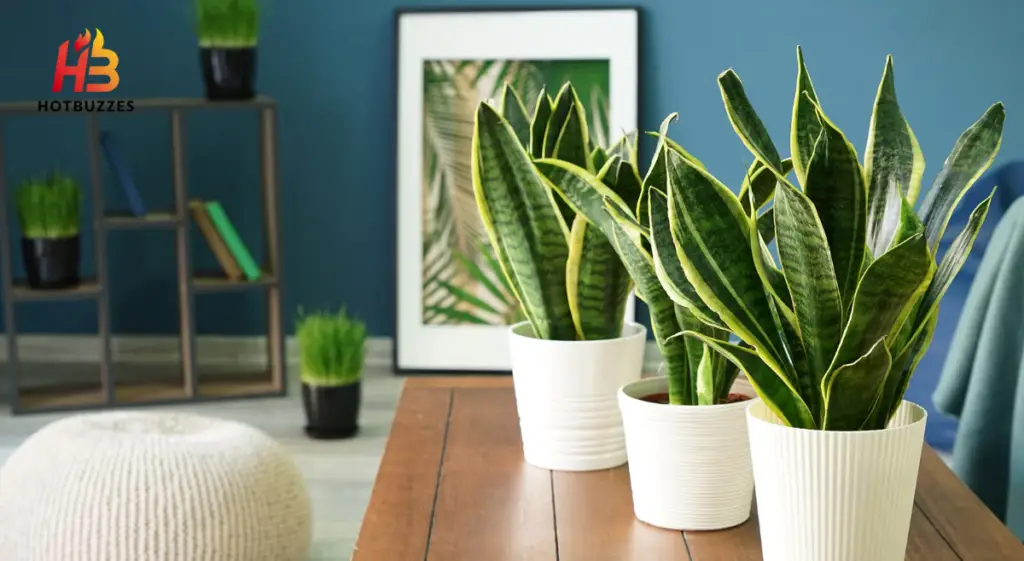
1. Snake Plant (Dracaena trifasciata)
The snake plant ranks among the top plants in trusted air-quality guides. Its reputation is backed by scientific research. According to Seed Sheets , it was identified in the NASA Clean Air Study for absorbing formaldehyde, benzene, xylene, and nitrogen oxides. This gives it one of the broadest pollutant-removal profiles of any common houseplant.
FilterBuy calls it the top recommendation for beginners specifically because it survives neglect, tolerates low light, rarely needs watering, and is one of the most effective plants for filtering indoor air toxins. Its CAM photosynthesis capability gives it a practical advantage over most houseplants for bedroom placement.
ClassyPlants recommends one snake plant plus aloe vera on a windowsill as the optimal bedroom combination. Nighttime oxygen from the snake plant, combined with formaldehyde filtration from the aloe, creates a complementary pairing in a minimal footprint.
NonToxicLab lists snake plant among the hardest houseplants to kill, alongside pothos, noting both tolerate low light, irregular watering, and a wide range of temperatures. If you have never successfully kept a houseplant alive, the snake plant is the most forgiving starting point on this entire list.
Pollutants targeted: Formaldehyde, benzene, xylene, trichloroethylene, nitrogen oxides. Best placement: Bedroom, hallway, living room. Low to bright indirect light. Water every two to four weeks in summer, monthly or less in winter. Note: toxic to pets.
2. Spider Plant (Chlorophytum comosum)
The spider plant combines genuine air-purifying credentials with one of the most forgiving care profiles of any houseplant, and the added benefit of being completely safe for cats and dogs, which makes it one of the most practically useful plants on this list.
Beaire reports that the NASA study demonstrated the spider plant removes around 90 percent of formaldehyde in the air within sealed test conditions and produces oxygen while cleaning the air by absorbing carbon monoxide, xylene, and formaldehyde. Seed Sheets describes it as showing strong results for formaldehyde, xylene, and toluene removal.
PlantasticHaven’s 2026 air-purifying plant guide notes that spider plants outranked all other pet-safe options in benzene-removing capability across the plants tested. Their arching offshoots enable propagation of new plants within three weeks from the parent, which means a single spider plant can produce multiple air-purifying plants over time without additional cost.
FilterBuy recommends spider plants as one of only three plants that are safe for homes with young children or pets. The other two are areca palm and Boston fern. This makes spider plants an excellent choice for households that prioritize both safety and improved indoor air quality.
Pollutants targeted: Formaldehyde, carbon monoxide, xylene, toluene, benzene. Best placement: Hanging baskets near windows, desks, and windowsills. Bright to medium indirect light. Water when the top two inches of soil are dry. Pet-safe and non-toxic.
3. Peace Lily (Spathiphyllum)
The peace lily is one of the most versatile plants on this list in terms of what it addresses. It removes the widest range of indoor pollutants of any common houseplant and is one of the only plants documented to absorb ammonia, a chemical commonly found in cleaning products that most other plants do not absorb.
NonToxicLab confirms the peace lily is one of the few plants shown to absorb ammonia and notes it removes a broader range of solvents than most other houseplants, making it particularly useful after renovation, repainting, or in homes where cleaning products with ammonia are used regularly.
NASA Fandom’s Clean Air Study entry lists peace lily among the key plants from the original 1989 study, tested for benzene, formaldehyde, and trichloroethylene removal. The peace lily also functions as one of the better natural humidifiers among commonly kept houseplants.
NonToxicLab notes that peace lilies release moisture through transpiration. This can increase humidity in dry rooms. The benefit is especially noticeable during winter when heating systems dry out indoor air. Peggy Omara’s indoor plant guide also states that peace lilies remove a wide range of indoor toxins. They are especially useful in home offices, where they can help reduce pollutants from printers, copiers, and other electronics.
Neoplants’ air-purifying plant review also highlights the peace lily as a VOC indicator plant. When VOC levels spike in a room, the peace lily’s spadix droops visibly before the plant otherwise appears stressed, making it a living early warning system for air quality changes.
Pollutants targeted: Formaldehyde, benzene, trichloroethylene, xylene, toluene, ammonia. Best placement: Bathrooms, home offices, living rooms. Low to medium indirect light. Keep soil consistently moist. Note: toxic to pets and humans if ingested.

4. Pothos (Epipremnum aureum)
Pothos is one of the most adaptable and widely available houseplants in the world, and its air-quality credentials are backed by the same NASA research that identified most of the plants on this list. Seed Sheets describes pothos as exceptionally adaptable in low-light spaces with documented capacity for formaldehyde and benzene absorption.
It trails beautifully, grows fast, and needs minimal attention beyond occasional watering. NonToxicLab identifies it as one of the hardest houseplants to kill and notes it tolerates low light, irregular watering, and wide temperature ranges, the same qualities that make it one of the best starter plants for anyone building an air-quality-focused plant collection.
Peggy Omara specifically recommends golden pothos trailing from a bookshelf in home offices because it removes VOCs effectively while tolerating the often-dim light near desks and electronics. ClassyPlants recommends pothos on top of kitchen cabinets as part of its room-by-room plant placement guide, cooking releases particulates and VOCs from gas stoves, and a trailing pothos at height quietly works against these without taking up counter space.
Pollutants targeted: Formaldehyde, benzene, carbon monoxide, xylene. Best placement: Home offices, living rooms, kitchens. Low to bright indirect light. Water when the top two inches of soil are dry. Note: toxic to pets and children if ingested.
5. Boston Fern (Nephrolepis exaltata)
The Boston fern brings a different kind of air-quality benefit to the list. It is one of the best natural humidifiers among commonly kept houseplants and has particular documented benefits for allergy and dust-related air quality concerns.
ClassyPlants notes that Boston ferns boost humidity, which keeps dust particles from circulating freely in the air; dry air allows dust to remain suspended longer, and higher humidity causes particles to settle faster. FilterBuy identifies Boston fern as one of three non-toxic options suitable for rooms with children and pets alongside spider plant and areca palm.
BWH Plant Co’s air purifying plant guide describes Boston ferns as pros at raising humidity and filtering pollutants, while noting they require more maintenance than most plants on this list; they need consistently higher humidity and moist soil. This makes bathrooms with indirect light one of the most ideal placements, where ambient moisture from showering provides the conditions they prefer naturally.
ClassyPlants recommends Boston ferns for bathrooms, specifically to filter chemicals from toiletries and cleaning products while thriving in the bathroom’s naturally higher humidity. Discover easy-care plants that grow well in low-light apartments and add natural beauty to your space.
Pollutants targeted: Formaldehyde, xylene, toluene. Raises indoor humidity. Best placement: Bathrooms, humid kitchens, hanging in indirect light. Needs consistently moist soil and humidity above 50 percent. Pet-safe and non-toxic.
6. Bamboo Palm (Chamaedorea seifrizii)
The bamboo palm is one of the higher-rated plants across multiple air-quality studies and brings a combination of VOC filtration and natural humidification that makes it particularly valuable as a larger statement plant in living rooms and open spaces.
Seed Sheets describes the bamboo palm as one of the higher-rated plants across multiple studies, filtering several VOCs while naturally adding humidity to the surrounding air. Neoplants lists it as targeting formaldehyde specifically, while adding humidity, a combination that addresses both chemical and moisture-related air quality at once.
FilterBuy recommends the bamboo palm for living rooms alongside rubber plants as high-traffic pollutant handlers that look good and tolerate some neglect. Its large, feathery fronds and substantial size make it one of the more visually impactful plants on this list while delivering meaningful air-quality benefits.
NASA Fandom’s Clean Air Study entry confirms the bamboo palm was tested in the original 1989 study and included in subsequent research by B.C. Wolverton is the primary researcher behind the NASA work.
Pollutants targeted: Formaldehyde, benzene, trichloroethylene. Adds humidity. Best placement: Living rooms, open-plan spaces. Bright indirect light. Keep soil moist but well-draining. Pet-safe and non-toxic.
7. Rubber Plant (Ficus elastica)
The rubber plant targets formaldehyde particularly effectively and combines that air-quality function with one of the boldest and most architectural leaf forms available in a commonly kept houseplant.
Seed Sheets describes it as bold in both appearance and function, targeting formaldehyde particularly well and thriving in bright indirect light with infrequent watering. Neoplants lists the weeping fig and rubber plant as targeting formaldehyde and other indoor air pollutants.
FilterBuy recommends rubber plants for living rooms as one of two larger plant options, alongside bamboo palm, that handle high-traffic pollutants, look great, and tolerate some neglect. Formaldehyde is particularly prevalent in living rooms with pressed wood furniture and new flooring, making the rubber plant a well-matched choice for these spaces.
The rubber plant’s large, glossy leaves also have a practical air-quality implication: more leaf surface area means more opportunity for both gas absorption and transpiration. FilterBuy notes that larger plants generally have more leaf surface area, which means more opportunity for gas absorption, a reason to prioritise larger specimens or multiple plants rather than single small ones, where improving air quality is a priority.
Pollutants targeted: Formaldehyde. Best placement: Living rooms, bright rooms. Bright indirect light. Water when the top two to three inches of soil are dry. Note: mildly toxic to pets if ingested.
8. Dracaena (Dracaena species)
Dracaenas cover a wide genus with multiple species, most of which appear on NASA’s original tested plant list and have documented capabilities across several pollutant categories.
Neoplants lists Dracaena as targeting formaldehyde, benzene, and more. NonToxicLab confirms dracaena for xylene and toluene removal, pollutants that come from paint, varnishes, and rubber, making dracaena particularly relevant in homes that have been recently painted or renovated.
NASA Fandom lists three specific dracaena varieties as tested in the original NASA study: Dracaena draco Warneckii (dragon plant), Dracaena marginata (dragon tree), and Dracaena massangeana (mass cane). All three showed pollutant-removal capabilities across the toxins tested, confirming this genus as one of the more thoroughly studied in the air-quality research.
ClassyPlants notes that dracaenas pair well with regular cleaning and a HEPA filter for the best results in allergy-prone households. Their sculptural, architectural growth makes them visually effective as statement plants while functioning as documented air-quality contributors.
Pollutants targeted: Formaldehyde, benzene, xylene, toluene, trichloroethylene. Best placement: Living rooms, home offices, bedrooms. Low to medium indirect light. Use filtered water to prevent leaf tip browning. Note: toxic to pets if ingested.

Room by Room Plant Placement Strategy
A strategic approach to placement delivers more benefit than placing plants randomly throughout a home.
Bedroom: ClassyPlants recommends one snake plant for nighttime oxygen release alongside an aloe vera on the windowsill for formaldehyde filtering from mattress and bedding chemicals. Two plants are plenty; avoid heavily scented plants that can disrupt sleep.
Living room: The highest pollutant load from furniture and flooring warrants the highest plant density. Rubber plants or bamboo palms as larger specimens, combined with pothos or spider plants as supplementary trailing or shelf plants, create the most effective multi-layered approach.
Home office: Peggy Omara recommends pothos trailing from a bookshelf for VOCs from electronics and peace lilies for the widest pollutant range. Spider plants on the desk stay within the immediate breathing zone.
Bathroom: ClassyPlants recommends Boston ferns and peace lilies specifically for bathrooms, both thrive in the humidity from showering while filtering chemicals from toiletries and cleaning products. Placing them on a shelf or hanging from the ceiling saves limited counter space.
Kitchen: Pothos on top of cabinets and aloe vera on a sunny windowsill cover cooking-related particulates and formaldehyde from gas stoves without taking up the workspace where food preparation happens.
FAQs
Q1: How many plants do I actually need to improve indoor air quality?
NASA researchers suggest at least one plant per 100 square feet as a starting baseline. PlantasticHaven updates this with the finding that 15 to 20 well-chosen plants across a 1,800 square foot home can cut formaldehyde and benzene levels by up to 60 percent within a week. More plants in a given room produce proportionally more benefit.
Q2: Are air-purifying plants a replacement for an air purifier?
No. NonToxicLab is clear on this: if clean indoor air is the primary goal, invest in a quality air purifier, test air with a monitor, ventilate regularly, and address pollutant sources. Plants are a meaningful supplement with genuine benefits; they just work best alongside other measures rather than instead of them.
Q3: Which plant removes the most pollutants?
The peace lily covers the widest documented range of pollutants, including formaldehyde, benzene, trichloroethylene, xylene, toluene, and ammonia. NonToxicLab confirms it as one of only a few plants shown to absorb ammonia, which most other commonly kept houseplants do not address.
Conclusion
Plants improve indoor air quality through a combination of VOC absorption, transpiration-based humidity improvement, oxygen production, and microbial activity in the soil. The evidence for benefit is real. The limitation is scale; a few plants make a meaningful contribution, but they cannot do the work of an air purifier in a typical ventilated home on their own.
The eight plants in this guide, snake plant, spider plant, peace lily, pothos, Boston fern, bamboo palm, rubber plant, and dracaena, are the most thoroughly researched and most consistently recommended across both the original NASA work and subsequent independent studies. Each addresses documented pollutants.
Each has a clear placement where it delivers the most specific benefit. Used together strategically, grouped in the highest-pollutant rooms, kept healthy and clean, they provide a genuine and sustained improvement to the air environment of any home.

I started growing houseplants a little over 3 years ago with a single pothos cutting and a windowsill. Since then, my collection has grown to more than 40 plants (snake plants, ZZ plants, peace lilies, a couple of orchids). I’m still intimidated by, and one aloe that has survived three moves despite my best efforts to kill it.
I’m not a botanist or a certified horticulturist, I’m a hobbyist who’s made most of the beginner mistakes so you don’t have to: overwatering, underwatering, ignoring root rot until it was too late, and putting a sun-loving plant in the darkest corner of my apartment. HotBuzzes is where I share what I’ve actually learned from keeping plants alive (and occasionally failing), along with research from reliable sources to back it up.