
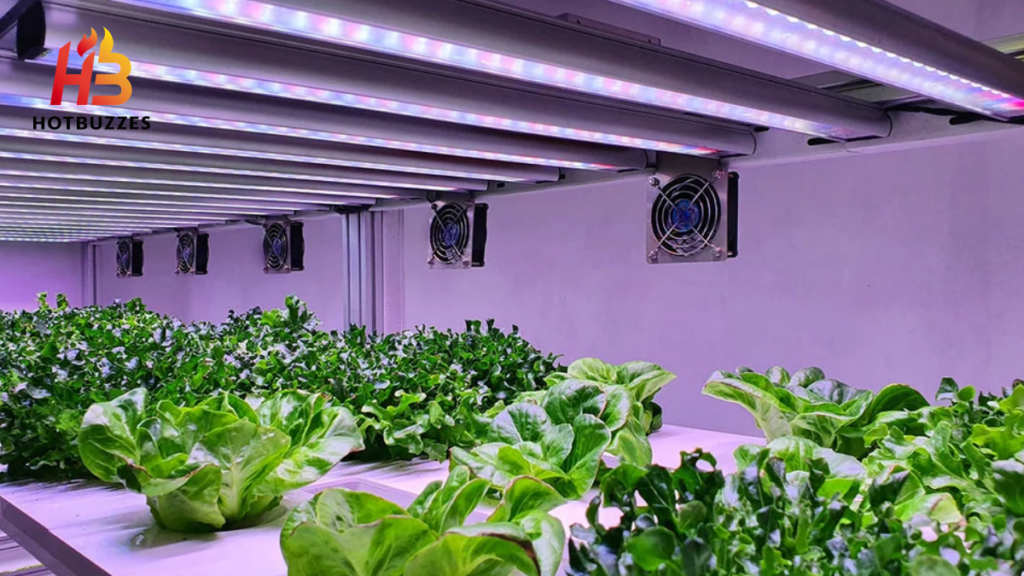
Houseplant care has always involved some guesswork. You prod the soil, lift the pot to judge its weight, and try to remember when you last watered the plant. Smart plant technology aims to close that gap by replacing intuition with actual data. In 2026, there has been a shift toward smart-controlled, energy-optimized lighting systems. Sensors and self-watering planters are also becoming more common. Until recently, these technologies were mostly used in serious hydroponic setups, according to Green Light Depot’s LED grow light guide. What once required years of plant-care experience can now be handled, at least partly, by a sensor, an app, and a well-specified light fixture.
This guide explains how to choose the right grow light for a specific plant and space. It also explains key specifications like PPFD and Kelvin and what they actually mean. You’ll learn which smart plant technologies offer genuine value. These range from simple Bluetooth sensors to AI-driven self-watering planters. The guide also explains which products may be little more than expensive gadgets. It includes practical guidance on light placement and photoperiod. You’ll also learn how to maintain grow lights and smart devices so they continue working well over time.
Understanding PPFD Before Buying Anything
Before comparing specific lights, understanding one core specification prevents the single most common grow light buying mistake. PPFD, or photosynthetically active radiation (PAR), measures how much usable light reaches a plant. It is expressed in micromoles per square meter per second, according to Snap Plant’s 2026 grow light comparison guide. Low-light houseplants generally need 50 to 150 PPFD. Medium-light tropicals typically need 150-400 PPFD. High-light succulents and herbs need 400 to 800 PPFD, according to the same guide. These ranges give buyers a concrete target. They can compare them with a light’s actual specifications instead of relying on marketing language alone.
Why Wattage Claims Can Be Misleading
Most “2000W equivalent” lights on the market deliver only 150 to 300 PPFD at 18 inches. This is enough for tropical houseplants but not enough for fruiting vegetables like tomatoes, according to Snap Plant’s guide. Be skeptical of listings that prominently advertise wattage but do not disclose amperage or actual measured wattage. Dog Notebook’s full spectrum grow light reviews recommend multiplying stated amperage by voltage to calculate the light’s actual power draw before trusting an inflated headline number.
Understanding Light Spectrum and Kelvin Ratings
Beyond raw intensity, the specific wavelengths a grow light produces affect which growth stages and plant types it actually supports well. A genuinely full-spectrum light typically combines cool white light in the 5000 to 5500K range, warm white light around 3000 to 3500K, and red light near 650 to 660nm, according to Spider Farmer’s 2026 grow light guide. This balanced spectrum supports everything from vegetative leaf growth to flowering. It also suits most houseplants better than a light focused heavily on one color range.
Far Red Light and the Emerson Effect
Some higher-end full-spectrum lights add a 730nm far-red band to the standard spectrum. This can trigger what is known as the Emerson effect and may help promote flowering in short-day plants, according to Dog Notebook’s reviews. This feature is mainly useful for flowering plants. It is less important for anyone who simply wants to keep foliage houseplants healthy through a dim winter.
Matching Light Type to Plant and Space
Not every grow light suits every situation, and pairing the fixture type to the actual plant and room makes a notable difference in results. For a single plant on a desk or in a dim corner, a compact clip-on or gooseneck grow light can be a practical option. These lights often offer 6000K full-spectrum output, automatic timers, and adjustable dimming. They also provide an inexpensive, low-commitment starting point, according to product listings referenced across multiple 2026 grow light roundups. These smaller lights typically provide enough PPFD for one low- to medium-light houseplant. They also cost less and take up less visual space than a full panel.
Strip Lights for Shelves and Herb Gardens
Strip lights mounted beneath a shelf work well for herb gardens or rows of small pots. They distribute light evenly across a horizontal surface. This eliminates the need to position a separate light over each plant, according to Snap Plant’s guide. The guide specifically recommends this format for shelf-based houseplant setups instead of using a single overhead panel.

Full Panels for Serious Indoor Setups
For a larger plant corner, grow tent, or group of sizable plants, a full LED panel provides more consistent and even coverage than smaller fixtures. Models like the Spider Farmer SE7000 use eight light bars to extend uniform coverage to the outer edges of the growing area, according to Spider Farmer’s guide. These panels suit anyone building a serious indoor growing setup. They are less necessary for simply supplementing light for a few houseplants. Keep fresh herbs within reach by learning how to grow and care for a productive indoor herb garden year-round.
Decorative Grow Lights for Living Spaces
For anyone who wants supplemental lighting without a fixture that looks like commercial grow equipment sitting in a living room, decorative pendant-style grow lights are specifically designed to blend into home decor while still delivering genuine horticultural performance, according to Snap Plant’s guide, addressing a common concern for anyone using grow lights outside a dedicated plant room.
Smart-Controlled Grow Lights
Beyond raw output and spectrum, 2026’s grow light market has shifted meaningfully toward app-connected, automated lighting systems. Smart LED grow lights increasingly support app or touch controls and programmable timers. Some also include a “sun sync” feature. It automatically adjusts the light schedule to mimic natural daylight patterns throughout the year, according to Programming Insider’s coverage of full spectrum grow light brands. Some models also include extensive plant databases. Certain systems cover more than 1,000 species. This helps users choose the right light settings for a specific plant without manually researching PPFD requirements.
Integrated Sensor and Light Bundles
Some smart grow light systems now combine lighting with temperature and humidity sensors. They also offer remote app control in a single kit, according to Spider Farmer’s product coverage. This setup allows coordinated monitoring of light and environmental conditions. It also means users do not have to manage lighting and climate as two separate systems.
Daisy-Chain Expansion
For anyone planning to grow a plant collection over time, choose a light system that supports daisy-chain expansion. This allows multiple light bars or fixtures to connect to a single controller, according to Programming Insider’s coverage. This setup makes it easier to expand your growing space. You will not need to buy a separate, unconnected light for every new plant.
Grow Light Comparison at a Glance
The table below summarizes the grow light categories covered throughout this guide.
| Light Type | Best For | Typical PPFD Range | Key Feature |
|---|---|---|---|
| Clip-on / desktop | Single low-light plant | 50 to 150 | Compact, low cost, easy setup |
| Strip lights | Shelves, herb gardens | 150 to 400 | Even coverage across horizontal surfaces |
| Full LED panel | Plant corners, grow tents | 400 to 800+ | Uniform coverage across a large area |
| Decorative pendant | Living spaces | 150 to 400 | Blends into home decor |
| Smart app-connected | Any of the above | Varies by model | Sun sync, plant database, remote control |
Smart Plant Sensors: What They Actually Measure
Moving beyond lighting, soil and environmental sensors form the second major category of smart plant technology worth understanding. Consumer-grade plant sensors typically track four core parameters: soil moisture, ambient light, temperature, and sometimes soil nutrient or conductivity levels, according to Blooming Expert’s review of smart plant monitors. A soil sensor pushed into potting mix reports these readings in real time to a smartphone, replacing the finger-poke test with an actual number rather than a rough guess.
Bluetooth vs WiFi Connectivity
Budget-friendly sensors can cost less than fifteen dollars. They often connect to a smartphone through Bluetooth, making them useful for checking a single plant periodically. However, you need to stay within range of the device, according to Blooming Expert’s guide. More advanced systems use WiFi or a dedicated radio gateway. These systems continuously send data to a home network. They can also support automation triggers and historical graphs instead of providing only a single spot reading, according to a DEV Community guide to smart irrigation and soil sensors.
What Sensors Do Not Do
A standalone soil sensor only provides information. It does not act on that information automatically, according to Daily Tech Edge’s roundup of smart plant gadgets. This clearly separates soil sensors from the automated watering systems covered next. The distinction matters when setting expectations. A sensor suits someone who enjoys hands-on plant care but wants better information to guide decisions. It is not designed for someone who wants to remove watering decisions entirely.
Self-Watering Smart Planters
For anyone who travels frequently or consistently forgets to water, automated planters represent the next step up from a simple monitoring sensor. Built-in soil moisture sensors trigger watering from a concealed reservoir. They provide consistent hydration when the plant’s roots need it, according to Farmonaut’s coverage of smart flower pot innovations. Higher-end models can hold several liters of water. They use a micro-pump to deliver water through sub-irrigation, or bottom watering. Many horticulturists consider this a healthy watering method for root health, according to Techy Plant’s guide to smart plant pots.
Why Not All Self-Watering Pots Are Equal
Traditional self-watering pots passively wick water from a reservoir. This can keep the soil constantly damp and may lead to root rot and fungal issues, according to LeafyPod’s comparison of self-watering approaches. Newer AI-driven planters use a top-down watering cycle that mimics rainfall. This lets the soil absorb, drain, and dry naturally between waterings. It avoids keeping roots constantly wet and helps address the over-wetting problem common with older self-watering designs.
AI-Powered Plant Identification and Care Profiles
Some of the newest self-watering planters debuted at CES 2026 as early AI-native plant pots. They let users photograph a plant so the app can identify the species and create a tailored care profile, according to Daily Tech Edge’s coverage. The planter then continuously tracks soil moisture, light, humidity, and temperature. It waters the plant according to its specific needs. Over time, the AI can refine its understanding of the plant’s individual responses.
Choosing Between Sensors and Full Automation
With both monitoring-only sensors and fully automated planters available, choosing the right category for a specific need avoids overspending on features that will not actually get used.
When a Simple Sensor Is Enough
Soil sensors alone suit anyone who genuinely enjoys the process of checking on and caring for plants but wants to stop guessing, according to Daily Tech Edge’s guide. This category also makes sense as a lower-cost entry point for someone curious about smart plant tech without committing to a more expensive automated system.
When Full Automation Makes More Sense
Automated watering systems remove the watering decision entirely, and this category is best suited to frequent travelers or anyone who consistently forgets to water despite good intentions, according to Daily Tech Edge’s guide. Pairing a self-watering planter with a smart sensor, rather than choosing one or the other, eliminates what remains the single most common cause of houseplant death: inconsistent watering, according to Blooming Expert’s guide.
Combining Grow Lights and Smart Sensors in One Setup
For a genuinely optimized indoor plant space, lighting and environmental monitoring work best treated as a single coordinated system rather than two separate purchases. All-in-one growing systems combine automated watering, built-in grow lights, and a controlled environment into a single unit, according to Daily Tech Edge’s guide, representing the most integrated option available for anyone building a dedicated indoor growing space from scratch rather than retrofitting an existing plant shelf.
Coordinated Smart Ecosystems
Certain smart plant ecosystems bundle a light fixture, a temperature and humidity sensor, and app-based remote control together as a single product line, according to Spider Farmer’s product coverage, allowing light schedules to be adjusted based on the same real-time environmental data driving watering decisions, rather than managing light and moisture as two disconnected systems that happen to share the same physical space. Give your indoor plants the care they need with these practical tips for healthier houseplants.
Facts About Smart Irrigation Performance
Beyond product features, independent research offers useful evidence for how much smart, condition-based watering actually improves on a traditional fixed schedule. Traditional watering timers operate on a fixed schedule regardless of actual conditions: if it rained heavily the day before, or the soil is already saturated, a timer waters anyway; conversely, during a heat wave when soil dries out unusually fast, a fixed timer still delivers the exact same amount it always does, according to the DEV Community’s guide to smart irrigation. Smart controllers instead adjust watering based on actual soil moisture, weather forecasts, temperature, humidity, and evapotranspiration rates, responding to real conditions rather than a predetermined calendar.
Documented Water Savings
Studies from the EPA’s WaterSense program have found that weather-based smart controllers measurably reduce outdoor water use compared to fixed-schedule irrigation, according to the DEV Community’s guide, giving a concrete, independently verified efficiency benefit beyond the more commonly cited convenience factor. While this research focuses primarily on outdoor irrigation systems, the same underlying principle, watering based on actual measured need rather than a fixed interval, applies just as directly to indoor smart plant sensors and self-watering planters.
Cost Considerations
Smart plant technology spans an enormously wide price range, and understanding where that cost actually goes helps set a realistic budget. A basic Bluetooth soil sensor can be found for under twenty dollars, and a complete smart garden automation setup, sensors plus a basic controller, can be built for under 150 dollars total, according to the DEV Community’s guide. This makes even the most affordable tier of smart plant tech considerably more accessible than the enterprise-grade lighting and irrigation systems this category originally grew out of.
Mid-Range and Premium Investment
Full-spectrum LED grow panels suited to a genuine plant corner or small grow tent typically represent a more significant investment, with pricing scaling according to coverage area, dimming range, and smart features included, according to Programming Insider’s guide, which specifically advises buyers to verify PPFD, wattage, coverage area, and warranty terms rather than relying on price alone as a quality signal. AI-driven self-watering planters with built-in plant identification and multi-sensor tracking sit toward the premium end of the smart plant tech category, reflecting the more advanced hardware and software behind their automated care profiles.
Proper Hang Height and Placement for Grow Lights
Even the best grow light underperforms if it is hung at the wrong distance from a plant’s canopy, making placement just as important as the specifications covered earlier in this guide.
Why Distance Changes Effective PPFD
A light’s PPFD output drops considerably as distance from the canopy increases, which means a fixture rated for strong output at six inches may deliver dramatically less usable light once raised to eighteen or twenty-four inches away. Checking a specific light’s PPFD rating at the actual distance it will realistically be hung, rather than relying on the single strongest number listed in its marketing material, gives a far more accurate picture of what a plant will actually receive.

Adjusting Height as Plants Grow
Because a young, newly potted plant sits closer to a fixed-height light than the same plant will once it has grown taller, periodically lowering the light, or raising the plant on a stand, keeps the canopy within an appropriate distance range as growth continues. Height-adjustable fixtures, increasingly common on desktop and gooseneck-style grow lights, remove much of the manual repositioning this adjustment would otherwise require.
Avoiding Light Bleaching and Heat Stress
Positioning a light too close to a plant’s leaves risks bleaching or scorching foliage, particularly with higher output panels designed for larger grow spaces rather than a single houseplant sitting close underneath. Monitoring leaves for any sign of pale, bleached patches directly beneath a light source, and increasing distance if this appears, prevents light-related damage before it becomes severe enough to affect the plant’s overall health.
Photoperiod and Timer Settings
How long a grow light stays on each day matters just as much as its intensity and spectrum, and getting this wrong is a common source of frustration even with an otherwise well-chosen fixture.
Typical Photoperiod Ranges for Houseplants
Most common houseplants do well with twelve to sixteen hours of light per day when relying primarily on a grow light rather than natural sunlight, according to specifications referenced across multiple 2026 grow light guides. Running a light for the full twenty-four hours is generally unnecessary and can actually stress some plants, since most species still benefit from a defined dark period as part of their natural growth cycle.
Why Consistency Matters More Than Precision
Running a grow light on a consistent daily schedule matters more than hitting an exact, precise number of hours, according to Dog Notebook’s reviews, which recommend picking a photoperiod suited to the specific space and plants, then maintaining it steadily rather than adjusting it frequently. A basic mechanical or digital timer accomplishes this reliably even without any of the smart, app-connected features covered earlier in this guide.
Sun Sync as an Alternative to Manual Timers
For anyone who prefers not to manually maintain a fixed schedule, a sun sync feature automatically adjusts a light’s on and off times to mirror natural seasonal daylight patterns throughout the year, according to Programming Insider’s coverage, offering a more hands-off alternative to a static timer setting that never changes regardless of the actual season outside.
Maintenance and Longevity of Grow Lights and Smart Devices
Getting long-term value from grow lights and smart plant tech requires a bit of ongoing upkeep beyond the initial setup.
Cleaning Light Fixtures
Dust accumulating on a grow light’s surface gradually reduces its effective output, since even a thin layer of dust blocks some portion of the light that would otherwise reach a plant’s leaves. Wiping down fixtures every few weeks with a dry or slightly damp cloth maintains consistent light delivery over the life of the fixture.
LED Lifespan Expectations
Many modern LED grow lights carry lifespan ratings well over 50,000 hours, according to Programming Insider’s coverage, which translates to many years of regular daily use before the diodes themselves noticeably degrade. This long lifespan is part of why LED technology has largely replaced older fluorescent grow light setups, which required far more frequent bulb replacement to maintain consistent output.
Battery and Connectivity Upkeep for Sensors
Bluetooth soil sensors typically run on small batteries rated for twelve months or more of continuous use, according to the DEV Community’s guide, which means periodic battery checks, rather than frequent replacement, are usually all the maintenance these devices genuinely require. Keeping a sensor’s companion app updated also matters, since software updates occasionally improve reading accuracy or add new automation features to already-owned hardware.
FAQS
Q1. What PPFD level do most common houseplants actually need?
Most tropical foliage houseplants fall into the medium light category, needing roughly 150 to 400 PPFD. Low light plants like snake plants or ZZ plants need only 50 to 150 PPFD, while high light succulents and herbs need considerably more, typically 400 to 800 PPFD.
Q2. Is a higher wattage grow light always better?
Not necessarily. Wattage alone does not reliably indicate how much usable light actually reaches a plant. Checking the light’s actual measured PPFD output at a realistic hanging distance is a far more reliable way to judge performance than comparing wattage claims alone.
Q3. Do I need a smart, app-connected grow light, or is a basic timer enough?
It depends on how much automation is actually useful for a specific setup. A basic mechanical timer reliably turns a light on and off at fixed times for a low cost, while a smart, app-connected light adds features like sun sync scheduling and remote control, which matter more for larger, more complex plant collections than for a single houseplant.
Q4. What is the difference between a soil sensor and a self-watering planter?
A soil sensor only reports information, such as moisture level, to a smartphone, requiring the user to act on that data manually. A self-watering planter goes a step further, using its own sensors to automatically trigger watering from a built-in reservoir without requiring any manual action at all.
Q5. Can smart plant tech actually prevent overwatering and root rot?
Yes, when designed well. Older, passive self-watering pots can actually contribute to root rot by keeping soil constantly damp, but newer sensor-guided and AI-driven planters that use a top-down, rainfall-like watering cycle specifically address this by letting soil dry out naturally between waterings.
Conclusion
Choosing the right grow light and smart plant technology comes down to matching actual specifications, PPFD, spectrum, and genuine automation features to a specific plant collection’s real needs, rather than being drawn in by inflated wattage claims or gadget-heavy marketing. A simple clip-on light or an inexpensive Bluetooth soil sensor delivers genuine, measurable value for a small collection, while full LED panels, integrated smart ecosystems, and AI-driven self-watering planters make more sense for a collection, and the complexity of caring for it grows larger.
What unites every genuinely useful product covered in this guide, from a basic soil sensor to a fully automated, AI-driven planter, is that each one replaces guesswork with actual, measurable data about what a plant is receiving and what it actually needs. That shift, from intuition toward information, is ultimately what separates smart plant technology that solves a real problem from a novelty gadget that simply adds another app to check, and understanding the specifications covered throughout this guide gives any buyer a much clearer way to tell the two apart before spending money on either one.

Ali Hassan is a plant enthusiast and content writer who creates practical, easy-to-follow articles about plant care, gardening, and indoor plants. He combines thorough research with reliable horticultural resources to provide accurate, beginner-friendly advice. His goal is to help readers grow healthier plants and make plant care simple, enjoyable, and accessible for everyone.