
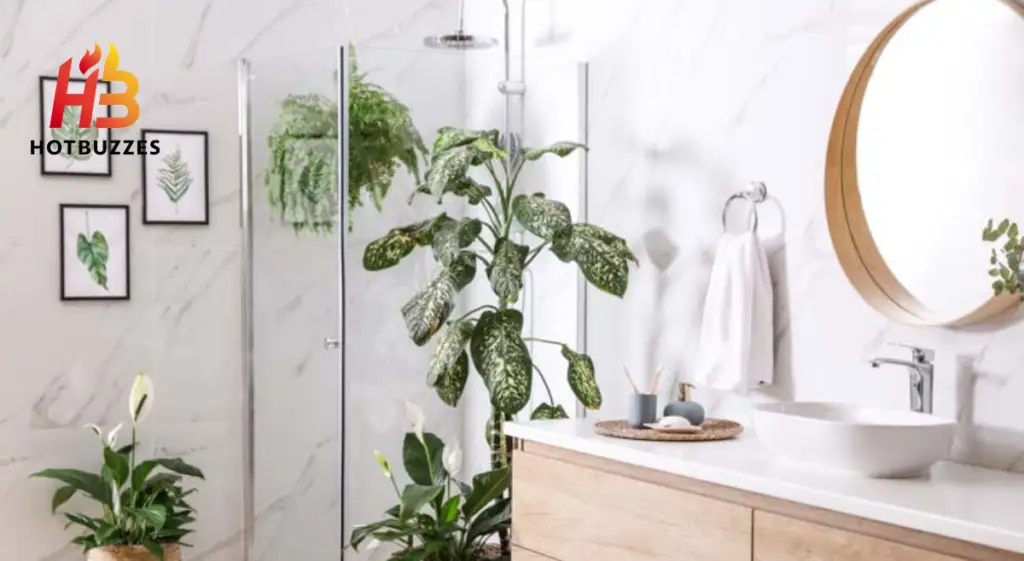
Most people think of bathrooms as difficult spaces for plants. Small windows, fluctuating temperatures, and the dampness that lingers after every shower seem like obstacles. The truth is almost the exact opposite. For plants that evolved in tropical rainforests, a bathroom is not a challenge. It is the closest thing to home they will ever experience indoors.
The humidity that collects after a hot shower, the consistent warmth, the filtered light from frosted or small windows, these are the conditions that tropical understory plants grew in for millions of years before anyone brought them inside a house. The key is not fighting the bathroom environment. The key is selecting plants that are specifically built to thrive in it.
This guide covers the biology behind why bathrooms suit tropical plants, a curated list of the best performers with specific placement notes, the mistakes that most people make in bathroom plant selection, practical strategies for maximizing a small humid space, and what to do in bathrooms with almost no natural light at all.
The Biology of Moisture Absorption in Plants
Understanding how plants actually interact with bathroom humidity separates the genuinely useful choices from those that merely tolerate the conditions. Plants absorb moisture in two primary ways. The first is through the root system from the soil, which is the standard watering pathway most people understand. The second, less commonly discussed pathway is through the leaves and stems directly from the surrounding air, a process called foliar absorption.
Planters Etc’s bathroom plant guide explains that air plants absorb moisture directly from the air through specialized leaf structures called trichomes. The same principle applies to plants with larger, porous leaves, which absorb some moisture through their foliage while their roots supply the rest.

For plants like Boston ferns, this dual absorption means they need much less supplemental watering in a humid bathroom than in a dry room. The humid air reduces their watering needs, helping them thrive where they often struggle in standard home conditions.
Simplify Gardening confirms that tropical plants evolved in humid environments. They absorb moisture from both the air and their roots, rather than relying on soil alone.
1. Boston Fern (Nephrolepis exaltata)
The Boston fern is the plant most naturally suited to bathroom conditions of any commonly available houseplant. Its biological requirements, high humidity, consistently moist conditions, and indirect light align almost perfectly with what a standard bathroom delivers after daily shower use.
Eplanters’ bathroom humidity plant guide describes Boston fern as a humidity-tolerant plant that brings a lush, natural feel to indoor spaces. Not only does it thrive in moisture-rich environments, but it also helps absorb excess humidity, making it simultaneously a decorative and functional bathroom plant.
Planters Etc describes it as a tropical plant with lacy fronds that thrives in humid bathrooms. It prefers indirect light, as direct afternoon sun can scorch the leaves. Water the soil when it feels dry, and mist the leaves in winter if the indoor air becomes dry.
Hardy Houseplant identifies the Boston fern as one of the species that benefits most from the humidity cycling typical of bathrooms, the spike during and after a shower, followed by a gradual return to baseline, closely mimics the humidity fluctuations of its natural tropical habitat. Learn how to create a beautiful indoor plant display without breaking your budget.
Humidity requirement: 50 percent or above, thrives in 60 to 80 percent. Light: Bright to medium indirect light. Frosted bathroom windows work well. Placement: Hanging basket above the bathtub or on a high shelf where cascading fronds have room to develop. Keep away from direct shower spray.
2. Spider Plant (Chlorophytum comosum)
The spider plant earns its place in bathroom plant guides not just for surviving humid conditions but for actively benefiting from them and contributing to the room’s moisture balance in the process.
Eplanters describes spider plants as genuinely thriving in the damp air of bathrooms. They absorb excess moisture from the air and act as natural air purifiers simultaneously. They also tolerate low light well, an important quality for bathrooms where windows are small or frosted and natural light is genuinely limited.
Planters Etc describes the spider plant as highly adaptable and effective at removing air pollutants. It thrives in humid, low-light bathrooms and requires very little care.
The cascading pups that trail from a mature spider plant are particularly well-suited to a bathroom display. Lawn and Garden Ideas’ bathroom plant guide notes that the baby spiderettes look especially attractive dangling over the edge of a shelf, and because the bathroom’s humidity feeds them from the air, the pups remain plumper and more vigorous than they would in a dry room.
Humidity requirement: Tolerates 40 to 80 percent, genuinely thrives at higher levels. Light: Medium to low indirect light. One of the best performers in dim bathroom conditions. Placement: High shelf where pups can trail freely. Tension rod hooks near the ceiling work well for hanging varieties.
3. Peace Lily (Spathiphyllum)
The peace lily brings flowering capability to the bathroom, something most plants in this list cannot offer, while also functioning as one of the most effective moisture-absorbers and air-purifiers among common houseplants.
Eplanters describes the peace lily as bringing a calming, spa-like feel to the space with its glossy green leaves and beautiful white blooms. It grows well in humid conditions and has been noted to help fight mould growth in damp environments, a direct functional benefit in high-humidity rooms.
Planters Etc. notes that the peace lily absorbs moisture through its leaves while helping remove air toxins. Water only when the soil is dry, or the leaves begin to droop. Bathroom humidity reduces its watering needs compared to a dry room.
Nordelvia lists the peace lily among the plants that thrive in shower-adjacent spots where humidity is highest, alongside ferns and orchids. Its low light tolerance makes it one of the few flowering plants that perform in the genuinely dim conditions typical of internal bathrooms.
Humidity requirement: 50 percent or above. Consistently humid conditions produce the most reliable blooming. Light: Low to medium indirect light. One of the very few flowering plants that blooms in dim bathroom conditions. Placement: Shelf or floor position near the shower area where humidity is highest. Toxic to pets and humans if ingested. Keep out of reach.
4. Air Plant (Tillandsia species)
The air plant depends on humidity rather than soil. With no traditional roots, it absorbs moisture and nutrients directly from the air, making a steamy bathroom an ideal indoor habitat.
Planters Etc describes the air plant as a soil-free plant that absorbs moisture through its leaves. It needs little light and only a brief soak every other week, making it ideal for bathrooms with limited space.
Nordelvia describes air plants as literally absorbing moisture from humid air, and confirms the target humidity of 50 to 70 percent as the range bathroom conditions typically deliver. In a well-used bathroom with daily showering, air plants between showers receive enough passive moisture absorption that their weekly soak requirements may reduce to every ten to fourteen days rather than weekly.
Hardy Houseplant gives specific placement advice: mounted on driftwood or displayed in glass terrariums near the bathroom’s moisture source. Its no-soil habit allows display on shelves, in glass bowls, or hanging globes without the drainage concerns of potted plants, making it ideal for small bathrooms.
Humidity requirement: Thrives at 50 to 80 percent. High bathroom humidity significantly reduces supplemental watering requirements. Light: Bright indirect light. Avoid direct sun. Placement: Mounted on driftwood, in glass terrariums, on tension rod hooks, or near a frosted window. Weekly twenty-minute soak in room-temperature water, allow to dry fully within four hours to prevent rot.
5. Bird’s Nest Fern (Asplenium nidus)
The bird’s nest fern is the more forgiving and structurally distinctive member of the fern family for bathroom use. Unlike the Boston fern with its delicate, dense fronds, the bird’s nest fern produces broad, wavy, strap-like leaves that collect in a rosette pattern, giving it a dramatically different appearance while maintaining the same love of humid conditions.
Hardy Houseplant lists the bird’s nest fern as one of the 15 best bathroom plants, noting it loves humidity, handles medium light, and is non-toxic, making it one of the safer fern options for households with pets or small children. Lawn and Garden Ideas describes it as light and feathery with an airy look that suits smaller bathroom spaces particularly well, and notes it needs bright indirect light to stay full and happy, making it best for bathrooms with at least one reasonable window.
The care distinction that matters most for bathroom placement is avoiding water pooling in the central rosette. This can cause rot at the crown of the plant where the leaves emerge. In a steamy bathroom, the ambient moisture already provides most of what the plant needs, so deliberate watering should be directed around the edges of the pot rather than into the centre of the rosette.
Humidity requirement: 60 percent or above. Performs better in consistently humid bathrooms than in drier rooms. Light: Medium indirect light. Frosted window or a position a few feet from an east-facing window. Placement: Counter, shelf, or hanging basket. Do not allow water to pool in the central rosette.

6. Pothos (Epipremnum aureum)
Pothos in a bathroom is almost fail-proof, and its trailing growth habit makes it one of the most visually effective choices for creating the sense of lush, cascading greenery that defines the spa-like bathroom aesthetic.
Nordelvia lists pothos as one of the best-fit species for bathroom conditions alongside philodendron and monstera, noting that trails from high shelves are where it performs most dramatically in terms of visual impact. Lawn and Garden Ideas describes it as doing well in humid, warm environments and tolerating medium to low light, with glossy, heart-shaped leaves that look particularly effective trailing from a hanging pot or wall-mounted planter.
The watering benefit of bathroom placement is meaningful for pothos specifically. In a dry room, pothos typically needs watering every seven to ten days. In a consistently humid bathroom, the ambient moisture reduces this to every twelve to sixteen days as the leaves absorb some atmospheric moisture and the soil dries more slowly. Nordelvia recommends shelves above the toilet or a vanity as ideal positions for trailing pothos and philodendron in bathroom spaces where floor and counter space are limited.
Humidity requirement: Tolerates 40 percent but thrives and shows improved foliage quality above 60 percent. Light: Low to bright indirect light. One of the strongest performers in genuinely dim bathroom conditions. Placement: High shelf for trailing display. Hanging a planter near the shower where steam collects.
7. Chinese Evergreen (Aglaonema)
The Chinese evergreen is one of the most underestimated bathroom plants available. Its range of leaf colours, from deep green through silver, pink, and red, makes it one of the few humidity-tolerant plants that delivers genuine colour variety in a bathroom without requiring flowers.
Lawn and Garden Ideas gives a strong endorsement: tolerates low light and high humidity, and the Silver Bay variety in particular has wide silvery leaves that practically glow in low light. It does not just tolerate humidity, it thrives in it, making it one of the easiest and most attractive plants for a low-light bathroom.
Hardy Houseplant lists the Chinese evergreen among the best bathroom plants for medium to low light. Keep it in a well-draining pot and avoid letting it sit in water by using a stand or saucer. Find the best indoor plants to refresh your home and enjoy a healthier, greener environment.
Nordelvia notes that high moisture air reduces leaf crisping on Chinese evergreens, a problem common in dry rooms, making bathroom placement one of the most practical solutions for keeping this plant looking its best.
Humidity requirement: 50 percent or above. Leaf crisping at tips and edges reduces significantly in consistently humid conditions. Light: Low to medium indirect light. Dark green and silver varieties handle the dimmest conditions best. Placement: Counter, vanity shelf, or floor corner. Elevate the pot to prevent contact with surface moisture.
8. Orchid (Phalaenopsis and others)
Orchids are the most glamorous bathroom plant on this list and also the most genuinely suited to bathroom conditions of any flowering houseplant. Their natural epiphytic habitat in tropical tree canopies is consistently warm, humid, and filtered in light, a nearly exact match for bathroom conditions in a home with regular shower use.
Nordelvia identifies shower-adjacent spots as specifically suited to orchids alongside ferns, and notes that orchid placement near bathroom windows captures the combination of indirect light and high humidity that produces the most reliable blooming from this plant. Planters Etc describes begonias and orchids as plants from a sprawling genus that typically fare well in pots in hot, humid bathrooms.
The care routine for orchids in bathrooms differs from what most people expect. Because the ambient humidity satisfies most of their moisture needs through passive absorption, watering frequency drops significantly compared to a dry room.
In a humid bathroom, most orchids need watering only every ten to fourteen days; some owners find that every three weeks is sufficient when daily showering maintains high ambient humidity. The clear plastic nursery pots that orchids are typically sold in allow root health to be monitored visually, which is a practical advantage in a room where overwatering is the most common problem.
Humidity requirement: 50 to 70 percent. Steamy bathroom conditions after daily showers provide near-ideal conditions. Light: Bright indirect light near a window. Direct sun scorches the leaves. Placement: Windowsill or shelf near a window. Clear nursery pots allow root monitoring. Allow roots to dry slightly between waterings.
9. ZZ Plant (Zamioculcas zamiifolia)
The ZZ plant is the right choice for the bathroom with almost no natural light at all. Of every plant on this list, it is the only one that has a genuinely documented case for surviving in near-windowless conditions, and its tolerance of bathroom humidity means it handles the moisture without the root rot risk that catches most houseplants in consistently damp environments.
Lawn and Garden Ideas describes it as ridiculously tough with shiny, upright leaves that look polished even when the rest of your space is chaotic — the type of plant you put in a ceramic pot on the vanity and let do its thing. Hardy Houseplant gives the most specific assessment: ZZ plant tolerates windowless bathrooms better than almost any other plant, with light requirements that extend to very low and a watering schedule of every two to three weeks.
Nordelvia includes ZZ plant among the species that tolerate fluctuating moisture with ease — neither the humidity spikes during showering nor the drier periods between showers cause it any visible stress. Its rhizome root system stores water, meaning the higher ambient moisture of a bathroom reduces its already-minimal watering needs even further.
Humidity requirement: Tolerates 30 to 80 percent, one of the widest humidity tolerance ranges of any common houseplant. Light: Any, including very low and fluorescent-only conditions. Placement: Floor or countertop in the dimmest bathroom conditions. Vanity shelf for display impact.
10. Calathea and Prayer Plant (Calathea and Maranta species)
Calatheas and prayer plants have a reputation for being demanding; they brown at the tips in dry air, droop with tap water fluoride, and drop leaves with temperature fluctuations. In a bathroom, almost every one of those complaints disappears. The consistent humidity solves the tip-browning, the temperature stays stable, and the indirect light through frosted windows suits them perfectly.
Nordelvia confirms that high-moisture air reduces leaf crisping, specifically on calatheas and prayer plants, the most common problem owners experience with this plant family in living rooms and bedrooms. Bathroom placement essentially solves the humidity problem that makes calatheas difficult in standard rooms.
Simplify Gardening includes calathea among the tropical plants that prefer humidity levels of 70 percent and above, conditions that only a heavily steamed bathroom consistently provides without artificial humidification.
The distinctive movement of prayer plants, leaves that fold upward at night and lower again in the morning, is particularly visible and satisfying in a bathroom where the plant can be observed during morning and evening routines. For intricate, patterned foliage combined with genuine low-light tolerance and high humidity preference, this plant family is the most rewarding option on this list.
Humidity requirement: 60 to 80 percent. Tip browning and leaf crisping reduce dramatically above 60 percent. Light: Medium to low indirect light. Frosted bathroom windows are ideal. Placement: Shelf or counter in the most humid zone of the bathroom. Use filtered water or rainwater to prevent tip spotting.

Bathroom Plant Placement
A bathroom is not a uniform environment. Different zones within the same room have meaningfully different conditions, and matching plants to those zones produces significantly better results than placing plants randomly.
Nordelvia recommends mapping light first, noting sun direction, frosted panes, and shaded corners, before deciding where any plant goes. Then grouping by needs: pair ferns together near the shower where humidity is highest, put drought-tolerant plants like ZZ and snake plant further from the steam source.
The shower-adjacent zone is the highest-humidity spot in any bathroom. Nordelvia confirms shower-adjacent spots suit ferns and orchids that need consistently high humidity. Keep plants close to the steam but not directly in the water spray path; waterlogged soil is the most common problem in this zone.
The window zone, if a window exists, is where light-dependent plants belong. Orchids, bird’s nest ferns, and Chinese evergreens all benefit from the combination of natural light and bathroom humidity that a window position provides. Hardy Houseplant recommends placing aloe vera specifically on a bathroom window sill when the window provides direct or very bright indirect sun.
The high shelf zone, shelves above eye level, the top of the toilet cistern, or wall-mounted positions, is ideal for trailing plants. Nordelvia specifically recommends tension rods or ceiling hooks for hanging spider plants and air plants to maximize vertical space in small shower rooms. Tiered stands, or ladders, also maximize vertical space efficiently in bathrooms where floor space is restricted.
Plants Unsuitable for Bathrooms
Knowing what not to put in a bathroom is as useful as knowing what works. Hardy Houseplant addresses this directly: fiddle leaf figs look appealing, but many sulk in dim, humid rooms. They need bright, consistent light and dislike the humidity fluctuations typical of bathrooms. If attempted, they need a bright bathroom with a substantial window and steady warmth, not the typical small frosted-window bathroom.
Nordelvia confirms the fiddle leaf fig as a plant that looks trendy but genuinely struggles in the conditions most bathrooms provide. It belongs in a bright living room near a large window, not in a steamy enclosed space with inconsistent light.
Cacti and most succulents, except aloe in very sunny bathrooms, do not belong in high-humidity environments. Planters Etc notes clearly that succulents like cacti will not fare well in damp bathrooms. Their moisture management systems evolved for exactly the opposite conditions, arid environments where water is scarce and humidity is low. Consistent bathroom humidity causes their roots to rot and their stems to become soft and mushy.
FAQs
Q1: Can plants really reduce mould in a bathroom?
Some can. Thursd confirms that plants absorbing moisture from bathroom air actively reduce the humidity that contributes to mould growth on walls, grout, and surfaces. However, plants are a supplement to ventilation rather than a replacement for it. An exhaust fan used consistently alongside humidity-absorbing plants produces the best results.
Q2: Which plant on this list works best in a bathroom with no window at all?
The ZZ plant is the strongest performer in windowless bathrooms. Hardy Houseplant specifically identifies it as tolerating windowless bathrooms better than almost any other plant. A grow light running eight to ten hours daily significantly improves outcomes for any plant in a windowless space.
Q3: Do bathroom plants need less watering than plants in other rooms?
Yes, in most cases. The ambient humidity reduces evaporation from both the soil and the plant’s leaves, which means the soil stays moist longer. Planters Etc notes this specifically for Boston ferns, plants that need frequent watering in dry rooms often need monthly watering in a steamy bathroom because the air provides what the soil cannot.
Conclusion
The bathroom is genuinely one of the best rooms in a home for the right houseplants, not despite its conditions, but because of them. The humidity, warmth, and consistent temperature that most people see as challenges are exactly the conditions that tropical plants evolved in. Bathrooms do not require special effort or expensive equipment to become thriving plant environments. They require the right plant selection.
A Boston fern or spider plant in a hanging basket above the bathtub, a ZZ plant on the vanity counter for the darkest bathroom corner, an air plant mounted on driftwood above the mirror, and a calathea on the shelf that previously crisped every time the heating came on, these are plants doing exactly what they were built for in an environment that meets their natural requirements better than almost any other room in the house.
Match the plant to the zone, ventilate regularly, check the soil before watering, wipe the leaves monthly, and empty the saucers. Everything else the bathroom provides for free.

I started growing houseplants a little over 3 years ago with a single pothos cutting and a windowsill. Since then, my collection has grown to more than 40 plants (snake plants, ZZ plants, peace lilies, a couple of orchids). I’m still intimidated by, and one aloe that has survived three moves despite my best efforts to kill it.
I’m not a botanist or a certified horticulturist, I’m a hobbyist who’s made most of the beginner mistakes so you don’t have to: overwatering, underwatering, ignoring root rot until it was too late, and putting a sun-loving plant in the darkest corner of my apartment. HotBuzzes is where I share what I’ve actually learned from keeping plants alive (and occasionally failing), along with research from reliable sources to back it up.